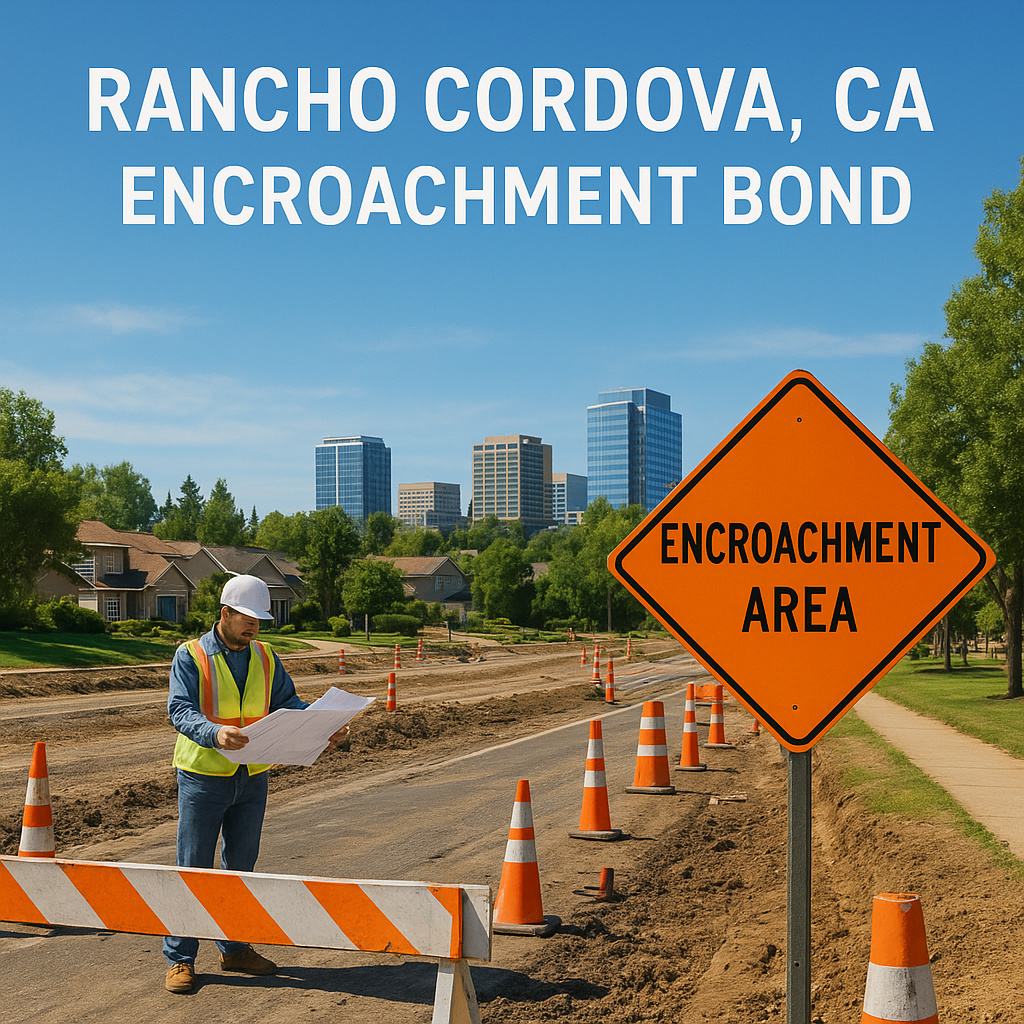
You’ve finally gotten the green light for that driveway extension, a new fence, or perhaps a stylish patio that nudges just a tiny bit over the property line. The plans look amazing. But then, the City of Rancho Cordova mentions you need something called an “encroachment bond” before you can dig a single hole. Suddenly, your excitement hits a wall of paperwork and unfamiliar terms.
Don’t stress. It sounds more intimidating than it actually is. Think of an encroachment bond as a promise — a safety net for the city and your neighbors. You’re telling the city, “I’ll do this work carefully, and if anything goes wrong in the public right-of-way, there’s money set aside to fix it.”
Whether you’re a homeowner, a contractor, or a business owner, understanding this requirement can save you time, money, and a whole lot of headaches. Let’s break it down into bite-sized pieces without the confusing legal jargon.
What Is a Rancho Cordova Encroachment Bond, Really?
Let’s keep this simple. An encroachment happens when part of your private property — or work you’re doing — reaches into public property. In Rancho Cordova, that public property could be a sidewalk, a street, an alley, or a utility easement. Even something as innocent as a mailbox or a beautifully landscaped flower bed can qualify as an encroachment if it crosses that invisible line.
An encroachment bond is a type of surety bond. Now, don’t zone out. A surety bond involves three parties: you (the principal), the City of Rancho Cordova (the obligee), and an insurance company (the surety). The bond guarantees that you’ll follow all the municipal codes and rules when you step into that public space. It also guarantees that if your project damages city property — like cracking a sidewalk or hitting a water line — the funds are available to repair it, without the taxpayers footing the bill.
Why Rancho Cordova Insists on These Bonds
You might be wondering, “Why does the city care so much about my little landscaping project?” The answer is rooted in protection and community responsibility.
City streets, sidewalks, and underground utilities are shared assets. They belong to all of us. The City of Rancho Cordova has a duty to keep these areas safe, functional, and in good repair. When a private project disturbs that public space, there’s always a risk something might go wrong. A contractor could accidentally damage a sewer line. A heavy truck delivering materials could crack the curb. Without a bond, the city would have to use public funds to fix those problems. An encroachment bond shifts that financial risk from the public to the person doing the work.
So, in a nutshell, the bond is not just a bureaucratic hurdle. It’s a tool that makes sure your project doesn’t accidentally become a burden on your neighbors.
A Real-World Analogy: Think of It Like a Security Deposit
If you’ve ever rented an apartment, you paid a security deposit, right? The landlord holds that money not because they expect you to trash the place, but just in case something happens beyond normal wear and tear. An encroachment bond works the same way. You’re not handing over cash directly to the city. Instead, you pay a small percentage of the bond’s total value to an insurance company. In return, they issue a bond that acts as your security deposit, guaranteeing the city’s public property will be left in good condition.
Who Typically Needs a City of Rancho Cordova CA Encroachment Bond?
You’d be surprised how many everyday projects trigger this requirement. It’s not just for massive commercial developments. You might need a bond if you’re planning to:
- Add or widen a driveway where it meets a public street.
- Install or repair underground utilities like water, sewer, or gas lines that cross into an easement.
- Build or repair a fence that sits near a property line adjacent to public land.
- Place a temporary construction dumpster or scaffolding on a sidewalk or street.
- Create any structure — yes, even a deck or a patio cover — that extends into a city right-of-way.
The Rancho Cordova Public Works Department usually notifies you when a permit you’ve applied for requires this bond. They’ll specify the exact bond amount they need, which often correlates with the scope and potential risk of the project.
How Much Will This Bond Set You Back?
Here’s some good news: you won’t have to pay the full bond amount upfront. If the city requires a $10,000 encroachment bond, you don’t write a $10,000 check. You only pay a premium, which is a small fraction of that total.
Typically, the premium rate falls somewhere between 1% and 3% of the bond’s total value. For someone with strong credit and a straightforward project, that $10,000 bond might only cost $100 to $300. The biggest factor affecting your premium is your personal credit score. For larger bonds, the surety company might also glance at your business financials and experience.
Think of it this way: for about the cost of a nice dinner out, you can unlock your permit and start building with peace of mind.
The Steps to Secure Your Encroachment Bond in Rancho Cordova
The process is smoother than you might expect. You don’t need to be a legal expert to get this done. Just follow this path:
- Step 1: Clarify the Requirement. Contact the City of Rancho Cordova’s Public Works or Building Department. Ask exactly what type of encroachment permit you need and the specific bond amount they require. Don’t guess on this; get it in writing from the city.
- Step 2: Find a Reliable Surety Bond Agency. Look for an agency that specializes in contract or permit bonds. They understand how municipalities work. Many agencies offer a quick, online application process.
- Step 3: Complete a Quick Application. You’ll provide a few basic details about yourself and your project. For small bonds, approval is often instant. The agency may run a soft credit check.
- Step 4: Review Your Quote and Pay the Premium. Once approved, you’ll receive the bond document. Pay the premium, and you’re set.
- Step 5: Deliver the Bond to the City. You’ll provide the original bond document to the Rancho Cordova city officials. They’ll keep it on file, and you can finally get that permit moving.
Many people choose to work with an agency that can handle the entire thing electronically, saving trips across town.
What Does the City Check for Before Releasing the Bond?
A common worry is, “Will I ever get this bond back?” The bond isn’t a fee you lose forever. It’s tied to your project’s completion and a final inspection. Once your work is finished, a city inspector will visit the site. They’ll walk the area, checking that the public right-of-way hasn’t been damaged, the sidewalk isn’t cracked, the asphalt is in good shape, and everything meets code.
If everything passes with flying colors, the city will formally release the bond, or it will expire without any claim being filed. It essentially vanishes. You don’t get the premium back — that was the cost of the service — but you won’t owe anything else. If there is damage, the city files a claim against the bond to cover the repair costs. That’s why it’s crucial to use a reputable contractor who will do the job right the first time.
Can Your Project Be Denied?
The city can deny an encroachment permit if your project seems too risky for the public space, but the bond itself is rarely the reason for a denial. Most people qualify for a bond easily. Even if your credit has seen better days, there are programs designed to help get you bonded. The surety industry is built on the idea that nearly everyone deserves a chance to move forward with their lives and businesses.
Why This All Matters More Than You Think
Skipping the bond process sounds tempting if you’re trying to cut costs or save time. But operating without the required Rancho Cordova encroachment bond is a gamble you don’t want to take. You could face a stop-work order, fines, or legal action. Worse, if something gets damaged, you’re personally liable for the entire repair bill. That cracked sewer main across the street? Those repairs can spiral into tens of thousands of dollars.
The bond protects you just as much as it protects the city.
Key Takeaways Before You Start Digging
Let’s hit the pause button and quickly recap. Your home or business project doesn’t have to stall because of the words “encroachment bond.”
- The bond is a guarantee from an insurance company that you’ll leave public property undamaged.
- You only pay a small premium, not the full bond amount.
- It’s required for any project that touches sidewalks, streets, or utility easements in Rancho Cordova.
- The city releases the bond obligation after a successful final inspection.
So, before you panic about another layer of red tape, remember: the encroachment bond is simply a tool that lets you build your dream project responsibly. It’s your neighborly handshake with the City of Rancho Cordova, promising that you’ll treat shared spaces with care. With the bond in your back pocket, you’re ready to break ground the right way.