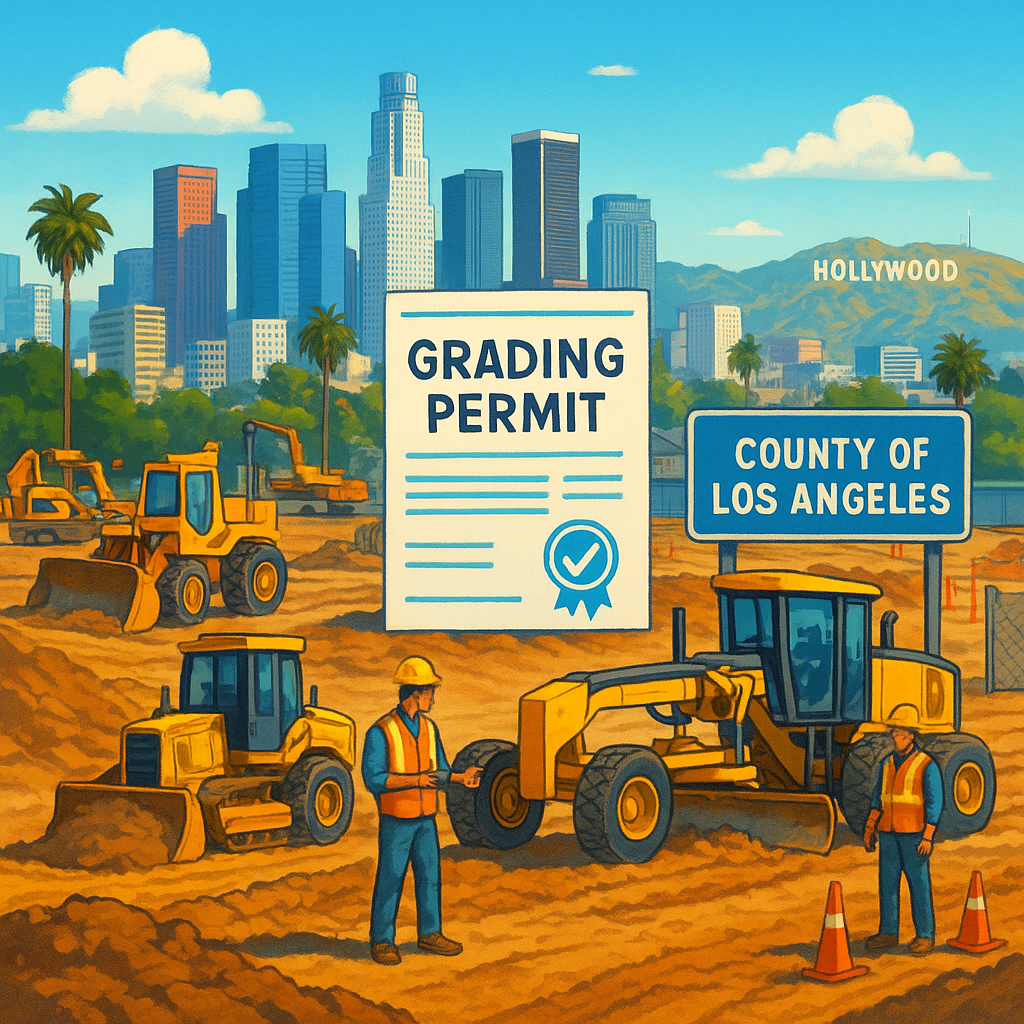
Imagine spending months planning a construction project in Los Angeles County. You’ve secured the land, drawn up the blueprints, and lined up a skilled team. Then, right before you break ground, you’re told you need something called a grading permit security bond. It sounds like just another bureaucratic hoop, but it’s actually a safety net woven into the very fabric of responsible building. So, what exactly is this bond, and why does it matter so much for your project?
What Is a Grading Permit Security Bond, Really?
Let’s strip away the legal jargon. A grading permit security bond is a promise. More specifically, it’s a three-way promise between you (the contractor or property owner), the County of Los Angeles, and a surety company. Think of it like a security deposit on an apartment, but instead of covering a landlord’s scratched floors, this bond covers the land itself. It guarantees that any grading, excavation, or earth-moving work you do follows all local codes and won’t leave a mess for someone else to clean up.
In Los Angeles County, this bond is often labeled “Compliance Only.” That’s a key detail. It doesn’t insure your work or protect your tools. Its sole job is to make sure you stick to the approved plans. If you don’t, the county has a financial backup to fix any erosion issues, drainage problems, or slope instability you might leave behind.
Why Los Angeles County Requires This Bond
Los Angeles isn’t just flat city blocks. It’s a landscape of rolling hills, steep canyons, and earthquake-prone terrain. When someone moves a significant amount of dirt, it can change how water flows, destabilize neighboring properties, or even trigger landslides. The county can’t afford to gamble with public safety. They require grading permits for most projects that involve cutting, filling, or reshaping the land. And with that permit, they almost always ask for a security bond.
This requirement lives in the County’s Building Code and Grading Ordinance. It’s not optional. Without the bond, your grading permit won’t be issued. It’s the county’s way of saying, “We trust you’ll do the right thing, but we’re going to hold a financial guarantee just in case.”
Who Needs One?
If you’re a grading contractor breaking ground on a new hillside home, a developer preparing a subdivision, or even a homeowner adding a retaining wall and needing to re-contour the yard, you might need this bond. The trigger is the volume of earth moved. Smaller landscaping jobs usually don’t apply, but once you hit certain thresholds—often 50 cubic yards of cut and fill or work on slopes steeper than a certain ratio—the bond becomes mandatory.
How the Bond Protects Everyone Involved
The beauty of this bond is how it spreads protection without slowing down progress. For the County, it’s a budget-friendly shield. They don’t have to drain taxpayer money to fix a botched grading job. For the public, it means the hillside behind their home won’t suddenly slide away because a developer cut corners. And for the contractor? It’s a powerful marketing tool. Being bonded tells clients, “I’m responsible, and I stand behind my compliance.”
Here’s a practical example: A contractor grades a large pad for a new house but rushes the job. The slope isn’t compacted properly, and after a heavy rain, mud slides onto the street and damages a neighbor’s fence. The county steps in, calls the surety company, and uses the bond money to repair the slope and clean up the mess. The contractor then has to reimburse the surety for every penny. That’s why a bond is not insurance—it’s a credit line you’re fully responsible for.
The Nuts and Bolts: Getting Your Bond
Securing a grading permit security bond in Los Angeles County is surprisingly straightforward, even if it feels intimidating at first. You’ll work with a surety bond agency. They’ll ask about your project, your credit history, and sometimes your business financials. Don’t worry if your credit isn’t perfect. These bonds are often “performance-based” more than “credit-based.” The surety wants to see your experience as a grading contractor and the scope of the job.
Once approved, you’ll pay a premium—a small percentage of the total bond amount. The bond amount itself is set by the county. It’s typically calculated to cover the cost of repairing potential damage or finishing the required erosion control work. For a residential project, this could be anywhere from $10,000 to $50,000 or more. Large commercial developments might need bonds in the hundreds of thousands. The actual cost to you? Often just 1% to 3% of that face value, depending on your qualifications.
The Compliance-Only Clause in Action
Remember the “Compliance Only” tag? It means the bond stays active until the county officially signs off on your work. This is crucial. You can’t just finish the dirt moving and walk away. A county inspector must verify that the grading matches the approved plan, that drainage systems work, and that slopes are stable. Only then will they release the bond. That final inspection is your finish line, and you want to cross it with care.
Common Mistakes That Trigger a Bond Claim
No one wants a claim on their bond. It can hurt your reputation and make future bonds more expensive. Let’s look at the common traps:
- Ignoring the approved plan: Changing slope grades without a revision, even if it seems minor, is a red flag.
- Failing to control erosion: LA County is serious about sediment washing into streets and storm drains. No silt fence or gravel bags? That’s a problem.
- Walking away before final inspection: If you disappear after the “dirt work” is done, the county may find deficiencies and call the bond.
- Not communicating with the inspector: A quick call to clarify a requirement can save months of headaches.
Think of the bond as a partner, not a punishment. It keeps you accountable to the standards you agreed to meet. Stay in regular contact with your county inspector, document everything with photos, and don’t cut corners on erosion control. These simple habits can protect your bond and your wallet.
What About the Cost? Breaking Down the Numbers
Let’s talk dollars and cents, because that’s often what keeps people up at night. The premium you pay is not the bond amount. If the county requires a $25,000 bond, you aren’t paying $25,000. For a well-qualified contractor with good credit, the premium might be $250 to $750 for the term of the permit. That’s a small price for the privilege of moving earth in one of the most regulated yet dynamic counties in the country.
Factors that influence your premium include your personal credit score, business financials, and the size of the project. Some surety companies offer programs specifically for new contractors or those with bruised credit, though the premium percentage may be higher. It pays to shop around, but not just for the cheapest rate. Look for a surety agent who understands Los Angeles County’s specific grading rules. Their guidance can be invaluable.
How Long Does the Bond Last?
The bond isn’t forever. It runs concurrently with your grading permit. Most permits are valid for a set period, often one year, and can be renewed if the project runs over. The bond must remain active until the county issues a “Bond Release” or “Exoneration.” This only happens after that successful final inspection. If you let the bond lapse before release, your permit becomes invalid, and you’re back to square one.
Connecting the Dots: Your Project’s Timeline
So, how does the bond fit into your overall project? Let’s map it out. First, you get your grading plans approved. Then, you’re told the required bond amount. You contact a surety agency, apply, and receive your bond document. You submit that document to the county building department along with your permit application fee. Only then does your grading permit get issued. Now you can break ground. When the work is done, you request an inspection, pass it, and the county releases the bond. Simple, right? It can be, with a little preparation.
Here’s a real-world rhythm: A homeowner in the Santa Monica Mountains wants to level a pad for an ADU. The county requires a $20,000 compliance bond. They get quotes, pay a $400 premium, and include the bond with their permit packet. The grading contractor does the work, installs proper drainage, and schedules the inspection. The inspector checks everything and gives the green light. A few weeks later, the bond is officially released, and the family can start building their new unit. No drama, no claims.
Avoiding the Pitfalls: Proactive Tips for Contractors and Owners
You’re not just buying a piece of paper. You’re entering a system designed to keep the landscape safe. To navigate it smoothly:
- Start early. Don’t wait until the last minute to find a surety agent. Some projects need underwriting time.
- Know your project inside and out. Understand the grading volume, slope ratios, and erosion control measures in your plan. The county will check every detail.
- Use a local grading contractor familiar with LA County regulations. Their experience can prevent costly missteps.
- Keep a rainy-day fund (literally). An unexpected storm can wash away your erosion control. Be ready to fix it immediately to avoid fines and bond claims.
What if you’re inheriting a project mid-stream? Maybe a contractor walked off the job. You’ll need to sort out the bond status immediately. Talk to the county and the surety. You might need to secure a new bond or transfer the existing one. Transparency here is everything.
The Bigger Picture: Why Bonds Build Better Communities
It’s easy to see this as just another fee, but step back for a moment. Los Angeles County’s grading bond requirement is a quiet guardian. It helps ensure that our hillsides stay stable, our waterways remain unpolluted by sediment, and our neighbors aren’t hurt by careless construction. Every responsible contractor who bonds their project contributes to that legacy.
And from a business perspective? Being able to say you’re bonded and comply with all local grading regulations sets you apart. It gives general contractors, architects, and property owners confidence. In a competitive market, that trust is worth far more than the modest premium you pay.
So, next time you hear “grading permit security bond,” don’t think of red tape. Think of it as the earth’s promise, backed by a financial guarantee. It’s a small step in the paperwork process that makes a giant difference on the ground. If you’re gearing up for a project in Los Angeles County, take a deep breath, find a reputable surety agent, and get the bond that lets you build with integrity. The land—and your future self—will thank you.