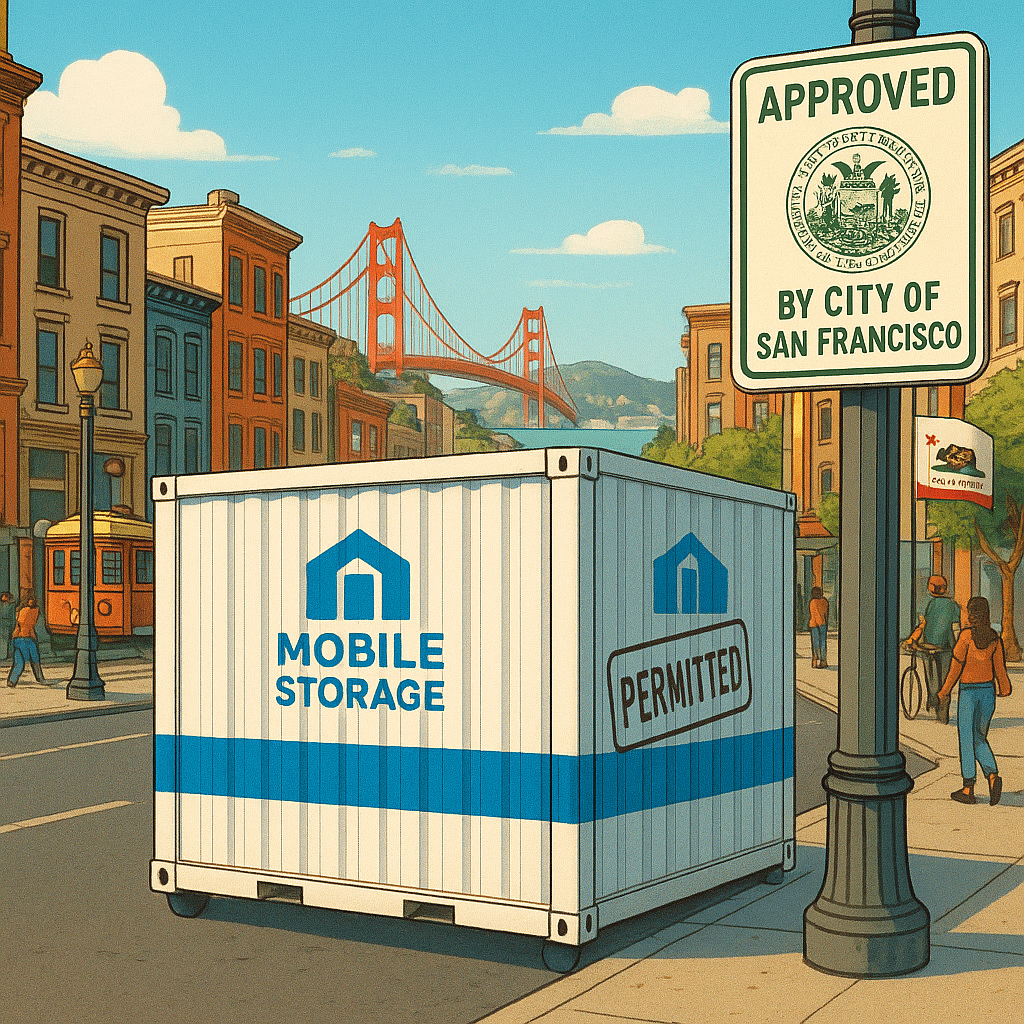
Moving is rarely a walk in the park, but if you live in a dense, bustling city like San Francisco, it brings a whole new set of challenges. Parking is tight, hills are steep, and space is at a premium. If you’re planning to use a portable storage container—the kind you often see from companies like PODS or U-Haul U-Box—you might already be picturing it sitting in your driveway or on the street while you load up your belongings. But here’s the thing: in the City and County of San Francisco, placing that container on a public street isn’t as simple as having it dropped off. It comes with a specific set of rules, including a permit and a surety bond.
Don’t let the paperwork scare you. Understanding what’s needed in advance saves time, money, and a potential run-in with a parking enforcement officer. Let’s break it all down in plain English so you can tackle your move with confidence.
Why You May Need a Street Occupancy Permit in San Francisco
Let’s start with the obvious question: when do you actually need a permit? If your container sits entirely on private property, such as your driveway or garage pad, you’re generally in the clear. The city’s concern begins the moment you place that container—any container—on a public right-of-way. This includes the street, the sidewalk, or even the area between the sidewalk and the curb (often called the parking strip).
San Francisco’s Department of Public Works (DPW) manages these situations through what’s called an “Occupation of Street” permit. Think of it as a temporary rental agreement with the city. You’re borrowing a piece of public space, and the permit makes it legal. Without it, you risk fines, a towed container, and a whole lot of stress during an already hectic time.
The permit isn’t just about paying a fee and slapping a sticker on the box, though. To get one, you’ll also need to provide a financial guarantee known as a surety bond. This requirement often surprises first-time users, so let’s explore what that bond is all about.
What Exactly Is a Mobile Storage Container Permit Bond?
A mobile storage container permit bond is a type of surety bond required by the City and County of San Francisco. It acts as a promise between three parties:
- You (the principal): the person or company placing the container.
- The City and County of San Francisco (the obligee): the entity that requires the bond to protect public property.
- A surety company: the insurance-like entity that backs your promise financially.
In simpler terms, the bond is a safety net for the city. If your storage container damages the street, cracks a sidewalk, blocks a fire hydrant longer than allowed, or causes any other harm to public infrastructure, the city can make a claim against your bond to cover repair costs. You, in turn, are responsible for repaying the surety company for any valid claims it pays out.
The Role of the Surety Bond
It helps to think of the bond like a security deposit on a rental apartment. You might take great care of the unit, but the landlord still collects a deposit just in case you knock a hole in the wall. The city does the same thing with a bond. It’s not a punishment and it’s not assuming you’ll cause damage. It’s simply a standard safeguard that keeps public spaces—and the repair budget—protected.
In San Francisco, the bond amount for a short-term residential mobile storage container is typically $1,000. For larger or longer-term commercial projects, the required amount can be higher, but for the average homeowner moving across town, the $1,000 bond is the benchmark. This is the total coverage, not the price you pay upfront. We’ll talk about the actual cost in a moment.
How to Obtain Your Permit and Bond: A Step-by-Step Guide
The process might feel bureaucratic, but when you break it down, it’s quite manageable. Here’s the typical path:
- Contact the Bureau of Street Use & Mapping. This is the branch of San Francisco Public Works that handles street occupancy permits. Their website provides application forms, fee schedules, and current requirements. Some permits can be applied for online, while others require an in-person visit or mailed documents.
- Gather your project details. You’ll need to know the exact dates the container will be on the street, the container’s dimensions (length, width, height), and the precise location. The city will want to ensure you’re not blocking a bus stop, a bike lane, a fire hydrant, or a driveway without proper consent.
- Secure the surety bond. You can’t submit your permit application without proof of the bond. The good news? Getting a $1,000 street occupancy bond is fast and inexpensive. You simply contact a licensed surety bond provider—many offer online ordering—and provide basic information. Within minutes to a day, you’ll receive the bond form that you file with the city.
- Pay the permit fee. The city charges a base fee for the street space you’re occupying. Fees vary depending on the duration, the size of the container, and the specific neighborhood. Always check the latest fee schedule on the DPW website, as costs can change annually.
- Post the approved permit. Once everything is processed, you’ll usually receive a permit placard that must be visibly displayed on or near the container. This lets enforcement officers know that your setup is legal.
A little pro tip: start this process at least one to two weeks before your planned delivery date. While bonds can be issued quickly, city permitting offices sometimes have a backlog, especially during peak moving season in the summer.
How Much Does the Bond Cost?
Here’s the part people really want to know. The $1,000 bond is the penalty amount—the maximum the city could collect if something goes wrong. You don’t hand over a thousand dollars. Instead, you pay a small premium to the surety company, typically between $100 and $150 for a one-year term. For a short-term permit that might last only a week or a month, this is often the same minimum premium. It’s a small price to pay for the ability to place a container legally on a San Francisco street.
Factors like your credit score can influence the exact premium, but for most people with decent credit, the cost hovers in that low range. Once you have the bond, you submit it with your application, and you’re done—no ongoing fees unless you extend the permit and need a longer-term bond.
Common Pitfalls to Avoid
Even with a permit and bond in hand, a few missteps can trip you up. Here are the most common ones to watch out for:
- Placing the container on the sidewalk. In most cases, containers must be placed in the roadway, not on the pedestrian walkway. Blocking the sidewalk is a major safety hazard and could lead to immediate removal.
- Forgetting to notify neighbors. While not always a legal requirement, giving adjacent properties a heads-up about a container occupying parking spots goes a long way in avoiding complaints to the city.
- Underestimating the time you need. Moving delays happen. If your permit expires and the container is still on the street, you could face daily fines. Always build in a one- or two-day buffer, and know how to request a permit extension if needed.
- Assuming the container company handles permits. Some moving container companies assist with the permit process, but not all do. Always confirm who is responsible. Ultimately, the permit and bond obligation falls on you if your name is on the application.
- Ignoring the bond requirement. It’s not optional. If you try to skirt the bond by submitting an application without it, your permit simply won’t be issued. The city checks.
Frequently Asked Questions
Do I need a bond if the container is placed on private property? No. The permit and bond are only required when the container occupies a public right-of-way. If you have a driveway, a yard, or a designated off-street spot, you can usually bypass the city process entirely. Just make sure the container doesn’t extend over the sidewalk.
What if my container company already has insurance? Their insurance typically covers their equipment and liability, but it does not fulfill the city’s requirement for a permit bond. The city wants a bond specifically naming you and the City and County of San Francisco. So even if the container provider has coverage, you’ll still need to secure the separate surety bond.
How long can I keep a container on the street? Permit durations vary, but for a residential move, a permit lasting seven to fourteen days is common. For longer periods, you’ll need to justify the extended occupancy and may face higher fees or additional bond requirements. Always check with DPW for the current limits.
Making Your Move Smooth and Hassle-Free
San Francisco’s mobile storage container permit and bond requirements are really just a way for the city to say, “We want to share our streets fairly and keep them in good shape.” By getting a permit and the small surety bond, you’re doing your part to protect the neighborhood while making your move as efficient as possible.
Think of it as one less thing to worry about. Once the paperwork is done and the permit is posted, you can focus on what really matters: getting your life packed up and settled into your next San Francisco home. And the next time you see a container neatly parked with an official permit on it, you’ll know exactly what went on behind the scenes to make it legal.