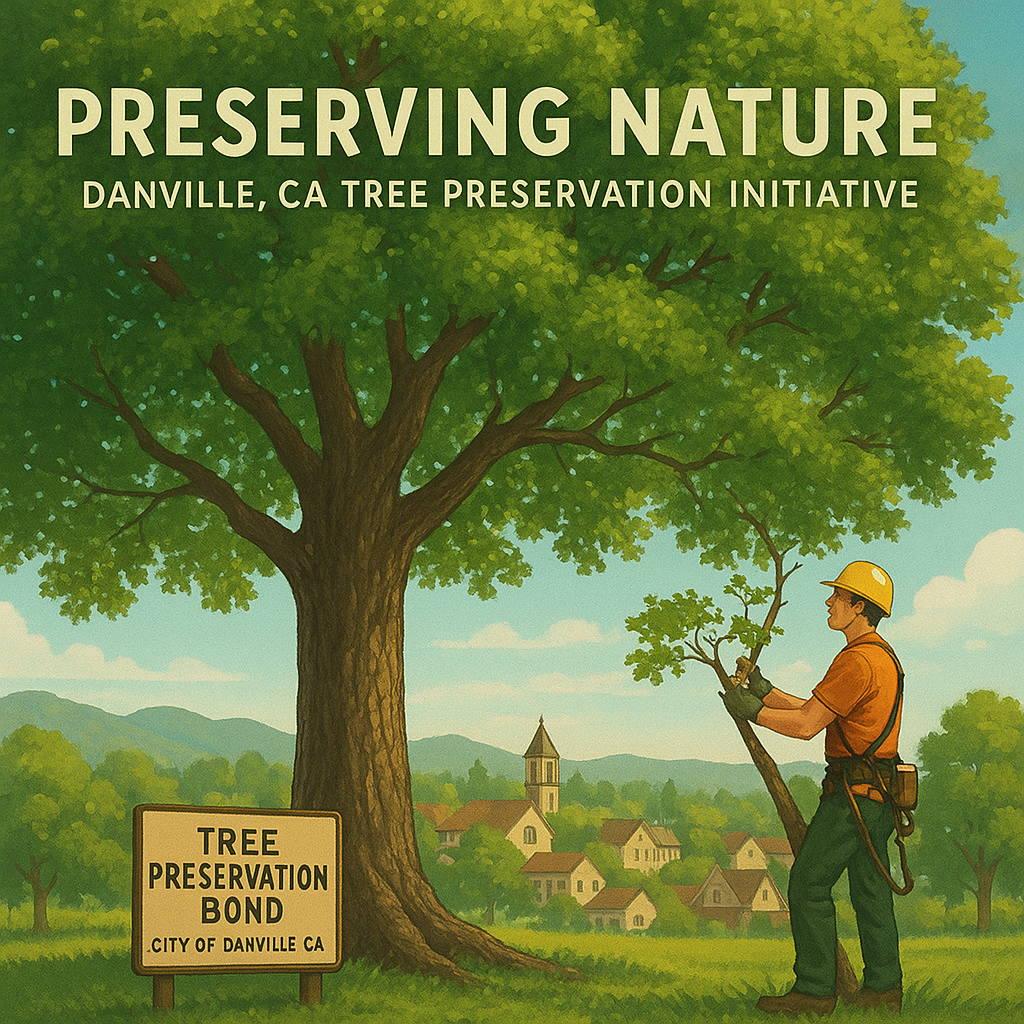
Have you strolled through downtown Danville lately and noticed how the leafy canopies make the streets feel cooler, calmer, and just a little more charming? Those majestic oaks and graceful sycamores are a big part of what gives our town its character. Keeping them healthy and standing tall takes more than occasional watering. It requires a coordinated effort from the city, homeowners, and the tree care professionals who prune and preserve them.
That’s exactly why the City of Danville has quietly rolled out a revamped Tree Preservation Initiative. You may have heard whispers about new rules, something about a Danville CA Tree Preservation Bond and tree trimmer liability insurance. It sounds official and maybe a little intimidating, but it’s actually a smart, straightforward plan to protect our urban forest for decades to come. Let’s unpack what this means in plain English, why it matters for your neighborhood, and how it keeps everyone on the same leafy page.
What Exactly Is the Danville CA Tree Preservation Bond?
Imagine you’re renting a beautiful, antique chandelier from a friend. They trust you to hang it in your home, but they also ask for a small deposit in case something happens. That deposit is basically what a tree preservation bond is — only instead of a light fixture, we’re talking about public trees. When a contractor or a homeowner plans a construction project near a city-owned tree, the city wants a financial guarantee that the tree will be protected. If the tree is damaged or removed without permission, the bond covers the cost of replacement or restoration.
In Danville, this isn’t a brand-new concept, but the initiative strengthens how the bond is applied. It ensures that whenever you pull a permit for work that might affect a street tree or a protected heritage tree, you’ll need to post a bond. That bond acts like a promise: “I’ll work carefully, and if I slip up, the funds are already there to make it right.”
This might sound like bureaucracy, but it’s actually a proactive layer of protection. Before this push, a tree could be damaged during a home addition, and months of finger-pointing would follow. Now, the bond clears the path for fast, fair fixes. The goal isn’t to punish anyone — it’s to keep Danville’s greenery robust and vibrant while still allowing progress.
Why Tree Trimmer 3rd Party Liability Matters Now More Than Ever
If you’ve ever hired a tree trimmer to shape the oak in your backyard, you know the relief of watching a skilled arborist swing into action. But have you ever paused to ask about their insurance? The new initiative puts a spotlight on tree trimmer – 3rd party liability coverage, and for a very good reason.
Tree work is risky by nature. A wayward branch can damage a neighbor’s roof, shatter a window, or worse — injure someone. Without proper liability insurance, you, the homeowner, could be on the hook for those bills. Danville’s updated approach encourages (and in many cases, requires) tree trimming companies to carry solid third-party liability insurance before they can work on properties where public trees or shared landscapes are involved.
Think of it this way: just like you wouldn’t let an uninsured driver borrow your car, you shouldn’t let an uninsured trimmer work on your trees. The city’s requirement protects you from financial headaches, but it also raises the bar for professionalism in the local tree care industry. When every crew carries proper coverage, the whole community benefits from safer job sites and healthier, correctly pruned trees.
How the Initiative Boosts Urban Greenery Beyond Individual Trees
At first glance, bonds and insurance forms don’t scream “eco-friendly.” But peel back the paperwork, and you’ll see a clever system designed to make Danville greener, not just preserve the status quo. Here’s how.
A Revolving Fund for Replanting
When a bond is forfeited because a tree was irreparably harmed, the money doesn’t vanish into a city general fund. It gets funneled directly into planting new trees, improving soil, and caring for our shared green spaces. Accidentally losing one mature oak could fund three or four new saplings in a park that desperately needs shade. It’s a self-healing cycle — damage inspires regeneration.
Better Training and Accountability
The liability insurance requirement nudges tree trimmers to invest in proper training. Companies that want to stay competitive in Danville will need to demonstrate they know how to prune without wounding trees, how to spot disease early, and how to work safely near power lines. This ripple effect means your neighborhood’s trees are more likely to be handled by experts who see them as living assets, not just obstacles.
Thoughtful Development
For builders and architects, the tree preservation bond encourages creative design. Instead of bulldozing a beautiful 80-year-old sycamore to make way for a cookie-cutter addition, they might design around it. The result? Homes with character, shaded patios, and higher property values — all because the upfront cost of bonding makes tree preservation the easier, smarter choice.
What This Means for You — Homeowner, Renter, or Business Owner
You might be thinking, “This sounds great for the city, but does it mean more hassle when I want to finally put in that driveway?” The short answer is no, as long as you plan ahead. Most routine pruning of trees on your private property doesn’t require a bond. The initiative mainly kicks in when:
- You’re doing construction that disturbs the root zone of a protected or city-owned tree.
- You’re removing a tree that meets the town’s threshold for significance (often based on size, species, or historical value).
- You hire a tree trimmer who will be working over sidewalks, streets, or other public right-of-ways.
For most of us, the biggest change is that when we hire a tree service, we’ll need to check that they’re on the city’s radar with up-to-date liability insurance. It’s a quick verification — similar to checking that a contractor is licensed. And it brings peace of mind. You can sip your morning coffee while they work, knowing if a mishap occurs, you won’t be hunting for a lawyer.
Becoming a Tree Preservation Champion in Your Own Yard
The city can set rules, but true urban greenery thrives when residents get involved. Here are a few actionable ways you can align with Danville’s initiative and maybe even become the neighborhood tree champion.
- Know Your Tree’s Heritage Status: Before you plan any major landscaping, check with the city’s planning department or use their online map to see if any of your trees are protected. A quick phone call can save you a big fine and a lot of heartache.
- Ask for Proof of Insurance: When a tree trimmer hands you an estimate, politely ask to see their certificate of liability insurance. A reputable pro will be proud to share it. If they hem and haw, consider it a red flag.
- Mulch and Water Thoughtfully: The strongest preservation bond in the world can’t fix a stressed tree that’s neglected. Simple acts like proper mulching (think donut shape, not volcano) and deep watering during dry spells keep roots strong and branches resilient.
- Join a Community Planting Day: Danville often hosts volunteer events where you can help plant new trees in parks or along streets. It’s a hands-on way to support the initiative and see firsthand how those bond funds get reinvested.
Common Misconceptions About the Tree Preservation Bond
Let’s debunk a few myths that tend to sprout like weeds whenever new rules take root.
Myth #1: “The bond means I can’t trim any trees near my house.”
Not true. Routine maintenance on your private trees is still your right. The bond only comes into play when the work involves public property or protected specimens with a permit. So go ahead and keep that fruit tree pruned.
Myth #2: “The city is just looking for ways to make money.”
The bond isn’t a fee that fills city coffers. It’s a protective deposit that’s fully refundable once the project is done and the tree is confirmed to be safe and sound. The city’s aim is zero forfeitures — they’d rather see a healthy tree than a check.
Myth #3: “Small, independent tree trimmers will be driven out of business.”
Actually, the insurance requirement levels the playing field. It rewards professionals who do things by the book and discourages fly-by-night operators who undercut prices by cutting corners. Over time, this pushes quality up, not down.
The Bigger Picture: A Greener, More Resilient Danville
Why does all this matter so much right now? As our summers grow hotter and our neighborhoods denser, mature trees become silent superheroes. They scrub the air, cool our homes, reduce stormwater runoff, and even boost mental well-being. Every time a heritage oak falls due to careless construction, we lose decades of environmental benefits overnight.
Danville’s initiative — with its blend of a Tree Preservation Bond and strict tree trimmer 3rd party liability requirements — is like an insurance policy for that irreplaceable canopy. It’s a way of admitting that while growth is inevitable, it doesn’t have to come at the expense of the natural beauty that makes people want to live here in the first place.
Next time you pass by a crew carefully maneuvering a crane around a broad-limbed sycamore, you’ll know there’s a thoughtful system at work behind the scenes. And maybe, just maybe, you’ll feel a little proud to live in a town that values its roots — both literal and figurative.
Embracing the Change Together
The tree preservation initiative isn’t just a set of codes tucked away in a binder at City Hall. It’s a community commitment. It invites homeowners to be mindful stewards, encourages tree pros to elevate their craft, and gives the city a practical toolkit to protect the leafy landmarks we all treasure. So, the next time you’re enjoying a picnic under a sprawling oak at Hap Magee Ranch Park, take a moment to appreciate the quiet safeguards that help keep that spot shady and serene for years to come.
After all, a tree planted in Danville today isn’t just a sapling — it’s a gift to future generations who will one day sit beneath its branches, just as we do now.