What Exactly Is an Encroachment Permit Performance Bond?
If you’ve ever rented an apartment, you’re already familiar with a security deposit. You give the landlord a chunk of money upfront. If you leave the place spotless, you get it all back. If you punch holes in the walls, the landlord uses that deposit to fix the damage. An encroachment permit performance bond works in a very similar way, just on a much larger scale and involving public streets or sidewalks.
In the City of Fairfield, California, any time a contractor, utility company, or even a homeowner wants to dig up, alter, or build upon public property—like a sidewalk, curb, gutter, or street—they need an encroachment permit. As part of that permit, the city asks for a financial guarantee. That guarantee is the City of Fairfield CA encroachment permit performance bond. It’s a promise, backed by a surety company, that you’ll complete the work according to city standards and restore the public space to its original condition, or better.
Why Does the City of Fairfield Require This Bond?
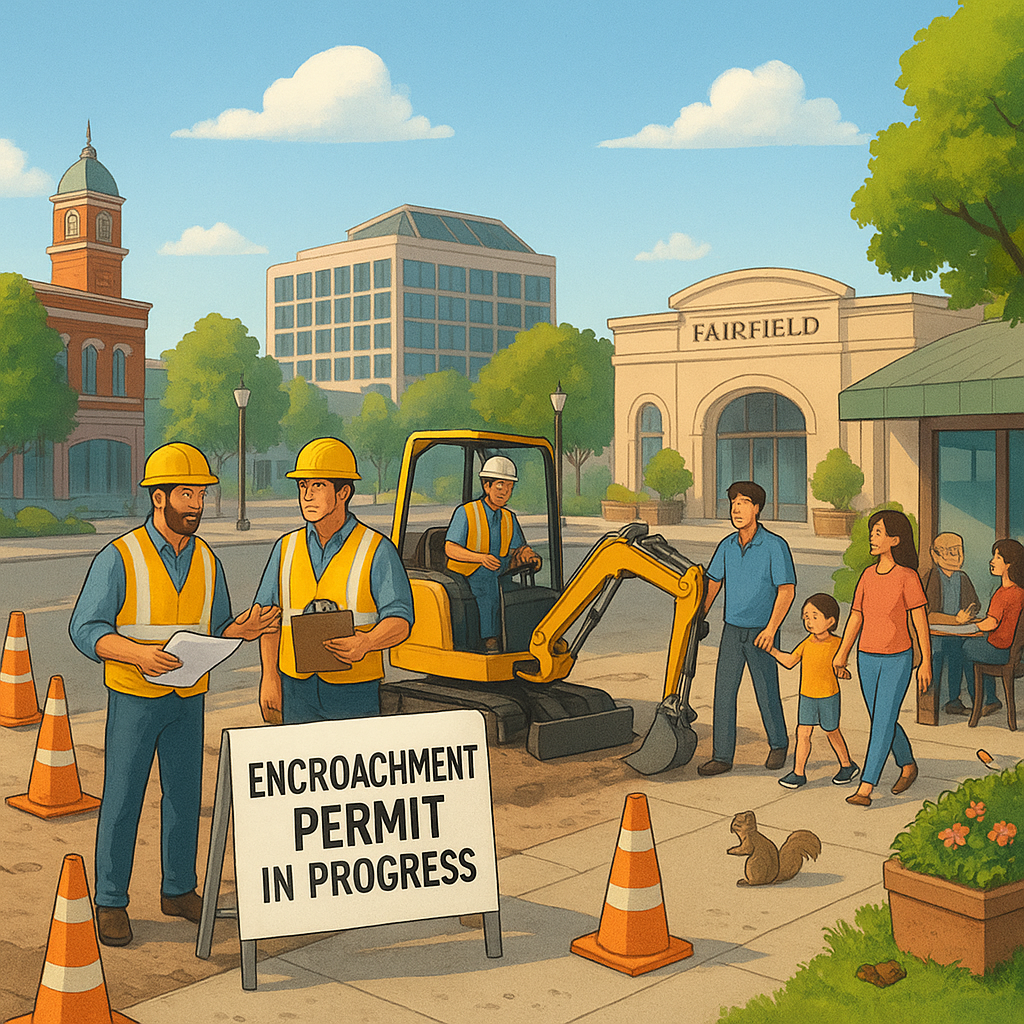
Picture a busy street in downtown Fairfield. A crew opens up the road to install a new water line. If they do a sloppy job, leave a trench unfilled, or pave it with subpar asphalt, the city—and its residents—are stuck with a dangerous eyesore. Taxpayers shouldn’t have to foot the bill for a private contractor’s mistake. That’s exactly why the Fairfield encroachment permit bond exists. It shifts the financial risk away from the public and onto the party doing the work.
The bond says, loud and clear: “If you don’t finish this project correctly, the city can step in, fix it, and use this bond money to pay for it.” It protects public infrastructure and ensures that every curb cut, every utility trench, and every driveway apron meets the strict engineering codes of the City of Fairfield, CA.
Who Actually Needs to Obtain This Bond?
This requirement is broader than many people think. It’s not just for massive construction firms. You might need a performance bond for an encroachment permit in Fairfield if you are:
- A general contractor breaking ground on a new commercial building, requiring sidewalk or street improvements.
- A homeowner installing a brand new driveway approach that connects to a public road.
- A utility company trenching across a street to repair or install gas, electric, or fiber-optic lines.
- A landscaper building a retaining wall that touches the public right-of-way.
- A developer putting in off-site improvements like curbs, gutters, and streetlights for a new subdivision.
Essentially, if your shovel touches ground that belongs to the City of Fairfield, the city wants a bond on file before that shovel breaks the surface.
How Does the Bond Actually Work? A Simple Breakdown
An encroachment permit performance bond involves three parties, just like most surety bonds. Understanding their roles demystifies the whole process.
- The Principal: That’s you—the contractor, homeowner, or developer who needs to perform the work. You purchase the bond.
- The Obligee: That’s the City of Fairfield. They require the bond to protect their streets and public spaces.
- The Surety: The insurance-like company that backs your promise. They issue the bond and, if necessary, pay the city for a valid claim. But remember, this isn’t insurance for you. The surety will come back to you for every penny they pay out.
Think of the surety as a co-signer on a loan. They vouch for you. If you default, they make good on your promise, but then they’ll knock on your door to collect.
What’s the Real Cost of a Fairfield Encroachment Permit Bond?
Here’s some relief: you do not have to pay the full bond amount upfront. If the city sets a required bond value at $20,000, you aren’t writing a $20,000 check. Instead, you pay a small percentage as a premium, typically between 0.5% and 3% of the total bond amount.
So for a $20,000 bond, your out-of-pocket cost might range from $100 to $600. The exact premium depends on a few personal factors:
- Your credit score: Solid credit usually lands you in that golden 1% range.
- Business financials: For larger bonds, the surety might look at your company’s balance sheet.
- Project specifics: A short, simple sidewalk replacement feels less risky than a complex, multi-month street widening.
Many sureties offer a fast online quote process specifically for Fairfield CA encroachment permit bonds, so you can have a firm number in minutes.
Walking Through the Bonding Process, Step by Step
If this feels overwhelming, don’t worry. Getting bonded is a standard, repeatable journey. Here’s what you can expect:
- Visit the City’s Permit Desk: Start with the City of Fairfield’s Public Works or Building Department. They’ll tell you the exact bond amount needed for your specific encroachment permit. This amount varies based on the scale of the work and the potential impact to public infrastructure.
- Gather Your Information: You’ll need your business license, contractor’s license number (if applicable), and details about the project scope. Homeowners may only need personal identification and the permit details.
- Apply with a Bond Agency: Reach out to a surety bond specialist. Provide the required bond amount and your details. The agent will shop rates among several markets to find you the best deal.
- Pay the Premium: Once approved, you pay the small premium, sign a few documents, and the bond is issued.
- File the Bond at City Hall: You’ll receive a sealed bond document. Deliver the original to the City of Fairfield. They’ll keep it on file until the project is completed and formally accepted.
Can the City Really Make a Claim? And What Happens Then?
Absolutely, yes. A claim against your City of Fairfield CA encroachment permit performance bond isn’t a theoretical scare tactic. If you abandon the job, if the new sidewalk starts crumbling six months later, or if you didn’t compact the soil under a road patch and a sinkhole develops, the city will notify the surety. A city inspector documents the deficiencies, sends a formal demand, and the claim process begins.
If the claim is valid, the surety pays the city up to the full bond penalty. However—and this is crucial—the surety then aggressively pursues you for full reimbursement, plus legal fees. Your business assets may be at stake. This reinforces the core purpose: it’s a powerful motivator to do the job right the first time and stick around to fix any issues.
Common Fairfield Projects That Trigger This Requirement
You might not realize how many home improvements brush up against the public domain. The city’s right-of-way often extends beyond the curb and onto what looks like your front yard. These everyday projects frequently require an encroachment permit bond:
- Installing a new concrete driveway approach from the street to your garage.
- Repairing or replacing a damaged public sidewalk in front of your property.
- Excavating in the street to connect a home to a sewer lateral or water main.
- Adding a speed hump, curb painting, or street furniture as part of a neighborhood traffic-calming project.
- Running underground electrical lines to a new accessory dwelling unit (ADU) if the trench crosses under the street.
When the permit covers work that disturbs the public realm, expect the bond request to follow.
Tips for a Smooth Encroachment Permit Bond Experience in Fairfield
A little preparation goes a long way toward making this requirement painless.
Double-Check the Bond Amount. The city may have standard bond schedules. For a simple residential driveway approach, the bond might be $2,000. For a large utility trench, it could be $50,000 or more. Confirm the exact figure before applying so you don’t overpay or come up short.
Bundle Your Bonds. If you’re a contractor regularly working in Fairfield, you might need multiple bonds for different permits. Ask your agent about a blanket bond or a bond program that can save you money and paperwork in the long run.
Read the Permit Conditions Closely. The bond is tied directly to the permit’s terms. Those terms will specify inspection schedules, restoration timelines, and materials you must use. Knowing these conditions up front reduces the risk of a costly claim later.
Don’t Confuse a Bond with Insurance. Insurance protects you from accidents. A bond protects the city from your failure to perform. You still need your own general liability and workers’ compensation policies, separately.
What If I’m a Homeowner, Not a Big Company?
Many homeowners feel a spike of anxiety when the city mentions “bonds.” They picture complex corporate agreements and huge fees. The truth is much simpler. A homeowner seeking a permit for a small project faces a straightforward process. The bond amount is usually lower, and credit-based approval is fast and cheap. Some surety companies even market a “homeowner encroachment bond” product designed specifically for this situation. You can often secure the bond in one afternoon and hand it to the city the next morning.
Why This Bond Benefits You, Too
It’s easy to view the Fairfield encroachment permit bond as just another bureaucratic hoop. But there’s an upside. The bond demonstrates to the city that you are a credible, trustworthy project owner. It can speed up permit approvals because the city knows the financial safety net is already in place. Plus, it protects you from accusations of shoddy work later on—once the city signs off that the work is acceptable, the bond is released, closing the loop.
Final Thoughts on Staying on the Right Side of Fairfield’s Rules
Digging into Fairfield’s streets and sidewalks comes with big responsibility. An encroachment permit performance bond isn’t just red tape; it’s a shared commitment to keeping the community safe and beautiful. By understanding how the bond works, what it costs, and how to easily obtain one, you turn a potential hurdle into just another line item on your project checklist. Do the prep work, partner with a knowledgeable bond agency, and you’ll be cleared to break ground with confidence.