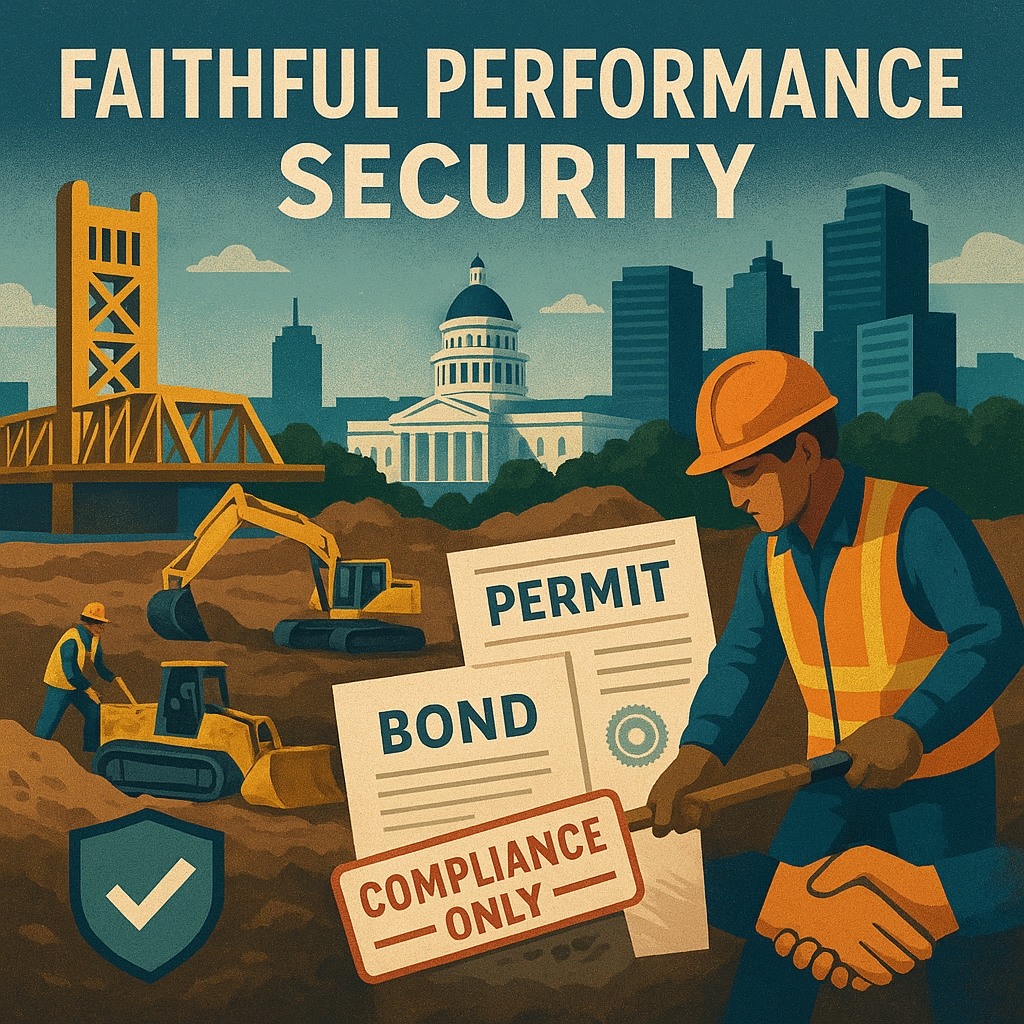
If you’re a grading contractor, developer, or even a homeowner planning to move a significant amount of earth in Sacramento County, you’ve probably heard the term “grading permit bond” tossed around like it’s just another piece of paperwork. But what does it really mean? And why does the county insist on something called a Faithful Performance Security? Let’s break it all down in plain English, without the confusing legal jargon.
What Exactly Is a Sacramento Grading Permit Bond?
Think of a grading permit bond as a promise backed by money. Officially, Sacramento County calls it a Faithful Performance Security for Grading Permit Bond. That’s a mouthful, so let’s simplify. When you get a permit to grade land—whether you’re leveling a lot for a new home, carving out a commercial pad, or building a road—the county wants assurance that you’ll complete the work correctly. The bond is your guarantee. It says, “I’ll do the grading according to the approved plans, I’ll keep the soil from washing away, and I’ll protect neighboring properties.” If you don’t, the bond steps in to cover the cost of fixing any mess.
This isn’t insurance for you. It’s a safety net for the county and the public. You pay a premium to a surety company, and they back your promise. If you break that promise, the surety pays out—but you’re the one who ultimately foots the bill. More on that later.
Why Does Sacramento County Require This Bond?
Sacramento County sits on a landscape that ranges from flat valley floors to rolling foothills. When you move dirt, you change the way water drains. One wrong move can send a muddy flood into your neighbor’s living room or erode a public road. The county’s grading ordinance exists to prevent these disasters. The Faithful Performance bond is the enforcement tool. Without it, the county would have little leverage if a contractor walks away halfway through a job or leaves a site in shambles.
Here’s the core reason in a nutshell: compliance. The bond ensures you comply with all the conditions of your grading permit. That includes things like:
- Proper erosion control measures (silt fences, straw wattles, etc.)
- Final stabilization of the site before the rainy season
- Adherence to the precise grade and drainage patterns shown on the approved plans
- Protection of adjacent properties from dust, debris, and runoff
If you’re thinking, “I’m a responsible contractor, I always follow the rules,” that’s great! But the county still needs a uniform system to hold everyone accountable. The bond levels the playing field.
Who Actually Needs This Bond?
If you’re pulling a grading permit in unincorporated Sacramento County, and the work involves more than a tiny amount of dirt disturbance, you’ll almost certainly need a Faithful Performance Security. This applies to:
- General contractors managing site preparation.
- Specialty grading and excavation contractors.
- Developers building subdivisions or commercial projects.
- Individual property owners acting as their own contractor (yes, even you DIY enthusiasts).
There are exceptions for very minor grading, like small landscaping projects that don’t alter drainage patterns. But as a rule of thumb, if the county asks for engineered grading plans, they’ll ask for a bond. The amount is tied to the estimated cost of the work the county might have to do if you default—usually the cost to restore the site to a safe, stable condition.
How Is the Bond Amount Determined?
Sacramento County doesn’t pull numbers out of thin air. The bond amount is typically set by the county’s engineering or building department based on the scope of your project. They consider factors like:
- The volume of soil being moved.
- The slope of the land.
- Proximity to sensitive areas such as creeks, wetlands, or existing structures.
- The length of time the site will be exposed.
For a small residential pad, the bond might be a few thousand dollars. For a massive subdivision, it could be hundreds of thousands. The key is that the bond equals the faithful performance cost estimate—what it would take for the county to hire someone else to step in and make things right. You don’t have to tie up the full amount in cash, which is a huge relief for your cash flow.
What About the Cost to You?
This is where people often breathe a sigh of relief. You don’t pay the full bond amount upfront. Instead, you pay a small percentage as an annual premium. For most grading bonds in Sacramento, that premium falls between 1% and 3% of the total bond amount. The exact rate depends on your personal credit, business financials, and experience.
Let’s look at a realistic example. Suppose the county requires a $20,000 grading bond for a single-family home site. With decent credit, you might pay just $200 to $600 per year. Even if your score isn’t perfect, a specialized surety agency can often find a program that works. The premium is a small price to pay for the ability to break ground on a project that could be worth far more.
Some contractors worry about a credit check. It’s true, the surety company will review your credit. But it’s not like a bank loan. They’re assessing your reliability, not your debt-to-income ratio alone. Even if you’ve had hiccups, there are bonds available through high-risk programs with slightly higher rates. The best step? Talk to a bond professional who knows the Sacramento market.
How to Get Your Hands on a Sacramento Grading Permit Bond
The process is simpler than you might think. It usually goes like this:
- Receive your bond requirement from the county. The grading plan check will come back with a note saying you need a Faithful Performance Security in a specific dollar amount.
- Contact a surety bond agency. Look for one familiar with California contractor bonds and Sacramento County requirements. They’ll ask for the bond amount and a brief application.
- Submit a quick application. You’ll provide basic business info and personal details for a credit check. Many agencies offer online apps that take 10 minutes.
- Get your quote. Within hours or a day, you’ll receive a premium quote. If you accept, you pay and they issue the bond.
- File the original bond with Sacramento County. The surety will mail you the sealed bond document. You deliver it to the county (often the planning or building department) to finalize your permit.
Pro tip: Don’t wait until the last minute. While the bond itself can be issued quickly, county processing times vary. Get the bond in hand early so you aren’t staring at a shovel-ready site with no permit.
Is This the Same as a Contractor License Bond?
No, and mixing them up can cause delays. A contractor license bond is required by the State of California for all licensed contractors. It guarantees you’ll follow state contracting laws and protects consumers from things like code violations or unfinished work. The grading permit bond is project-specific and required by Sacramento County. It solely guarantees that the grading work will be done per the permit. You’ll need both if you’re a licensed contractor doing grading. If you’re a homeowner pulling your own permit, you might only need the grading bond, but you still have to comply with state owner-builder rules.
What Happens If Something Goes Wrong?
Imagine a rainy winter hits right after rough grading. The contractor didn’t install the required erosion control blankets, and a muddy slurry slides into the street, clogging storm drains and damaging a neighbor’s landscaping. The neighbor complains, the county inspects, and they find the site non-compliant. The county will give the contractor a chance to fix it. If they don’t, the county can make a claim against the bond. The surety will investigate, and if the claim is valid, they’ll pay out up to the bond amount to cover the cleanup. Then the surety comes knocking on your door to collect every penny they paid out, plus legal costs. So yes, you want to avoid claims like the plague.
That’s why the bond is so effective. It motivates you to do the job right, because the financial consequence of a claim can sting much more than the original cost of proper erosion control. It’s accountability, plain and simple.
How Long Does the Bond Stay in Effect?
The Faithful Performance bond remains in place until the county issues a formal acceptance or sign-off on the grading work, often called “final approval” or “bond exoneration.” Once the county inspector verifies that the site is stable, slopes are protected, and drainage works as designed, they’ll release the bond. At that point, your obligation ends. If the project drags on for multiple years, you may need to renew the bond annually and pay the premium each year until you finish.
A Little Local Insight
Sacramento County prides itself on balancing development with environmental protection. The county’s Grading, Erosion, and Sediment Control Ordinance is detailed, and inspectors are thorough. A grading bond isn’t just red tape—it reflects the community’s expectation that growth happens responsibly. From the agricultural lands of the Delta to the neighborhoods of Fair Oaks and Antelope, everyone benefits when hillsides aren’t left to erode. As a contractor, having your bond in place shows you respect the rules and are committed to doing things right. It can even become a quiet marketing advantage: “We’re bonded and fully compliant with all Sacramento County grading requirements.”
Wrapping It All Up
Sacramento’s Faithful Performance Security for Grading Permit Bond might seem like one more expensive hurdle, but it’s actually a smart piece of risk management that protects you, your neighbors, and the environment. It allows the county to say “yes” to your project without losing sleep over what might go wrong. The cost is modest compared to the value of the work, and the process is straightforward once you know where to go.
So, next time you see “grading bond required” on your permit conditions, you can smile. You know it’s not a punishment. It’s a tool that lets you break ground with confidence, and that’s something worth having. If you have questions about a specific bond amount or need a quote, reaching out to a surety bond expert with Sacramento experience is always a wise next move.