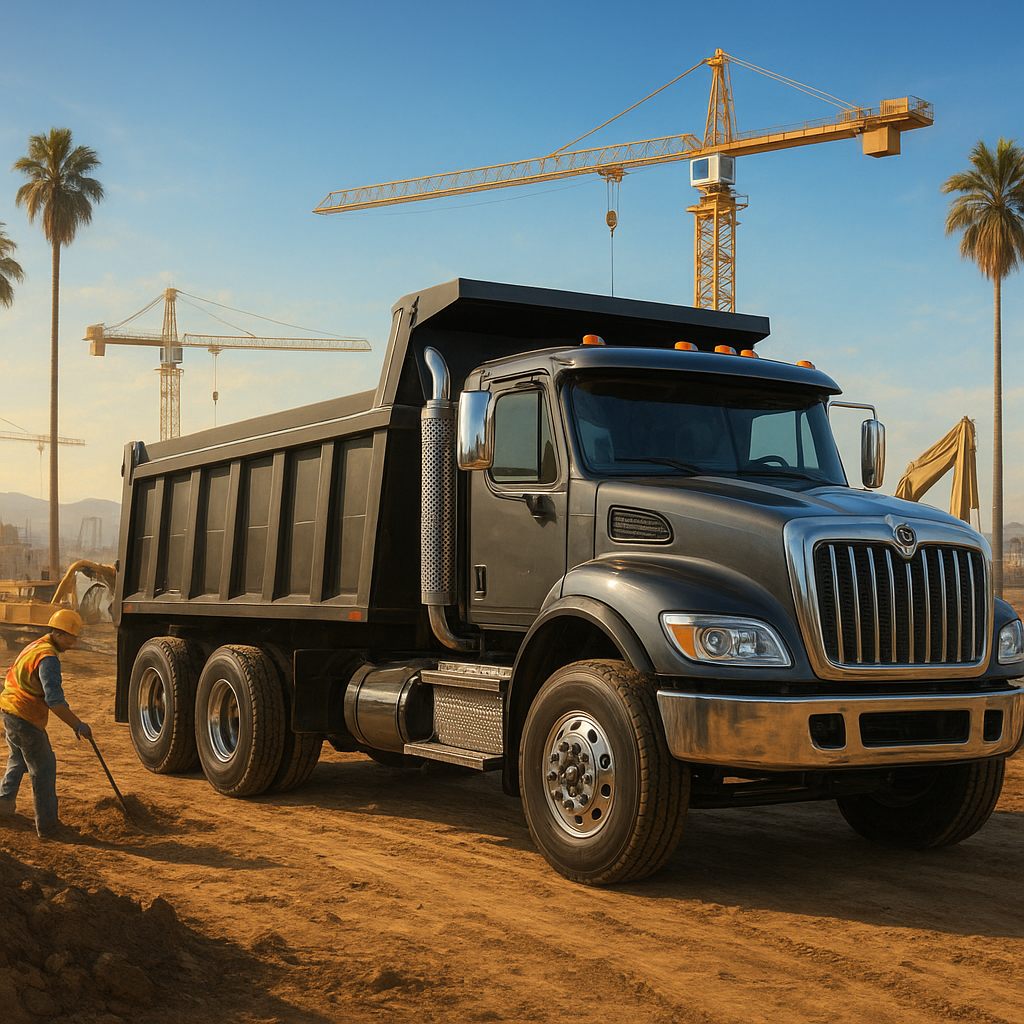
Picture this: a massive construction site in Los Angeles needs 50 loads of gravel by noon. A dump truck owner gets the call, fires up the engine, and hits the road. Behind the scenes, though, there’s a quiet paperwork hero making that trip legal—a surety bond. If you run a dump truck business or arrange construction trucking in California, bonding isn’t just a formality; it’s your ticket to operating without headaches. Let’s walk through what a California dump truck motor carrier does, where a construction trucking services broker fits in, and why bonds like the CA dump truck carrier bond and the broker bond are so important.
What Exactly Is a California Dump Truck Motor Carrier?
In simple terms, a dump truck motor carrier is anyone who uses a dump truck to move property—think sand, asphalt, demolition debris, or heavy equipment—for a fee. California doesn’t take this lightly. The moment you haul someone else’s materials on public roads, you’re a “motor carrier of property.” Your dump truck might be a single-axle tipper or a giant belly dump, but the state sees you as a business that needs proper permits. And yes, that includes independent owner-operators. If you’re getting paid to haul dirt from a grading job, you’re in the carrier club.
These trucks are the lifeblood of the Golden State’s building boom. Road crews can’t function without a steady flow of aggregate, and homebuilders rely on dump runs for everything from foundation spoils to landscape rock. That’s why the state created a clear set of rules to protect the public, shippers, and even other drivers sharing the interstate.
The Unsung Hero: Construction Trucking Services Brokers
Now, let’s flip the coin. Have you ever wondered who connects the contractor with the right dump truck at the right time? Enter the construction trucking services broker. This person doesn’t own a fleet of trucks but acts like a matchmaker. They find available carriers, negotiate rates, and coordinate logistics so a construction site never sits idle waiting for material. Without a good broker, a paving crew might lose half a day staring at an empty parking lot.
Brokers handle the communication, paperwork, and often the payment flow. Because they’re arranging transportation of property, they fall under strict federal and state rules, too. If you’re a broker setting up loads for dump trucks in California, you’re not just a phone jockey; you’re a licensed professional who must carry a bond that says, “I’ll do right by the people I serve.”
Why Bonding Matters More Than You Think
Both motor carriers and brokers have to prove they’re financially responsible before they can legally operate. A surety bond is the simplest way to do that. Think of it as a three-party promise. You—the carrier or broker—agree to follow the rules. The state or federal agency requires it. And a bonding company steps in to guarantee that if you slip up, the harmed party gets paid. It’s not insurance for you; it’s protection for the public and your customers.
California’s bonding requirements are designed to filter out fly-by-night operators. State officials want to know that when a dump truck drops a load of scrap metal on a busy street, there’s a financial backstop. The same goes for brokers who handle thousands of dollars in freight charges. A bond says you’re serious, stable, and accountable.
California Motor Carrier Permit (MCP) Bond – Your $15,000 Safety Net
If you operate a dump truck as a motor carrier of property in California, you’ll almost certainly need a CA dump truck carrier bond, commonly called the MCP bond. This bond is required when you apply for a Motor Carrier Permit from the Department of Motor Vehicles. The standard amount for most for-hire property carriers is $15,000. Yes, fifteen thousand dollars. That number might sound intimidating, but you don’t pay the full amount upfront. You pay a small percentage—usually 1% to 5% of the total bond—depending on your credit and financial strength.
What does the MCP bond cover? It guarantees you’ll comply with state vehicle code provisions, maintain proper insurance, pay any fines or assessments, and take care of obligations that arise from your trucking operations. If a dump truck carrier damages a state-maintained guardrail, doesn’t pay a required fee, or violates a regulation that results in a financial penalty, the bond can step in. It’s essentially a pre-funded pledge that keeps your business in good standing with the DMV.
You’ll often see this bond called a California dump truck bond or simply a motor carrier permit bond. No matter the label, it’s your golden key to receiving and renewing that MCP number. Without it, your dump truck stays parked.
The Broker Bond: A $10,000 Requirement for Construction Trucking Matchmakers
On the broker side, a construction trucking services broker arranging dump truck loads needs a separate bond under federal law. The Federal Motor Carrier Safety Administration (FMCSA) requires property brokers to file a BMC-84 surety bond in the amount of $10,000. Even if you only broker jobs inside California, the federal requirement still applies because you’re arranging interstate-eligible transportation. This bond protects shippers and motor carriers from broker misconduct—like failing to pay a carrier after the job is done or mishandling funds.
Imagine a small dump truck owner delivers three days of material to a bridge project. The broker collected the money from the contractor but vanished without paying the trucker. Scary, right? That’s exactly the scenario the broker bond prevents. The carrier can file a claim against the bond and recover the unpaid freight charges. For brokers, carrying this bond sends a trust signal to every fleet owner who joins your network.
In California, some brokers may also need to look at state-level requirements if they’re handling household goods, but for standard construction materials, the FMCSA $10,000 bond is the big one. Keep in mind, you’ll also need operating authority, a process agent, and of course, solid credit to get bonded.
How Do These Bonds Translate to Real Job Sites?
Let’s put it all together with a quick story. Meet Joe, an owner-operator running a Kenworth dump truck out of Fresno. Joe applies for his Motor Carrier Permit and obtains a $15,000 MCP bond for about $150 a year. Meanwhile, Lisa runs a construction trucking services brokerage in San Bernardino. She posts a $10,000 BMC-84 bond for roughly $100–$300 annually, depending on her credit. A general contractor calls Lisa and says, “I need 200 tons of base rock delivered to a warehouse slab pour by Friday.” Lisa taps Joe, who has the right truck and insurance. Because both are properly bonded, the contractor rests easy knowing there’s recourse if something goes sideways. Joe gets paid on time, Lisa earns her brokerage fee, and the concrete pour stays on schedule. The bonds quietly underpinned the entire transaction.
Without those bonds, the contractor might hesitate to trust an unfamiliar carrier, and carriers might shy away from brokers who aren’t screened. Bonds really are invisible handshakes that make business smoother for everyone.
Steps to Getting Your Dump Truck or Broker Bond Fast
Worried about jumping through hoops? It’s simpler than you think. The bonding process has been streamlined so you can focus on hauling, not paperwork mountain. Here’s what the typical path looks like:
- Identify your bond type. Are you a motor carrier needing a $15,000 California Motor Carrier Permit bond? Or a freight broker who needs a $10,000 BMC-84 bond? Pin down which box you check first.
- Gather your business details. You’ll need your company name, address, DOT or MC number (if you have one), and personal information. For the MCP bond, you’ll often need your DMV carrier identification number.
- Apply through a surety bond provider. Most providers let you complete a quick online form. They’ll run a soft credit check to determine your premium rate. Good credit can get you rates as low as 1% of the bond amount.
- Pay the premium and receive your bond form. Once approved, you’ll get the official bond document. For the MCP bond, you’ll submit it to the DMV along with your permit application. For the broker bond, it gets filed electronically with the FMCSA through a surety bond execution process.
- Keep your bond active. Pay the renewal premium each year. If you let it lapse, your permit or broker authority could be revoked, and that’s a fast track to lost revenue.
What If I’m a Small Operator? Do I Still Need All This?
Absolutely. Whether you run one dump truck or a fleet of 20, California’s MCP bond requirement doesn’t change based on size. Even part-time haulers who take on occasional construction debris jobs must comply. The state’s logic is simple: if you’re using public roads for commercial gain, you need to be financially accountable. The same goes for a one-person brokerage working from a home office. Small doesn’t mean risk-free.
There is a tiny bit of good news. Some motor carriers who operate exclusively in certain limited-mileage agricultural zones might have different rules, but for a typical dump truck working construction sites in urban or suburban California, the $15,000 bond is standard. When in doubt, a quick call to the DMV Motor Carrier Services Unit or a licensed surety agent can clarify your exact obligation.
Can I Use Insurance Instead of a Bond?
A question that pops up all the time. For motor carriers, California allows you to satisfy the financial responsibility requirement with either a surety bond or a certificate of insurance that meets the minimum limits. Many carriers opt for the bond because it’s a straightforward, affordable way to meet the DMV’s demand without tying up cash or increasing their auto liability policy. For brokers, the FMCSA requires the $10,000 bond or a trust fund; a standard insurance policy doesn’t replace it. You’ll often hear the phrase “the bond is king” in trucking circles because it’s a dedicated instrument that regulators prefer.
Keeping Your Business Moving Forward
Compliance might sound like a chore, but think of it as building a foundation for your reputation. Each time you renew your <strong