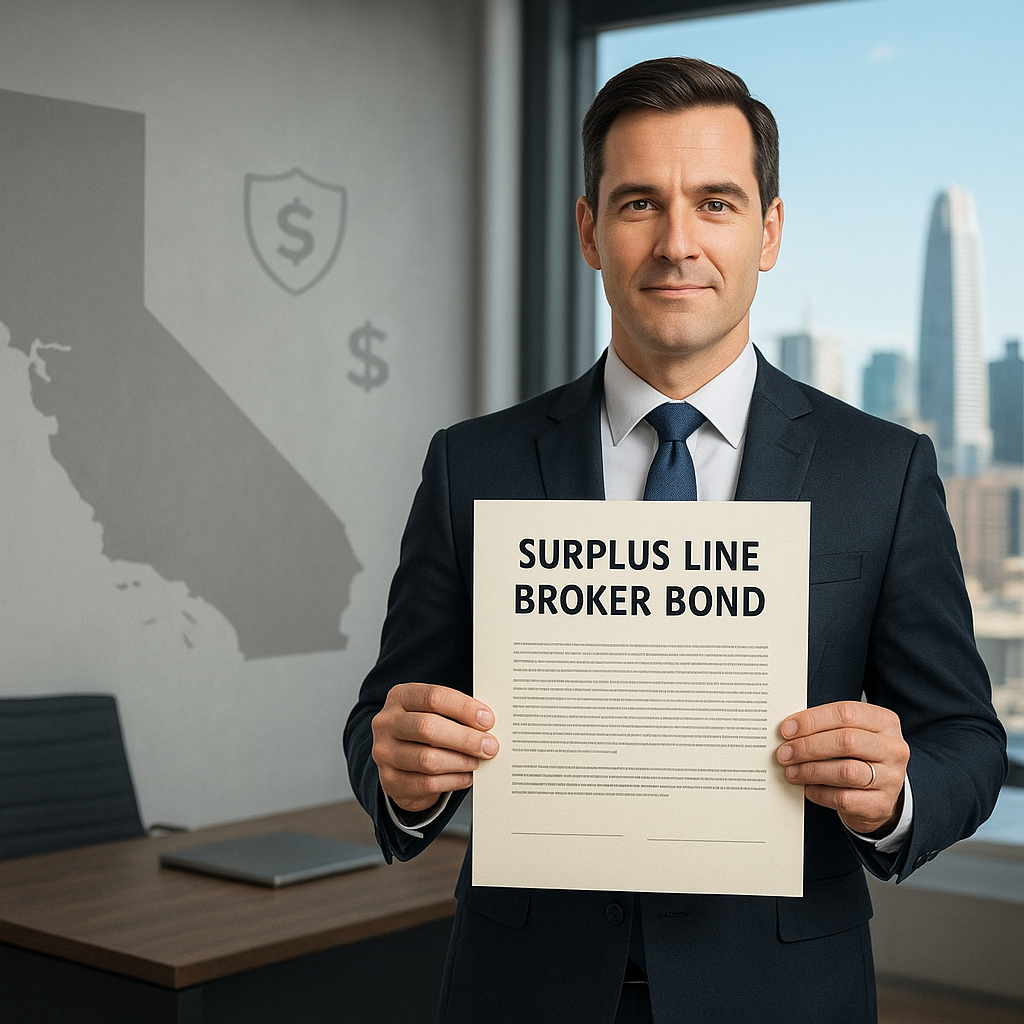
So, you’re diving into the world of surplus lines insurance in California. Maybe you’ve heard the term “California Surplus Line Broker Bond” tossed around, and you’re wondering what it really means for your day-to-day business. Or perhaps you’re a freshly licensed agent trying to check every box on your compliance list. Either way, you’re in the right place.
This guide breaks things down without the confusing jargon. We’ll talk about what the bond is, why the State of California requires it, how much it costs, and how you can get one without pulling your hair out. By the end, you’ll feel much more confident about this essential piece of your licensing puzzle.
What Exactly Is a California Surplus Line Broker Bond?
Let’s start with a simple analogy. Think of the California Surplus Line Broker Bond as a safety net, not for you, but for the people you serve and the state that oversees you. It’s a type of surety bond, which is a three-party agreement. The three parties are:
- You, the Surplus Lines Agent (the Principal): The person who needs to get the bond.
- The State of California (the Obligee): The entity that requires you to have the bond to protect the public.
- The Surety Company (the Surety): The company that backs you financially if something goes wrong.
In plain English, a surplus line broker bond is a promise. It promises that you will follow all the rules and regulations set out in the California Insurance Code. If you accidentally break a rule and it causes someone financial harm, a claim can be made on the bond to make things right. It’s not insurance for your business—it’s protection for your clients and the state.
Why Does the State of California Require This Bond?
You might be thinking, “I’m an honest businessperson. Why do I need to buy a bond?” Great question. The requirement isn’t about distrusting you personally. It’s a long-standing rule to keep the whole surplus lines market fair and trustworthy.
Surplus lines insurance covers unique or high-risk situations that standard carriers won’t touch. Because these policies aren’t backed by the California Insurance Guarantee Association (CIGA), lawmakers created an extra layer of protection. The bond ensures that if a surplus lines broker mishandles premiums, fails to pay a legitimate claim, or violates any part of the licensing law, there’s a financial remedy available.
Simply put, the bond helps maintain the integrity of the state’s insurance marketplace. It reassures California policyholders that even when they’re dealing with non-admitted carriers, a licensed professional with real accountability is at the helm.
Who Needs a CA Surplus Line Broker Bond?
Not every insurance agent in California needs this bond. You need it if you are acting as a Surplus Lines Agent or Surplus Line Broker. This includes individuals and business entities that hold a surplus line broker license from the California Department of Insurance (CDI).
If your day-to-day involves soliciting, negotiating, or placing insurance with non-admitted carriers on behalf of a California insured, then this bond is non-negotiable. You can’t get your license—or keep it active—without one.
How Much Bond Coverage Do You Need?
The required bond amount for a California Surplus Line Broker Bond is fixed at $50,000. This isn’t optional, and it isn’t variable based on your business volume. Every surplus line broker in the state must maintain this amount of coverage.
Now, here’s the part that often causes confusion. The $50,000 is the total amount of the bond, not the amount you pay. You only pay a small percentage of that number, called the bond premium. Let’s talk about that.
What Does a Surplus Lines Agent Bond Actually Cost?
The premium is the annual fee you pay to keep the bond active. For a $50,000 bond, premiums typically range from $250 to $2,500 per year. That’s a wide gap, right? Why the range? The surety company bases your price on your personal credit score and, in some cases, your financial history.
Think of it like a loan application without the monthly payments. A person with excellent credit might pay just 0.5% to 1% of the total bond amount ($250 to $500 a year). Someone with some credit bumps or lower scores may pay closer to the 3% to 5% range. Even if your credit isn’t perfect, there are programs designed to get you bonded. You are not automatically disqualified.
Keep in mind that this is typically a one-year term that you must renew annually. You can often save some money by paying for a two- or three-year term upfront, if the surety offers it.
Step-By-Step: How to Get Your Bond Right Now
Getting bonded isn’t a weeks-long ordeal. In fact, the process is often surprisingly fast. Here’s how the average California surplus line broker gets bonded:
1. Find a Specialized Bond Provider
You don’t want to wander into a random insurance office that primarily handles car and home policies. You need a surety bond agency that understands the State of California’s specific broker requirements. Experienced providers will help you avoid paperwork mistakes that can slow down your license.
2. Complete a Quick Application
You’ll provide basic information about yourself and your business. This usually includes your name, Social Security number (for a personal credit check), business name, address, and your CA surplus line license number if you already have one. The application for a standard bond is simple—often just one page.
3. Receive Your Quote and Pay the Premium
After a soft credit pull (which does not impact your score), the surety will offer you a premium quote. Once you accept the quote and pay the fee, the bond goes into production. Most agencies can issue the bond form the very same day.
4. Sign Your Bond and File It
The completed bond document will arrive electronically, ready for your signature. Once you sign it, you send the original bond to the California Department of Insurance. Your bond provider will usually guide you on exactly where to send it. CDI requires the original signed document with a raised seal, so digital-only filing won’t work here. Make sure your provider mails you a wet-signed copy.
Common Questions That Pop Up All the Time
“Is the bond the same thing as errors and omissions insurance?”
No, and mixing them up is a classic mistake. Your E&O policy protects your business if a client sues you for professional mistakes. The surplus line broker bond protects the state and the public. You must have both. The bond does not replace E&O coverage.
“What happens if someone files a claim against my bond?”
A claim is serious. If the surety company investigates and finds the claim valid, they will pay the harmed party up to the $50,000 limit. However, you are personally responsible for repaying the surety every single penny they paid out. A bond claim is not an insurance claim; it’s effectively a line of credit you must pay back.
“Does my credit score lock me out of bonding?”
It rarely locks you out completely. Sureties do consider credit, but they look at the whole picture. Even agents with challenged credit histories can qualify for a California Surplus Line Broker Bond through special market programs. Don’t assume you can’t get bonded until a professional has reviewed your case.
Smart Tips for Surplus Lines Agents in 2023
Staying compliant is about more than just buying the bond one time. Here are a few habits to build into your practice:
- Set a renewal reminder a month early. A lapse in your bond means a lapse in your license. The state doesn’t send a gentle reminder before suspending your authority to do business.
- Keep your contact details current with CDI. If the Department needs to reach you regarding your bond, an outdated address can cascade into bigger problems.
- Understand your tax filing obligations. The bond ensures regulatory compliance; it doesn’t relieve you of paying surplus line taxes on time.
- Partner with a reliable surety agency. A good bond agent becomes a resource, not just a one-time vendor. They’ll remind you of upcoming renewals and help you if your business structure changes.
Wrapping Up and Moving Forward
The California Surplus Line Broker Bond might seem like just another item on a checklist. But when you strip it down, it’s a crucial trust-building tool. It tells the State of California and every client you work with that you stand behind your professional obligations. Without it, the unique risks you place for people simply wouldn’t have the same safety net.
Now that you know what the bond is, why it matters, and how to get it, you can take action without the confusion. Find a knowledgeable surety provider, get your quote, and tick this requirement off your list. Then, you can focus on what you do best: helping your clients navigate the world of surplus lines coverage. If you still have that nervous, “did I do this right?” feeling, reach out to a bond specialist today. A five-minute conversation is almost always free and can give you total peace of mind.