What Exactly Is a Performance Bond?
Imagine you’re hiring someone to build a custom deck in your backyard. You hand over a hefty deposit, dreaming of summer barbecues, but weeks go by with no progress. Then the contractor stops answering calls. Your money is gone, and you’re left with a half-finished eyesore. Frustrating, right?
Now picture the same scenario, but this time the contractor had to put down a security deposit with a neutral third party before ever picking up a hammer. If they vanish mid-project, that deposit is used to hire someone else to finish the job. That, in a nutshell, is how a performance bond works—and it’s exactly the kind of safety net the City of Flagstaff is now putting in place for local infrastructure projects.
A performance bond is a financial guarantee issued by a surety company. It promises that if a contractor fails to complete a job according to the contract terms, the bond will cover the costs to finish it or compensate the project owner. In Flagstaff’s case, the bond runs to the Municipality, meaning the city itself is the protected party. This isn’t just paperwork—it’s real protection for public dollars and community trust.
Flagstaff’s New Requirement: A Closer Look
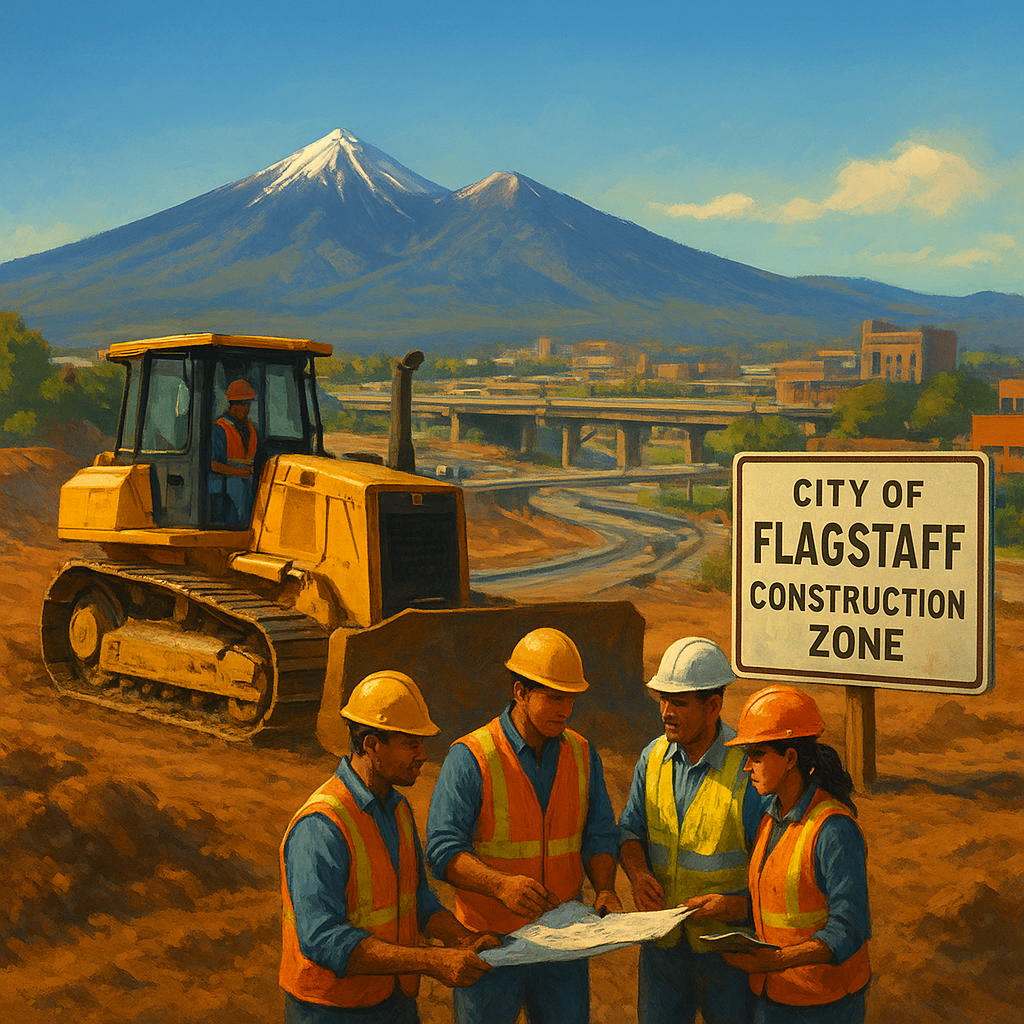
The recent move specifically targets clearing and earthwork contractors who take on municipal projects. Whether it’s grading for a new park, clearing land for a drainage channel, or shaping the terrain for future roads, these ground-level jobs set the stage for everything that follows. If the earthwork is done poorly—or not finished at all—the ripple effects can be disastrous: eroded slopes, flooding hazards, and delayed construction of homes or businesses.
Under this updated policy, any contractor performing such work for the city must secure a Flagstaff AZ improvements performance bond. The bond runs directly to the City of Flagstaff, meaning the municipality can tap into it without a long legal battle if the contractor defaults. This requirement reflects a proactive shift in how the city manages risk and protects its long-term infrastructure investments.
Think of it as a safety belt for city projects. You don’t expect a crash, but you’re incredibly grateful for that belt if something goes wrong.
Why This Matters for Everyday Residents
You might be thinking, “I’m not a contractor or a city planner—why should I care?” The answer lies in how public works get funded. Every time the city breaks ground on a new project, your tax dollars, utility fees, or state-shared revenues are at stake. A performance bond safeguards those funds by ensuring the job gets done, even if the original contractor hits financial trouble, cuts corners, or walks away.
Consider a practical example. Let’s say Flagstaff hires a land-clearing company to prepare a site for a new community retention basin that will prevent neighborhood flooding. The contractor scrapes the topsoil, starts rough grading, then abruptly declares bankruptcy. Without a performance bond, the city would have to scramble, find extra money, and rebid the half-finished work—all while monsoon season approaches. With the bond in place, the surety company steps in. They can either finance the original contractor to finish, hire a replacement, or pay the city to get it done. The basin gets built, homes stay dry, and taxpayers aren’t left footing a surprise bill.
This layer of security touches everything from clearing and earthwork for new fire stations to preparing pads for affordable housing. It’s the kind of quiet protection that keeps neighborhoods functioning smoothly without drama.
Peace of Mind for Planned Growth
Flagstaff is a community that values thoughtful expansion. As the city grows, land must be correctly prepared—erosion controlled, drainage patterns respected, and foundations built on stable ground. An earthwork contractor’s job is more than just moving dirt; it’s about creating the literal foundation for homes, shops, and emergency services. When that work is bonded, the city sends a clear message: quality and completion aren’t optional.
What Contractors Need to Know
If you’re a local earthwork or site-prep contractor, this new rule directly affects how you bid on city jobs. Before you can even pick up a set of plans, you’ll need to obtain a Flagstaff AZ improvements performance bond. Here’s what that looks like in practice:
- Work with a reputable surety broker. They’ll guide you through the bonding process, which typically involves a review of your company’s financial health, experience, and track record.
- Expect a credit check and paperwork. The surety company wants to be confident you can complete the project. Think of it like applying for a mortgage—the better your credentials, the smoother the process.
- Budget for the bond premium. This is usually a small percentage of the total contract amount, often between 0.5% and 3%, depending on your financial strength and project size.
- Remember that bonding can open doors. Securing a bond signals to municipalities that you’re a serious, reliable operator. It can give you a competitive edge over unbonded contractors.
Far from being a hurdle, the bond is a badge of trust. It tells the City of Flagstaff that you stand behind your work and have the financial backing to see the job through.
How the Bond Runs to the Municipality: The City’s Perspective
When a bond “runs to the Municipality,” the city is the beneficiary. This legal arrangement means Flagstaff can make a direct claim if performance standards aren’t met. There’s no need to chase down a contractor’s assets through court or hope their insurance covers the gap. The surety has already vetted the contractor and agreed to pay if things go sideways.
This mechanism is especially valuable for clearing and earthwork contracts, where problems can remain hidden until heavy rains or seasonal freezes expose them. A poorly compacted fill slope might look fine on a sunny day but could slump months later. Because the bond remains in force for a specified maintenance period—often a year or more after completion—the city retains leverage. If defects appear, the bond can fund repairs without reopening public coffers.
In many ways, the bond acts like a promise with teeth. It transforms a handshake agreement into a legally binding safety net.
The Bigger Picture: Trust and Infrastructure
Infrastructure is the backbone of any thriving city, but it’s easy to take for granted. Smooth roads, properly graded parks, and stable building pads don’t happen by magic—they start with skilled earthwork. By requiring a performance bond, Flagstaff is investing in confidence. It’s a way of saying, “We’re building for the long haul, and we’re making sure every dollar spent moves the community forward.”
This approach also aligns with a broader trend across Arizona and the country. Municipalities are increasingly insisting on performance bonds for site development work, recognizing that the lowest bid isn’t always the best deal if the contractor can’t finish the job. A bonded contractor has already passed a financial vetting process, which often correlates with better project outcomes.
Have you ever walked past a construction site and noticed a sign listing the contractor and surety information? That sign is a quiet reassurance that the work is backed by more than a handshake. Now, expect to see those signs pop up even more frequently around Flagstaff as the new rule takes hold.
Common Questions (and Simple Answers)
Does a performance bond increase project costs for the city?
Slightly, but the bond premium is typically factored into the contractor’s bid. In the long run, the city saves money by avoiding stalled projects, legal fees, and costly re-dos. It’s a pay-a-little-now, save-a-lot-later strategy.
Are all clearing and earthwork jobs covered?
The requirement applies to municipal contracts above a certain threshold. Smaller maintenance tasks may be exempt, but any significant site preparation for public works will need the bond that runs to the City of Flagstaff.
What happens if the contractor does everything right?
The bond simply expires once all obligations are met and the maintenance period ends. No claims are made, and everyone walks away happy. It’s like insurance you hope never to use.
Can a homeowner request a similar bond for a private project?
Absolutely. While this specific mandate targets city contracts, homeowners can ask any contractor to provide a performance bond for large residential jobs. It may cost a bit more, but the peace of mind is often worth it.
Wrapping It All Up
The introduction of a Flagstaff AZ improvements performance bond for clearing and earthwork contractors isn’t a bureaucratic detail buried in council minutes—it’s a tangible upgrade to how the city protects its residents and resources. By ensuring that every major dirt-moving project is backed by a bond running to the municipality, Flagstaff is fortifying the literal ground beneath our feet.
Next time you see a grader shaping a new roadbed or an excavator carving out a retention pond, you can feel a little extra confidence. That crew isn’t just working for a paycheck—they’re operating under a promise, backed by a bond, that the job will be done right. And if life throws a curveball, the city has the financial tools to keep building without missing a beat.
It’s a smart, forward-thinking move that makes our growing community stronger, one bonded project at a time.