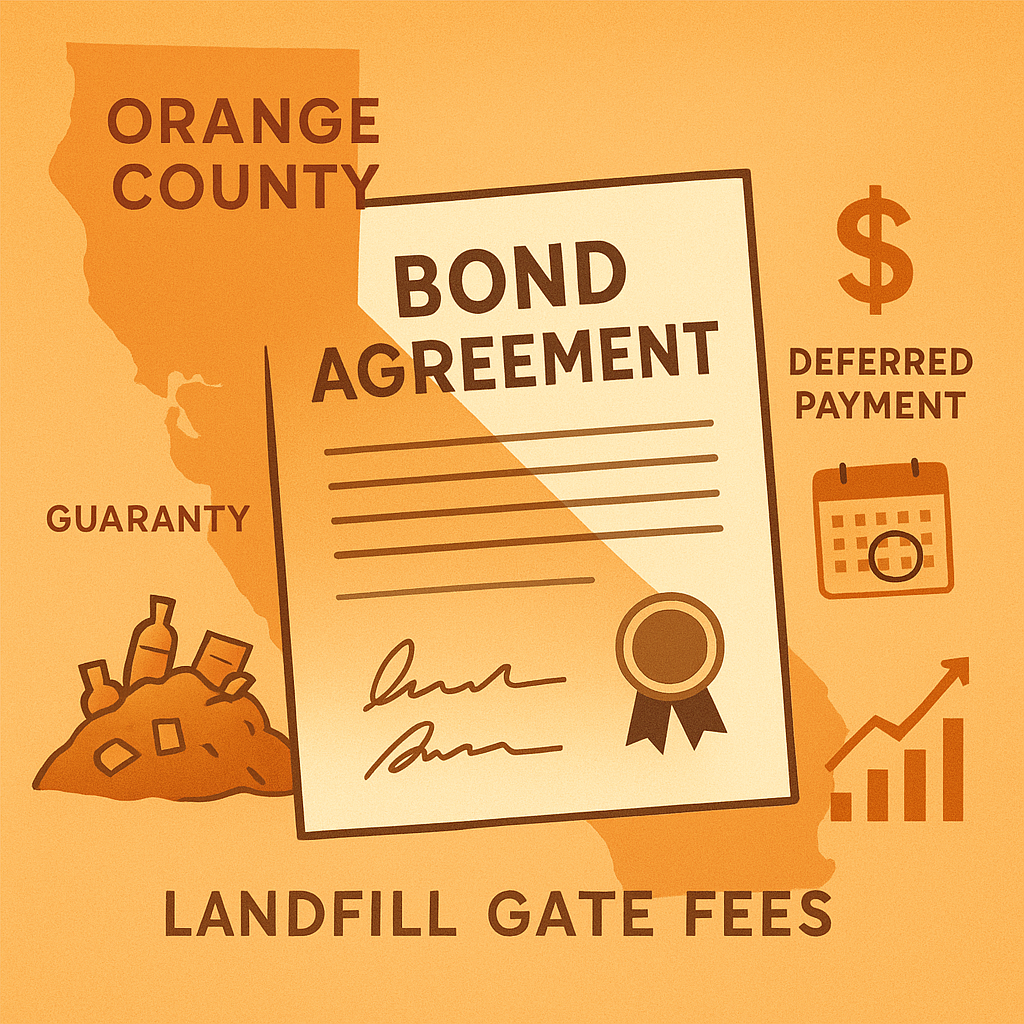
Imagine you run a busy waste hauling business in sunny Orange County. Your trucks are constantly rolling to the landfill, and every time you enter, you’re hit with a gate fee. It’s like stopping at a toll booth over and over again. That cash adds up fast, and managing the daily payments can become a real headache for your bookkeeper. What if you could simply drop off the trash now and handle the bill later? That’s exactly the creative solution Orange County, California, offers through its deferred payment program—and it’s backed by something called a Deferred Payment of Landfill Gate Fees Guaranty Bond. Never heard of it? Don’t worry. Let’s unpack this clever financial tool together.
What Exactly Is a Deferred Payment of Landfill Gate Fees Bond?
Think of this bond as a promise with a safety net. When a waste company or hauler wants to delay paying the dumping fees at an Orange County landfill, the county needs reassurance. They don’t want to chase anyone down for an overdue invoice. So, they require a guaranty bond—a three-party agreement that protects the county’s finances.
Here’s how the pieces fit together:
- The Principal: That’s you, the waste hauler or business who wants to pay later.
- The Obligee: Orange County, the entity that operates the landfill and is owed the gate fees.
- The Surety: The insurance company that guarantees you’ll make good on your payments.
If your company fails to pay the deferred dumping fees, the county can file a claim against the bond. The surety then steps in to cover the loss up to the bond amount. But here’s the thing—a bond isn’t insurance for your business. You’ll still have to repay the surety company every penny they paid out. It’s essentially a line of credit that exists to keep public services like landfills running smoothly.
Why Did Orange County Create This Program?
You might be wondering, “Why not just collect cash or a credit card at the gate like everyone else?” For large-scale haulers, that’s not always practical. Dumping fees can reach thousands of dollars a day. Tying up that much working capital on the spot can choke a company’s cash flow, especially for smaller or minority-owned hauling businesses trying to compete.
Orange County’s innovative approach gives qualifying haulers breathing room. Instead of paying per load, they can set up an account and settle up on a regular billing cycle—weekly, bi-weekly, or monthly. This system keeps the trucks moving faster through the gates, reduces paperwork at the scale house, and lets businesses plan their expenses more effectively. The bond is simply the county’s way of saying, “We trust you’ll pay us later, but we’re also protecting taxpayer resources just in case.”
How Does the Deferred Payment Process Work in Practice?
Let’s walk through a typical scenario. Suppose you operate Orange County Waste Solutions, a fictional but realistic midsize hauling company. Your fleet makes 20 trips to the landfill each day. At $46 per ton, that’s a hefty daily charge.
Step One: Apply for Deferred Payment Privileges
You contact the county’s waste management department and fill out an application. They review your business credit, hauling history, and financial standing. If you check out, they’ll tell you the required bond amount—often based on your estimated monthly landfill usage.
Step Two: Secure the Guaranty Bond
You reach out to a surety bond agency (many operate entirely online). You’ll provide some basic information about your business and finances. The surety then gives you a quote, which is a small percentage of the total bond amount. Once you pay the premium, the bond is issued and filed with Orange County.
Step Three: Dump Now, Pay Later
With the bond in place, your drivers enter the landfill using an account number or an automated tag system. The scale master records the weight, and the gate fee is added to your deferred account balance. At the end of the billing period, you receive an invoice and pay it in full. No cash changes hands at the gate, and your trucks get back on the road faster.
What Are the Real Benefits of Using This Bond?
This isn’t just bureaucratic red tape; it’s a strategic tool. Here’s what it brings to the table for Orange County haulers:
- Improved Cash Flow: You keep your money longer, which can help cover fuel, payroll, and maintenance without pinching pennies.
- Operational Efficiency: Gate lines move quicker when drivers aren’t fumbling with checks or credit cards. Seconds add up to hours over a month.
- Financial Credibility: Carrying a bond signals to the county and potential clients that your business is stable and trustworthy.
- Simplified Accounting: A single monthly statement replaces a mountain of individual gate receipts. Reconciling expenses becomes a breeze.
And let’s not forget the environmental angle. Faster gate processing means less idling, which means fewer emissions. Everyone wins.
Who Needs This Bond in Orange County?
Not every occasional pickup truck user heading to the landfill needs a bond. This program is designed for commercial entities that regularly dispose of large volumes. Common bond principals include:
- Local waste management and recycling companies
- Construction and demolition debris haulers
- Commercial landscaping businesses
- Municipal or county solid waste fleets
- Roll-off container services
If your business model involves recurring trips and you’d like to streamline your payments, the deferred payment program—and the bond that supports it—is probably the right fit.
How Much Does the Bond Cost?
You’ll be happy to learn you don’t have to shell out the full bond amount upfront. The bond amount might be set at $50,000, $100,000, or more, depending on your projected landfill fees. However, your actual cost—the premium—is just a fraction of that. For applicants with good credit, that premium could be as low as 1% to 3% annually.
So, if Orange County requires a $50,000 bond, your out-of-pocket expense might only be $500 to $1,500 for the year. That’s a small price for the flexibility of deferred payments. Factors like your business’s credit score, years in operation, and financial statements will influence the exact rate. Newer businesses or those with credit hiccups may pay slightly more, but bonds are still accessible in most cases.
What Happens If a Payment Is Missed?
This is the part where things get serious. A deferred payment bond is not a “get out of jail free” card. If your company falls behind and the county files a claim, the surety will investigate. If the claim is valid, they’ll pay the county the owed amount. But remember, the surety will then aggressively seek reimbursement from you. You could also lose your bond eligibility, ruining your ability to defer fees in the future. Your credit could take a hit, and your business reputation within the county might suffer. It’s always best to treat the deferred invoices as you would any critical bill—pay them on time, every time.
Is This Bond Specific to Orange County?
While the concept exists elsewhere, each jurisdiction has its own rules. The Orange County Deferred Payment of Landfill Gate Fees Guaranty Bond is tailored to the county’s ordinances and landfill system. Other California counties might have similar programs, but you can’t use the same bond for a different county’s landfill unless that county specifically accepts it. Always check with the local environmental or public works department. Orange County’s innovative twist is how this tool supports local haulers while keeping ratepayer risk extremely low.
How to Get Started Today
Feeling ready to unlock smoother cash flow for your hauling business? The path is simpler than you might imagine. First, confirm your eligibility by contacting the Orange County Waste & Recycling department. They’ll outline the exact bond amount you need. Next, find a reputable surety bond agency that understands California’s waste management bonds. They’ll guide you through the paperwork, provide a fast quote, and often issue the bond within a day or two.
Gone are the days of hauling around cash boxes or worrying about daily gate fees derailing your budget. Orange County’s deferred payment approach—underpinned by this smart bond—harmonizes public service with private enterprise. It’s one of those behind-the-scenes systems that makes the local economy tick quietly, efficiently, and fairly.
So, the next time you see a garbage truck smoothly exiting a landfill scale, you’ll know there’s a good chance a deferred payment bond is hard at work, keeping operations clean, swift, and sustainable.