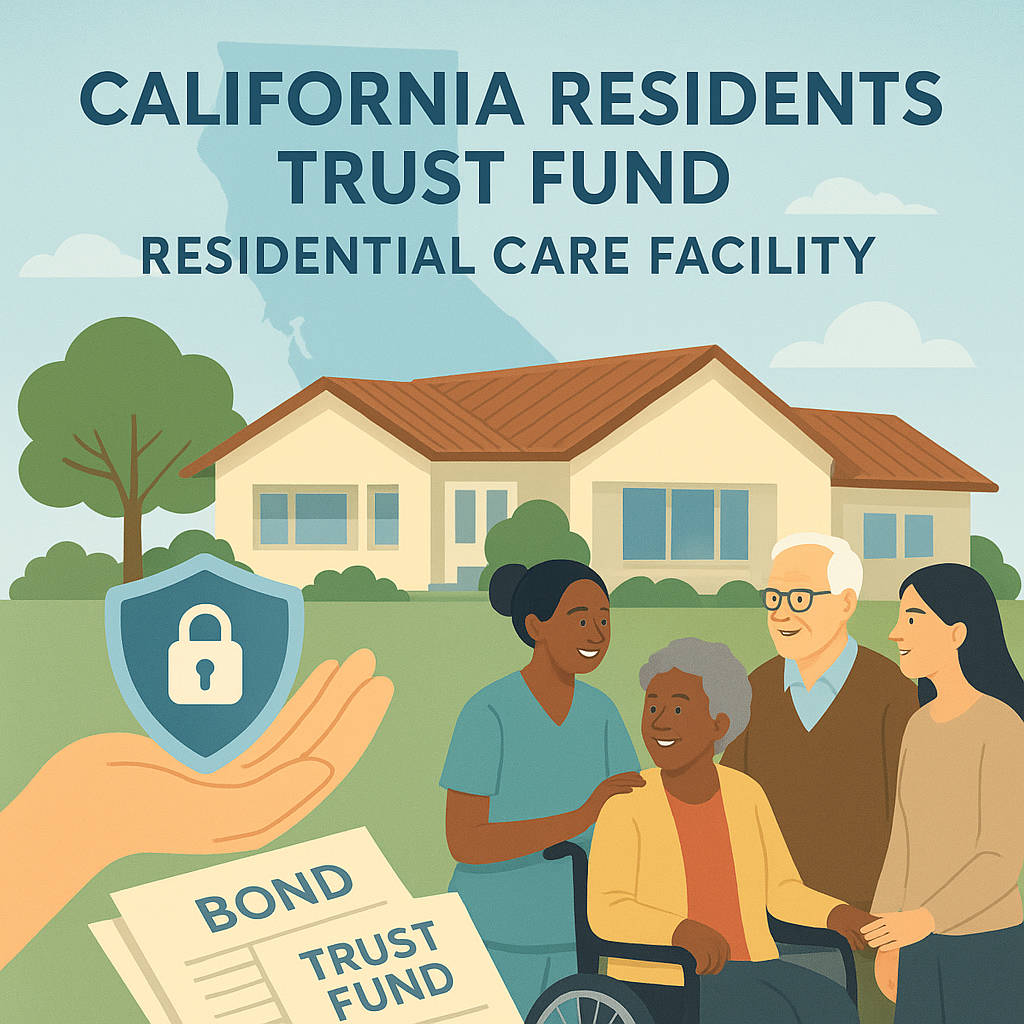
Imagine for a moment that your family decides to move a loved one into a residential care facility. It’s a big step, full of trust and hope. Along with personal belongings, there’s often a small but meaningful amount of money involved — money intended for little comforts, treats, or personal needs. You hand over these funds expecting them to be managed with the same care you would give. But how can you be absolutely sure the money is safe? This is precisely where the California Residents Trust Fund (Residential Care Facility) Bond steps in, acting like a financial safety net.
You might hear different terms floating around — patient funds bond, resident trust bond, or simply California residential care facility bond. They all point toward the same essential protection. In a nutshell, this bond is a legal requirement for many care facilities across the state. Its job is straightforward: to ensure that money belonging to residents is handled honestly and never misused.
If the phrase “surety bond” makes your eyes glaze over, you’re not alone. Let’s strip away the jargon and talk about what this bond really means for everyday people — families, seniors, and the caregivers who look after them.
What Exactly Is a Residents Trust Fund Bond?
Think of this bond as a promise with teeth. When a residential care facility accepts personal funds from residents — often called “patient funds” or “resident trust funds” — the facility is expected to manage that money responsibly. The state of California doesn’t just take their word for it. It asks for a surety bond, which is a three-way agreement between the facility (the principal), the state (the obligee), and a bonding company (the surety).
If the facility misuses the money or breaks the rules, a claim can be filed against the bond. The bonding company then investigates and, if the claim is valid, compensates the residents up to the bond’s limit. Later, the bonding company will seek reimbursement from the facility itself. So, in the end, the facility is held accountable. That’s the beauty of the system.
Why Does California Require This Bond?
California has long been at the forefront of protecting vulnerable populations. Individuals in residential care settings — whether elderly, disabled, or otherwise in need of support — often rely on facility staff to handle small sums of cash. Maybe it’s $50 for a haircut, or $200 kept aside for birthday gifts and outings. Even though these amounts might seem modest, they represent dignity and personal choice. Losing that money can feel like a violation of trust.
By requiring a CA Residents Trust Fund Bond, the state sets a clear expectation: “If you handle other people’s money, you must stand behind your actions.” This bond helps maintain the integrity of the care system. It reassures families that their loved ones won’t be taken advantage of financially. And for facility operators, it serves as a constant reminder to follow proper accounting practices and keep resident funds entirely separate from operational accounts.
Who Needs to Get This Bond?
Not every care facility automatically needs one. The requirement largely applies to licensed residential care facilities for the elderly (RCFEs), also known as assisted living facilities, board and care homes, and similar settings. If an establishment accepts and manages personal funds on behalf of its residents, a bond is typically mandated by the California Department of Social Services (CDSS).
What about smaller homes with just a handful of residents? The rules can be nuanced, but generally speaking, if a facility accepts, retains, or disburses resident funds, the state expects a bond to be in place. It’s less about the size of the facility and more about the nature of the responsibility.
In some cases, facilities might pool resident money into a single trust account. The bond covers that pooled account. Other facilities might hold individual accounts for each resident. Either way, the bond’s protection applies to funds that belong to the people living there, not the business itself.
How Much Coverage Is Required?
Bond amounts aren’t pulled out of thin air. California evaluates the average amount of personal funds held by the facility at any given time. The required bond amount usually needs to at least match that average. For example, if a facility consistently holds around $10,000 in resident trust funds, the state will likely ask for a bond of $10,000 or more.
It’s important to know that the bond amount can also be based on the maximum number of residents the facility is licensed to serve. Sometimes the licensing agency sets a minimum bond amount, adjusted upward as needed. Operators should check directly with the Department of Social Services or their licensing body to confirm the exact figure. Remember, your surety bond professional can also help you calculate the right amount based on the guidance you receive from the state.
A Closer Look at Resident Fund Management
To understand the bond’s value, let’s peek behind the curtain of day-to-day life in a care facility. Picture an elderly woman named Helen. Her daughter deposits $300 in her personal trust account each month. Helen likes to buy fresh flowers, pay for a manicure now and then, and treat herself to a special dessert during community outings. The facility records every deposit, every withdrawal, and keeps those records open for Helen’s family to review.
Now imagine a darker scenario: A staff member facing personal financial trouble starts “borrowing” small amounts from residents’ accounts, planning to pay it back but never doing so. Without a bond, recovering that money could be slow, painful, and sometimes impossible. With a bond in place, the affected residents can file a claim and recover their funds far more smoothly. The bond serves as a dedicated pool of money, ready to make things right.
The Human Side of Financial Protection
When we talk about bonds and regulations, it’s easy to get lost in paperwork and legal terms. But at its heart, this protection is about real people. It’s about a son who can sleep easier knowing his mother’s small savings are safe. It’s about a resident who feels a genuine sense of independence because she can buy a book or a new blouse without jumping through hoops.
Financial abuse in care settings is, unfortunately, underreported. A bonding requirement acts as a deterrent. When employees and operators know that a claim could trigger an investigation and mandatory repayment, the temptation to mishandle funds shrinks dramatically. It’s not just a punitive measure — it’s a preventive one.
Common Misconceptions About the Bond
Let’s clear up a few points that often cause confusion.
- The bond doesn’t protect the facility’s own money. It covers resident funds only. If the facility faces a lawsuit or goes bankrupt, this bond isn’t general liability insurance. Its focus is razor-sharp — safeguarding personal funds entrusted to the facility’s care.
- It’s not the same as malpractice insurance. While both are important, they serve completely different functions. Malpractice insurance deals with negligence in care; the trust fund bond deals exclusively with financial integrity.
- Buying a bond isn’t a one-and-done task. The bond must remain active for as long as the facility manages resident funds. Renewals, usually yearly, are a must. Letting a bond lapse could put a facility’s license at risk.
- The bonding company does background checks. When a facility applies for a bond, the surety company looks into the applicant’s financial history and credit. This screening process adds another layer of security for the public.
How to Obtain a California Residents Trust Fund Bond
If you operate a care facility, the process is more straightforward than you might expect. Start by contacting a surety bond agency that’s familiar with California’s unique requirements. They’ll walk you through these basic steps:
- Confirm the required bond amount with your licensing authority. Don’t guess — get it in writing or at least email confirmation.
- Complete a bond application. You’ll typically provide details about the facility, your business history, and sometimes personal financial information.
- Receive a quote. The premium you pay is a small percentage of the total bond amount, often between 1% and 5%, depending on credit strength and underwriting factors.
- Pay the premium and get the bond form. The surety company will issue the official bond document, which you file with the state as part of your licensing packet.
Once the bond is in place, keep it current. Put renewal dates on your calendar, and be proactive about updating the bond amount if your resident fund totals change significantly.
What Happens If a Claim Is Filed?
Let’s walk through a claim scenario step by step. Suppose a resident’s family notices that money is mysteriously missing from the account. They gather statements, attempt to resolve the matter directly with the facility, but hit a wall. The next move is to file a claim with the bonding company.
The surety company then investigates. They’ll look at account records, receipts, and interview relevant staff. If the evidence supports the claim, the surety pays out up to the bond’s full amount. This isn’t the end of the story for the facility, though. The facility must eventually reimburse the surety for every penny paid out, plus any associated legal or investigation costs. This back-end responsibility keeps operators on their toes.
Tips for Facilities to Avoid Claims
- Keep meticulous, transparent records of all resident fund transactions.
- Never commingle resident money with the facility’s operating funds.
- Offer regular account statements to residents and families.
- Train staff on proper handling and ethics regarding personal funds.
- Conduct periodic internal audits to catch mistakes early.
How Families Can Benefit from Knowing About This Bond
You don’t need to be a facility operator to find this information valuable. If you’re researching care options for a loved one, add a simple question to your list: “Does this facility carry a resident trust fund bond, and for how much?” A reputable facility will answer without hesitation. If they squirm or dodge the question, consider it a red flag.
Knowledge is power. Understanding that California requires this bond gives families a conversation starter. It shows the facility that you’re paying attention, and it opens the door to deeper discussions about how resident funds are handled day to day. Small questions like “How do I access Mom’s account records?” become much easier when the framework of the bond is already in place.
The Bigger Picture: Trust as the Foundation of Care
There’s an invisible infrastructure that makes quality care possible. It’s built from regulations, training, compassion, and yes, financial safeguards like the Residents Trust Fund Bond. When that infrastructure is strong, families can focus on what truly matters — spending meaningful time with their loved ones, sharing laughter, and creating memories. They don’t have to spend that time worrying about whether someone is dipping into the cookie jar.
California’s approach serves as a model for other states, showing that a relatively simple bonding requirement can inject a powerful dose of accountability into a system that cares for some of society’s most cherished members. Every time a facility buys a bond and adheres to its principles, it sends a quiet but clear message: “We take your trust seriously.”
Whether you are an operator striving to do the right thing or a family member exploring care options, taking a few moments to understand this bond bridges the gap between anxious uncertainty and confident peace of mind. In the world of residential care, that peace of mind is priceless.