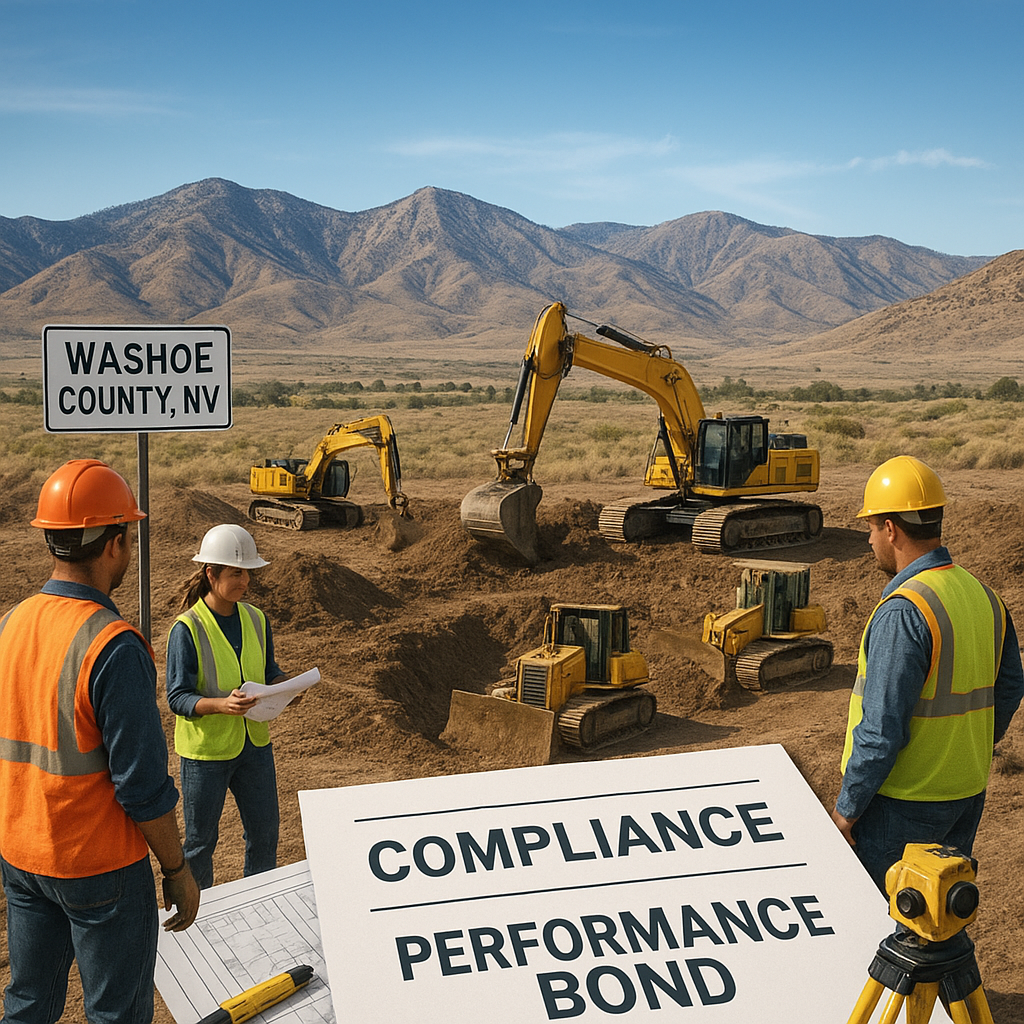
If you’re an excavation contractor working in the Reno-Sparks area or anywhere in the Truckee Meadows, you’ve probably heard the term “performance bond” tossed around. It might sound like something only the big players need, but if you’re pulling permits in Washoe County, this is a conversation you can’t afford to skip. Let’s break it down in plain English—no legal mumbo jumbo, just the facts you need to keep your business moving and protected.
What Exactly Is an Excavation Performance Bond?
Think of a performance bond as a safety net with muscles. It’s a three-party agreement between you (the contractor), your client (often a developer or a government entity), and a surety company. The bond guarantees that you’ll complete the excavation work according to the contract’s terms. If you fail to deliver, the surety steps in to either fix the problem or pay out a set amount. But here’s the kicker: you’re ultimately responsible for repaying the surety. So it’s not insurance for you—it’s protection for the project owner.
For Washoe County, specifically, an excavation performance bond is usually tied to permits involving grading, trenching, earthwork, or any digging that could affect public infrastructure, drainage, or environmental safeguards. The county wants assurance that the job won’t be left half-done, causing erosion, safety hazards, or expensive cleanups for taxpayers.
Why Washoe County Requires These Bonds
You might wonder, “Why does the county care about my private excavation project?” Good question. Washoe County’s stunning landscape comes with a responsibility. The Sierra Nevada foothills, the river corridors, and the desert floor all have unique soil stability, flood control, and ecosystem needs. A badly managed excavation can trigger landslides, contaminate water, or wreck roadways. The county uses performance bonds as a financial guarantee that the work meets their strict codes. If a contractor walks away or does a poor job, the bond money can pay for a qualified crew to do it right.
In many cases, this isn’t optional—it’s baked into the permitting process. Whether you’re excavating for a new housing development in South Meadows or digging a utility trench in Incline Village, your permit might be conditional on securing a bond. Ignoring that requirement can bring your project to a screeching halt with fines, stop-work orders, or even revocation of your contractor’s license.
Who Needs an Excavation Performance Bond in Washoe County?
Not every shovel-hit requires a bond. Typically, the threshold revolves around the scale and potential impact of the excavation. Here are the most common scenarios:
- Subdivision development – When roads, storm drains, and utilities must be installed according to county standards.
- Public right-of-way work – Any excavation that cuts into sidewalks, streets, or alleys under county jurisdiction.
- Grading and fill operations – Projects that move large amounts of earth, especially in hillside areas prone to erosion.
- Floodplain and drainage projects – Work near rivers, creeks, or any area in the Truckee River watershed that could affect water flow.
- Utility trenching – Laying water, sewer, or gas lines where improper backfill could cause pavement failure or utility damage.
Essentially, if your dig could affect public safety or infrastructure, expect the county to ask for a bond. Even smaller contractors doing driveway culverts or retaining wall excavations sometimes get surprised by this requirement. Always check with the Washoe County Community Services Department early in your planning.
How Does a Performance Bond Differ from a License Bond?
This is a common head-scratcher. A license bond is required by the Nevada State Contractors Board just to get or maintain your license—it says you will follow the laws and pay your taxes and suppliers. A performance bond, on the other hand, is project-specific. It covers one job, one set of promises. You might hold a valid state license with a bond, but still need a separate excavation performance bond for a particular Washoe County permit. Think of the license bond as your driver’s license, and the performance bond as a special permit to haul an oversized load.
The Real Cost for Washoe County Contractors
Now, let’s talk numbers because that’s what keeps you in business. The premium you pay for a performance bond is a small percentage of the total bond amount—usually between 1% and 3%. Suppose the county requires a $100,000 bond for your excavation project. Your annual premium might be $1,000 to $3,000, depending on your credit, experience, and the surety’s evaluation. The bonding company will look at your financial statements, work history, and sometimes your personal credit score. If you’re a well-established contractor with clean books, you’ll get the best rates. If you’re new or have a rocky past, it might cost more, or you might need to provide collateral.
Don’t make the mistake of viewing this as a waste of money. The bond cost is often a small fraction of your total contract, and it opens doors to larger, higher-paying jobs. Some savvy contractors even use their bondability as a marketing tool—it tells clients, “I’m financially stable and the county trusts me to get it done.”
Step-by-Step: Getting Bonded for a Washoe County Excavation Project
The process isn’t a mystery, but it does require some legwork. Here’s a straightforward roadmap:
- Review your permit conditions. The county will specify the bond amount and the exact language needed. Do not guess.
- Reach out to a surety bond specialist. Work with an agency that understands Nevada construction bonds—avoid generic online mills. They can explain nuances of Washoe County’s requirements.
- Gather your paperwork. Most sureties will ask for business financials, a resume of past excavation projects, personal financial information for owners, and a copy of the contract or permit details.
- Fill out the application and get a quote. Once you submit, the surety underwrites the risk. If approved, you’ll receive a premium quote and a bond form.
- Sign and file the bond with the county. After paying the premium, you’ll get the actual bond document. Deliver this to the Washoe County permitting office before you start digging. Keep a copy for your records.
Pro tip: Don’t wait until the last minute. Underwriting can take a few days to a couple of weeks. Starting early keeps your project schedule intact.
What Happens If Something Goes Wrong?
Performance bonds exist because plans sometimes unravel. Let’s say you hit unexpected groundwater, your equipment breaks down, or a subcontractor disappears mid-job. If you can’t fulfill the contract, the project owner (or the county) can file a claim against your bond. The surety will investigate. If the claim is valid, the surety has options: they might hire another contractor to finish your work, provide financial compensation, or—in rare cases—partner with you to resolve the issues. But remember, the surety will then come after you for every penny they spent. That’s the “indemnity” agreement you signed. So it’s not a free ride; it protects the project but keeps your feet to the fire.
Building Trust with Your Clients and the Community
Beyond the legal requirement, a performance bond sends a powerful message. It tells homeowners, commercial developers, and county officials that you stand behind your work. In a competitive market like Washoe County, where word-of-mouth and reputation are everything, that credibility is gold. It can be the difference between winning a bid and losing to someone who “sounds cheaper” but offers no guarantees. When you hand over that bond certificate, you’re essentially saying, “My word isn’t just talk—it’s backed by a financial institution.”
Common Misconceptions That Trip Up Contractors
- “I have general liability insurance, so I don’t need a bond.” Insurance protects you from accidents or property damage. A bond guarantees completion. They serve completely different purposes.
- “Only huge national contractors need bonds.” Wrong. Even a one-man excavator doing a small retaining wall in Verdi might need a bond if the county deems the slope critical.
- “If I don’t finish, the bond company just pays and I walk away.” Nope. The indemnity agreement means you owe them back. Avoiding claims should be your top priority.
- “The bond covers me if the client doesn’t pay.” It’s not a payment bond. That’s a separate product. This bond only guarantees your performance to the obligee. Make sure your contract has payment terms clearly spelled out.
Washoe County’s Unique Landscape and Regulatory Hints
The Truckee Meadows present challenges you won’t find in Las Vegas or Elko. Decomposed granite soils, high groundwater in some basins, and strict hillside development rules mean the county is particularly vigilant. The Community Services Department may require a performance bond as part of your Erosion and Sediment Control Plan or your Grading Permit. They care about long-term stability because a failed cut slope can threaten homes and roads for decades. If your project is in the Tahoe Basin part of the county, additional TRPA (Tahoe Regional Planning Agency) regulations might come into play, and bonds are often layered on top.
How to Reduce Your Bond Costs Over Time
If you plan ahead, you can make bonding cheaper and smoother. Consider these habits:
- Maintain excellent credit. Good personal and business credit scores signal low risk.
- Build a strong work-in-progress report. Show completed projects on time and on budget, with references.
- Keep detailed financial records. CPA-prepared statements are better than shoebox receipts.
- Start small. Successfully bond a few smaller Washoe County jobs before chasing a multi-million-dollar excavation. A track record earns trust with sureties.
- Partner with a local surety agent. They understand the local market and can fight for better terms when your data supports it.
Questions You Might Be Asking Yourself
Does my Washoe County permit always require a performance bond? Not always, but any permit that disturbs soil on a significant scale or near public infrastructure will likely trigger it. Ask the county during your pre-application meeting.
Can I use cash instead of a bond? In some cases, the county may accept a cash deposit or a letter of credit as an alternative. However, tying up cash can strain your working capital. A bond frees up that cash for equipment, materials, and payroll.
What if my client is a private homeowner, not the county? The bond requirement typically comes from the county as a permit condition, not from your private client. Even if a homeowner hires you to dig a big foundation, the building department might still demand a bond to protect adjacent roads or slopes.
How long does the bond last? It remains in force until the county formally releases it—usually after a final inspection and a waiting period to ensure no defects appear. Don’t forget to request that release certificate once work is accepted; otherwise, the bond might hang over your head.
Partnering with the Right Surety Team
Not all bond agents are created equal. Look for a firm that specializes in construction surety bonds and has a track record with Nevada municipalities. They’ll know Washoe County’s form preferences, the typical bond amounts for different excavation types, and how to present your application to tame underwriters. A good agent becomes a partner, helping you scale your business while keeping compliance simple.
Wrapping It Up: Your Action Plan
An excavation performance bond for Washoe County isn’t a bureaucratic nuisance—it’s a tool that protects everyone involved and demonstrates your professionalism. By understanding what triggers the requirement, preparing your financial story, and working with a knowledgeable surety agent, you can turn this obligation into a competitive edge. Next time you bid a job, you won’t just promise the earth; you’ll back it up with a guarantee that resonates with clients and regulators alike. So dig deep, stay bonded, and keep shaping our beautiful Nevada landscape responsibly.