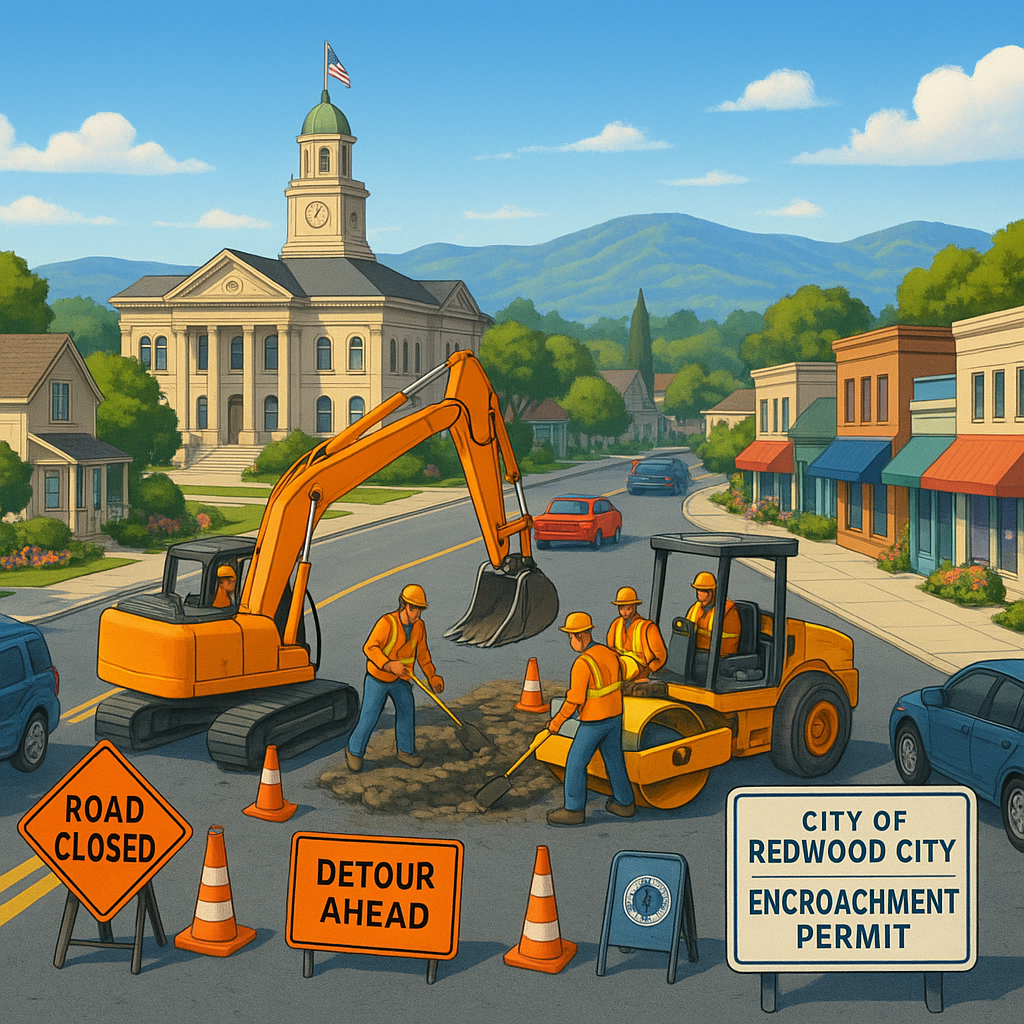
So, you’re planning a project in Redwood City that might nudge into public property. Maybe you’re building a new driveway, installing a fence that sits close to the sidewalk, or digging underground for utility lines. If your work will touch the city’s right-of-way—like streets, sidewalks, or even the strip of grass between the curb and your property line—chances are you’ll hear about something called an encroachment permit bond. It sounds official, maybe even a bit intimidating, but it’s really just a safety net. Let’s walk through what it is, why the City of Redwood, California asks for it, and how you can check this box without the headache.
What Exactly Is an Encroachment Permit Bond?
Think of an encroachment permit bond as a promise backed by money. When you apply for an encroachment permit, Redwood City is giving you permission to use or alter land that belongs to the public. But the city needs to know that you’ll put everything back the way it should be. The bond is a three-party agreement between you (the contractor or property owner), the City of Redwood, and a surety company. If you don’t complete the work correctly, or if you damage city property and walk away, the bond steps in to cover the cost of fixing it.
In simpler terms, it’s like a security deposit you don’t have to pay upfront in full. Instead of handing over thousands of dollars in cash, you buy a bond for a fraction of that amount. The city gets the protection it needs, and you keep more cash free for your actual project.
Why Does Redwood City Require This Bond?
You might wonder, why can’t I just promise to do a good job? Cities like Redwood, California deal with hundreds of encroachment projects every year—sidewalk repairs, sewer lateral replacements, landscaping that spills over curbs, and even cafe tables on the sidewalk. Not every project goes smoothly. A contractor might dig a trench and leave the pavement patch bumpy and uneven. A homeowner might install an irrigation system that erodes the public shoulder. The city needs a reliable way to fix problems without chasing down individuals or waiting for a court case.
The encroachment permit bond ensures that public safety and infrastructure come first. It reassures the city that even if something unexpected happens, funds are set aside to restore streets, sidewalks, and utilities to their original condition. In the end, this protects everyone—neighbors, pedestrians, drivers, and you, because a properly finished job avoids future liability headaches.
Who Needs a Redwood City Encroachment Permit Bond?
Not every small fix will trigger the bond requirement, but many common projects do. You’ll likely need an encroachment permit bond if your work involves:
- Constructing or widening a driveway that crosses a public sidewalk.
- Installing or repairing underground utilities like water, sewer, or gas lines within the city right-of-way.
- Placing a fence, wall, or mailbox post on or near a public easement.
- Performing sidewalk or curb repairs adjacent to your property.
- Temporary use of the street or sidewalk for a dumpster, scaffolding, or construction staging.
- Landscaping improvements that spill into the parkway strip.
If any of these sound like your upcoming project, it’s smart to reach out to the Redwood City Public Works Department early. They’ll let you know exactly what’s required. Often, the bond amount will depend on the scope and potential impact of your work.
How Does the Bond Work, Step by Step?
Understanding the mechanics can turn a blurry requirement into clear steps. Here’s how the process usually unfolds for an encroachment permit bond in Redwood City:
1. You Apply for the Encroachment Permit
First, you submit your permit application to the city. That might include site plans, engineering drawings, and details about the work. The city reviews everything and determines if a bond is necessary—and if so, how much coverage you need. Typical bond amounts might start at a few thousand dollars for smaller jobs and go up for major utility work.
2. You Purchase the Bond from a Surety Provider
Once you know the required amount, you contact a surety bond company or an insurance agent that specializes in bonds. They’ll ask a few basic questions: What kind of project is this? How long will it last? Your credit profile may also come into play, because the surety wants to feel confident you’ll complete the work responsibly. The good news? For most encroachment bonds, the premium is quite affordable—often just 1% to 5% of the total bond amount, depending on your qualifications.
3. You File the Bond with the City
After you buy the bond, you’ll receive a bond form that needs to be delivered to Redwood City. This is the official proof that you’ve secured the financial guarantee. Keep a copy for your records, because the bond remains in effect until the city releases it.
4. You Complete the Work—and the City Inspects It
Do your project right, following all of Redwood City’s codes and standards. When the work is finished, a city inspector will come out to check everything. If the job meets the requirements and there’s no damage to public property, the city will issue a release or acceptance. From that point, the bond obligation ends, and you’re free and clear.
How Much Does a Redwood City Encroachment Permit Bond Cost?
Here’s where many people breathe a sigh of relief. You don’t pay the full bond amount. You pay only the premium. For example, if the city requires a $10,000 encroachment permit bond, your out-of-pocket cost might range from $100 to $500, depending on factors like your personal credit and the bond company’s rates. For larger bonds or those associated with more complex utility work, premiums can scale accordingly, but they remain a small fraction of the coverage.
What impacts your price? Your credit score is the biggest factor for smaller bonds. Strong credit often unlocks the lowest rates. The bond term also matters—most encroachment bonds stay in place until the city signs off, which could be 6 to 18 months. Some surety providers may offer a flat rate regardless of the timeline, while others factor in the duration. It’s always a good idea to compare quotes from a couple of bond specialists to make sure you’re getting a fair deal.
What Happens If Something Goes Wrong?
Let’s address the elephant in the room. What if the work damages a city sidewalk, or the contractor disappears mid-project and leaves an open trench? That’s precisely when the bond springs into action. The City of Redwood can file a claim against the bond to recover the cost of repairs. The surety company investigates, and if the claim is valid, they pay out to the city up to the full bond amount. Then, the surety will seek reimbursement from you. So while the bond protects the public, it’s not insurance for your mistakes—you’re ultimately on the hook for making things right.
Think of the bond as a safety net for the community, not a shield for poor workmanship. Doing the job correctly from day one is always the most cost-effective path.
Common Pitfalls and How to Avoid Them
Walking through the encroachment permit process in Redwood City doesn’t have to be complicated. Still, a few missteps trip people up. Here’s how to steer clear:
- Assuming you don’t need a permit: Even small projects can trigger the requirement. When in doubt, call the city’s Public Works department and describe your plans. They’re there to help, not to surprise you later.
- Waiting until the last minute: Bonds can take a day or two to process, especially if you need to provide additional information. Lock in your bond well before your scheduled start date so you don’t lose precious time.
- Not keeping good records: Save all paperwork, including your permit application, approved plans, bond documents, and inspection results. If any questions arise down the road, you’ll have everything handy.
- Choosing the cheapest bond without checking the surety’s reputation: Make sure the surety company is licensed in California and has a solid track record. The city may reject bonds from unknown or unlicensed providers.
- Forgetting about the release: Once work passes inspection, follow up to confirm the bond is officially released. This ensures you won’t pay ongoing premiums or have an open obligation lingering.
Real-Life Scenarios: When an Encroachment Bond Saves the Day
Let’s put this into a story you might relate to. A homeowner on a quiet Redwood City street wants to widen their driveway to fit two cars. A portion of the new concrete apron crosses the public sidewalk. The city issues a permit and requires a $5,000 encroachment permit bond. The contractor tears out a section of the sidewalk during the pour but forgets to properly compact the base before pouring new concrete. Six months later, the sidewalk cracks and creates a tripping hazard. The city files a claim on the bond, gets the sidewalk repaired quickly, and the homeowner isn’t stuck negotiating with a vanished contractor. The bond worked exactly as intended.
Now imagine a plumbing company trenching across a residential street to connect a new sewer line. They restore the asphalt but leave a noticeable dip that collects rainwater and ice. Without a bond, the city might have to chase the company through legal channels. With a bond in place, Redwood City uses the funds to mill and overlay the trench area, restoring a smooth, safe driving surface. Public safety wins, and the permitting process maintains its integrity.
Your Next Steps: Making the Bond Part of a Smooth Project
Ready to move forward? Start by visiting the Redwood City website or contacting the Engineering Division. Ask specifically about encroachment permit bond requirements for your type of project. They’ll give you the exact bond amount and any special conditions. Then, reach out to a reputable surety bond agency. Many can issue the bond within 24 hours once they have your application and credit review.
Remember, this bond isn’t just red tape—it’s a cooperative tool that lets private improvements happen while keeping public spaces safe and well-maintained. By understanding the requirements upfront, you’ll avoid delays, keep your project on track, and walk away with a finished result you can be proud of. And isn’t that the kind of smooth renovation story anyone would want to tell?