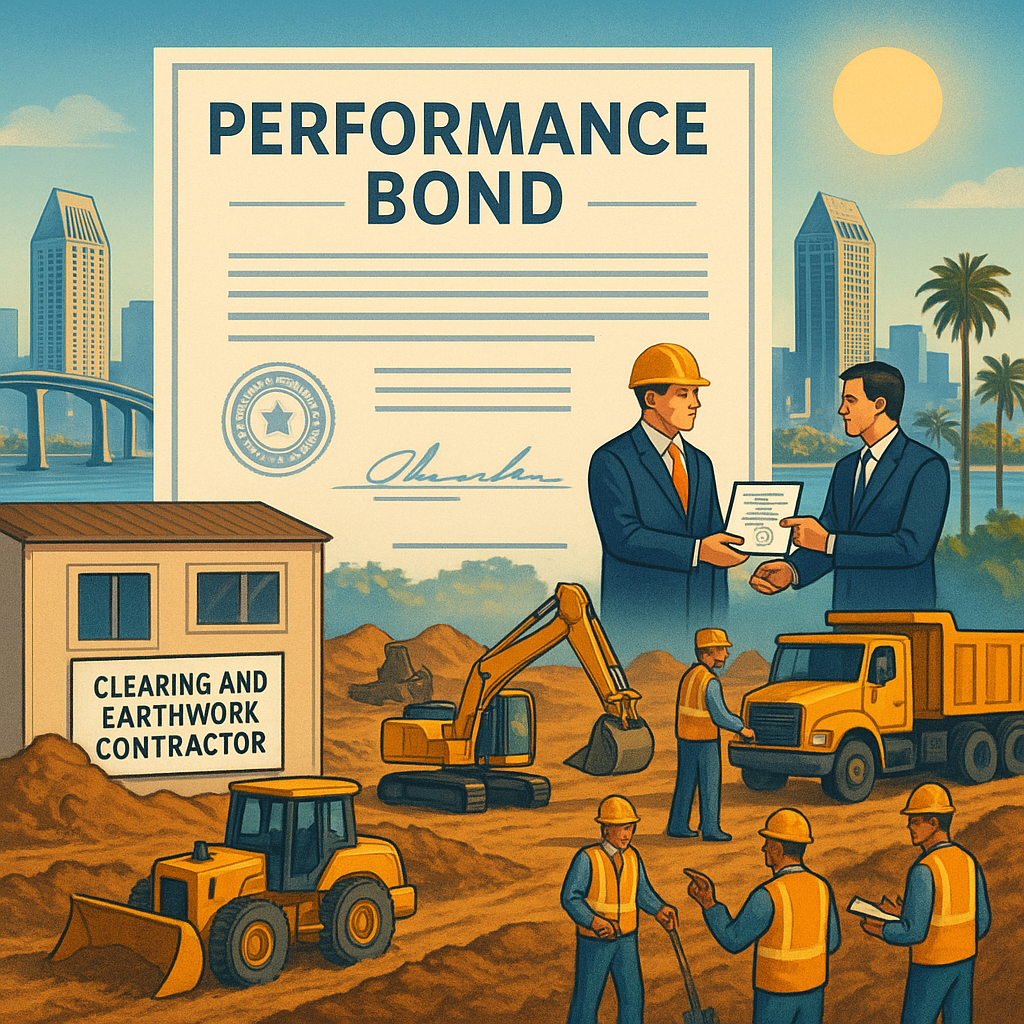
Have you ever driven past a construction site where the earth is being moved, hillsides are being reshaped, or trenches are being dug for future utilities? These projects don’t just happen overnight. Behind the scenes, contractors have to follow strict rules set by the City of San Diego, and one of the most important requirements is something called a grading or public improvements performance bond. If you’re a contractor, a developer, or even a curious homeowner wondering how the city protects its land and infrastructure, this guide is for you. We’ll break down exactly what these bonds are, why they matter, and how they keep public projects on track—without any confusing legal jargon.
What Is a San Diego Grading and Public Improvements Performance Bond?
Imagine you’re hiring a builder to construct a large retaining wall on your property. You’d probably want some kind of promise that if the work isn’t finished or is done poorly, you won’t be left with a costly mess. The City of San Diego asks for the same kind of promise, but on a much larger scale. A grading and public improvements performance bond is a financial guarantee that a clearing, earthwork, or grading contractor will complete a project according to the city’s codes, permits, and approved plans.
These bonds run to the municipality—meaning the City of San Diego is the party protected by the bond. If a contractor fails to finish the job, the city can use the bond money to hire someone else to complete the work or fix any damage to public property. Think of it like a security deposit for the entire project, but instead of a landlord holding your deposit, an insurance company backs the promise.
Why Does the City of San Diego Require These Bonds?
San Diego’s landscape is unique—rolling hills, canyons, and coastal bluffs. When contractors cut into slopes or move massive amounts of soil, it can affect drainage, roadways, and even the stability of surrounding properties. The city isn’t just being picky; they’re protecting everyone’s safety and the long-term integrity of public infrastructure.
Grading projects often tie into public improvements like curbs, gutters, sidewalks, sewers, and storm drains. If a contractor starts a subdivision and leaves the streets half-paved or the drainage channels unfinished, the community suffers. The performance bond ensures the city has a financial backup plan. In short, the bond keeps contractors accountable from the first scoop of dirt to the final inspection.
How Does a Grading Performance Bond Actually Work?
Let’s simplify the whole process with three key players:
- The Obligee: This is the City of San Diego. They require the bond and receive the protection.
- The Principal: That’s you, the contractor. You’re the one who must purchase the bond and fulfill the project obligations.
- The Surety: The insurance company that issues the bond and guarantees payment if you default.
Here’s a practical example. Suppose a contractor wins a bid to clear a large site and install underground utilities for a new park. The city issues a grading permit, and as part of that permit, the contractor must secure a performance bond. If the contractor walks away halfway through, leaving exposed trenches and unstable slopes, the city files a claim with the surety company. After investigating, the surety steps in—either providing the funds needed to hire a replacement contractor or, in some cases, arranging for the work to be completed. This all happens without taxpayer money being drained by an unfinished eyesore.
It’s a clever system that turns a promise into something with real teeth. And while no contractor wants a claim on their record, knowing the safety net is there gives the city and the public peace of mind.
Who Needs This Type of Bond in San Diego?
Not every landscaping project requires a bond, but many land-disturbing activities do. Generally, you’ll need a City of San Diego grading/public improvements performance bond if you’re a:
- Clearing and earthwork contractor working on new developments
- Grading contractor handling mass excavation or slope stabilization
- Subdivision developer installing public streets, water lines, or sewers
- Contractor building retention basins or stormwater management systems
- Any professional engaged in work that modifies ground surfaces and connects to city infrastructure
Even smaller projects that appear straightforward, like building a single-family home on a steep lot, can trigger grading permit conditions that include a bonding requirement. The city’s Development Services Department typically spells out the exact bonding amount and specifics when you pull your permit. If you’re unsure, it’s always a good idea to ask upfront. Finding out you need a bond after you’ve already mobilized equipment can cause delays no one wants.
Common Misunderstandings About Grading Bonds
Let’s clear up a few myths that often trip people up.
“Isn’t this just regular insurance for my business?”
Not exactly. General liability insurance protects you and your business from accidents or property damage. A performance bond protects the city if you don’t fulfill your contract. It’s a guarantee of completion, not a coverage policy for your day-to-day risks.
“The bond money is mine to use for the project.”
No. The bond is a line of credit in the city’s favor. You can’t draw from it to pay for materials or labor. If you complete the job correctly, the bond simply expires and is no longer needed.
“Getting a bond means I have to put up all the cash myself.”
You won’t need to hand over a suitcase of money. Surety companies evaluate your credit, experience, and financial strength before issuing a bond. If you’re qualified, you pay a premium—usually a small percentage of the total bond amount. The cost is similar to an insurance premium.
What Influences the Cost of a Grading Bond?
There’s no one-size-fits-all price tag. The premium you pay depends on several factors, including:
- The total bond amount required by the city. This is often based on the estimated cost of the public improvements.
- Your personal and business credit score. A strong credit profile signals reliability and can lower your rate.
- Your industry experience and track record. Contractors who have completed similar projects successfully pose less risk.
- The surety company’s underwriting guidelines. Each surety has its own appetite for risk.
For well-qualified contractors, premiums may range from 1% to 3% of the bond amount. So if the city requires a $100,000 bond, you might pay between $1,000 and $3,000 per year. It’s a small price for the ability to break ground on a profitable public works project.
How to Secure Your San Diego Grading Bond Smoothly
You don’t have to navigate this alone. Many contractors work with a specialized bond agency that understands municipal requirements. The process typically flows like this:
First, you’ll receive the exact bond form and amount from the City of San Diego or its Development Services Department. Don’t guess—always get the official paperwork. Next, you’ll complete an application with a surety company or a bond broker. They’ll ask about your finances, the project scope, and your past work. Once approved, you pay the premium, sign the documents, and the bond is issued. Then you file the bond with the city as part of your permit or contract package.
Pro tip: Start the bonding process early. Even if you have great credit, waiting until the last minute can add stress to an already busy project launch. Building a relationship with a knowledgeable bond professional can also help you get better rates over time.
What Happens if a Claim Is Filed Against Your Bond?
Nobody likes to think about claims, but understanding the mechanism helps you appreciate why the system works. If the city deems your performance unsatisfactory—maybe you abandoned the site or didn’t correct code violations—they’ll notify the surety. The surety then investigates. If the claim is valid, the surety pays the city up to the full bond amount.
But here’s the part many new contractors miss: you are still responsible for reimbursing the surety for every penny they pay out. A bond isn’t a gift; it’s a financial guarantee backed by your promise to repay. That’s why maintaining good project management and open communication with city inspectors is crucial. Addressing small issues early can prevent a full-blown bond claim later.
How Grading Bonds Benefit the Local Community
It’s easy to see bonds as just another regulatory hoop to jump through, but they serve a larger purpose. When a contractor is bonded, neighbors can feel confident that torn-up streets will be repaved and that erosion won’t threaten nearby homes. The bond helps ensure that public improvements—things everyone uses—are built to last. It also levels the playing field for reputable contractors. Unscrupulous operators who might underbid a job and then disappear face a real barrier because they often can’t secure a bond. In that sense, the bonding requirement upholds quality across San Diego’s construction industry.
What to Look for in a Bond Provider
Choosing the right partner makes a difference. Look for a provider who offers:
- Direct access to surety markets that understand municipal bonds
- Clear explanations without industry jargon
- Fast turnaround times so your permits don’t stall
- Guidance for contractors who might be new to bonding
Whether you’re a seasoned earthwork contractor or you’re tackling your first public improvements project, having a responsive and experienced bond team behind you can turn a complicated requirement into a simple checkbox. And that means more time focusing on what you do best: moving dirt safely and building the infrastructure that keeps San Diego growing.
Moving Forward with Confidence
So, what’s your next step? If you’re preparing to bid on a San Diego project or you’ve been told your permit requires a grading performance bond, take a deep breath. This isn’t a hurdle designed to frustrate you. It’s a safeguard that protects your business reputation, the city’s infrastructure, and the trust of the community. Start by collecting the details from your permit package, then reach out to a bonding professional who can walk you through the specifics.
San Diego’s construction world moves quickly, and being prepared with the right bond in hand means you won’t miss a beat. Plus, when you drive past a completed project years later, you’ll know your commitment—backed by that bond—helped shape the city in a lasting way.