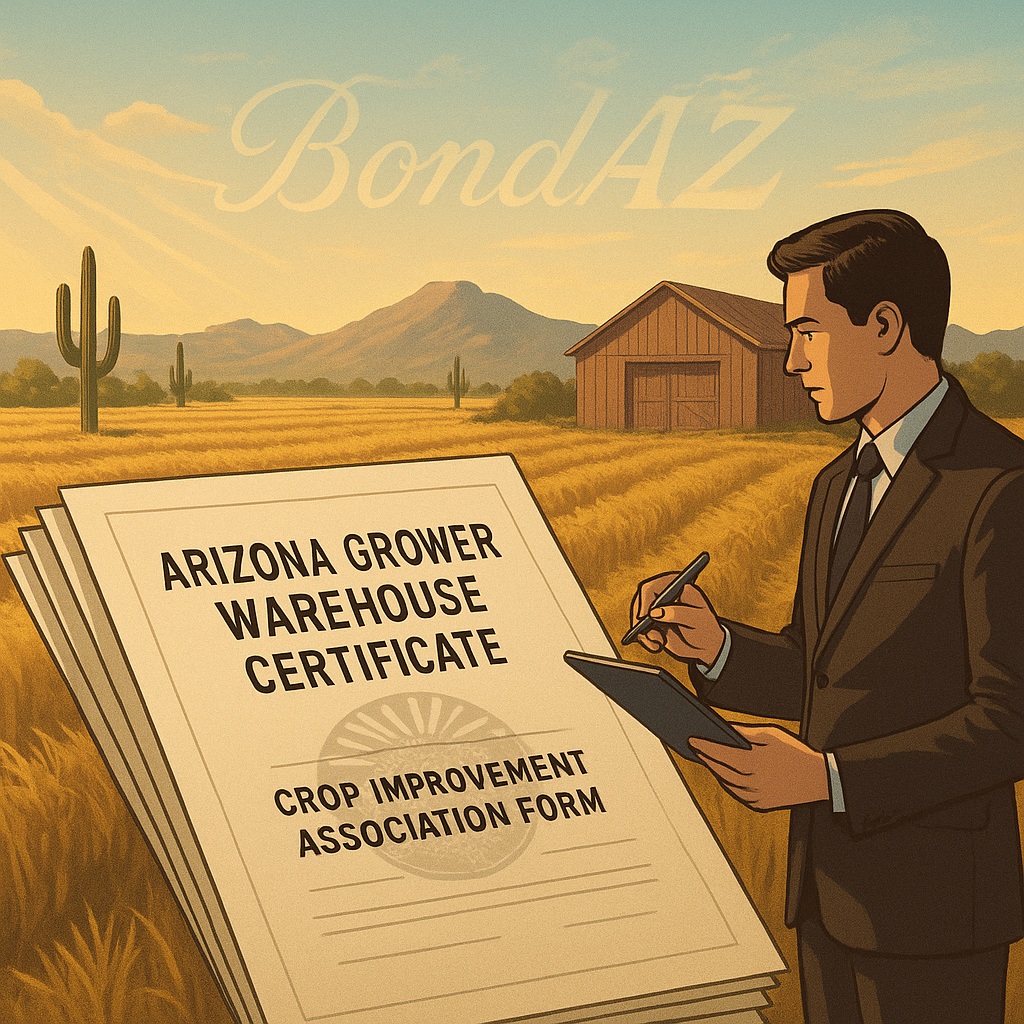
Have you ever wondered how farmers protect their hard-earned harvest when it leaves their hands? Imagine you’ve spent months nurturing a crop, only to deliver it to a warehouse and then worry whether it’s truly safe. That’s where a special kind of financial promise steps in. In Arizona, that promise often comes in the form of a Grower Warehouse Certificate Bond. While the name might sound like a mouthful, the idea behind it is straightforward—and deeply important for anyone in agriculture.
What Exactly Is an Arizona Grower Warehouse Certificate Bond?
Think of this bond as a safety net made of paper and trust. It’s not an insurance policy for the warehouse owner. Instead, it’s a three-party agreement that protects the farmers and growers who store their products. The bond says, “If the warehouse doesn’t follow the rules or fails to pay what it owes, there’s money set aside to make things right.”
In technical terms, it’s a surety bond required for certain agricultural warehouses operating in Arizona. The bond is often associated with the Arizona Crop Improvement Association form. That might sound a bit bureaucratic, but it simply means the bond follows a standard format that satisfies state regulations. Whether you’re dealing with seeds, grain, or even hay, this bond helps create a fair marketplace.
Who Needs This Bond and Why?
Not every business that stores a few bags of seed needs to be bonded. The requirement typically applies to public grain warehouses, seed warehousemen, and sometimes hay brokers who operate in Arizona. If a facility receives agricultural products for storage, conditioning, or resale on behalf of growers, the state wants to ensure those growers aren’t left empty-handed.
Imagine you’re a seed grower placing your entire year’s production into a warehouse. The warehouse promises to pay you after the seed is cleaned, treated, and sold. But what if the warehouse goes out of business in the middle of the deal? Without a bond, you might stand in a long line of creditors, hoping to recover something. With the bond, you have a direct financial guarantee that can cover your loss up to the bond amount.
Hay brokers, too, can fall under similar requirements. They often hold large volumes of hay that farmers entrust to them for sale or storage. A bond reassures the farmer that the broker will handle the hay responsibly and account for the proceeds honestly.
The Role of the Arizona Crop Improvement Association
You might see the name “Arizona Crop Improvement Association” (ACIA) linked closely with these bonds. ACIA is a non-profit organization dedicated to promoting high-quality seed and crop standards in the state. They provide certification services that help farmers market their products as pure, vigorous, and true-to-variety.
When a warehouse handles certified seed, the stakes are even higher. The bond tied to ACIA ensures that if a warehouse mishandles or mislabels certified seed, there’s a path to compensation. The bond form provided by ACIA aligns with their strict guidelines, giving growers an extra layer of confidence. So, while the bond is a legal requirement, it’s also a badge of reliability for anyone displaying it.
How Does the Bond Actually Work?
Let’s break it down into a simple story.
You’re a small alfalfa seed grower near Yuma. You deliver 10,000 pounds of cleaned seed to a warehouse that displays a valid Arizona Grower Warehouse Certificate Bond. A few months later, you learn the warehouse sold your seed but never paid you the agreed-upon price. You’ve suffered a clear financial loss.
Here’s the path to being made whole:
- File a claim: You contact the surety company that issued the bond and explain what happened.
- Investigation: The surety looks into the facts. They check if the warehouse truly violated its obligations.
- Payout: If the claim is valid, the surety pays you up to the bond’s full amount. That might be $50,000, $100,000, or another figure set by the state.
- Reimbursement: Here’s the key difference from insurance. The warehouse must eventually repay the surety for any money paid out. The bond doesn’t protect the warehouseman from their own mistakes—it only protects the public.
This setup encourages warehouses to operate honestly and carefully. After all, nobody wants to owe a surety company a large sum of money.
Why This Bond Matters More Than Ever
Agriculture is full of unpredictable elements—weather, pests, market swings. The last thing a grower needs is financial instability in the very system that stores and sells their product. The bond acts as a stable pillar in a sometimes shaky industry.
For consumers, this matters too. When warehouses are held accountable, the entire supply chain works better. Seeds remain true to label, grain isn’t commingled irresponsibly, and hay brokers don’t vanish with a truckload of product and a pocketful of cash. The bond helps keep food and feed production honest from field to table.
Common Scenarios Where the Bond Comes into Play
- A seed conditioner mixes two different varieties by mistake, causing a grower to lose a premium market.
- A hay broker accepts a load, sells it, but delays payment for months, causing cash flow problems on the farm.
- A warehouse goes bankrupt and the stored grain is suddenly tied up in legal proceedings.
- A facility fails to maintain proper storage conditions, leading to mold or spoilage.
In each case, the bond offers a clear, legal avenue for the affected grower to seek compensation without needing a lengthy court battle.
Getting Bonded: What Warehouse Operators Need to Know
If you’re running or starting an agricultural warehouse in Arizona, you might wonder how to obtain this bond. The process is simpler than you might think.
First, determine your specific requirement. The Arizona Department of Agriculture or the ACIA can tell you the bond amount you need. These amounts are often based on the volume of product you handle or the payment obligations you take on. A small seed cleaner might need a $10,000 bond, while a large grain elevator could require $100,000 or more.
Next, work with a surety bond agency that understands agricultural bonds. They’ll ask about your business finances, experience, and credit history. Don’t worry if your credit isn’t perfect—many agencies specialize in helping businesses with various backgrounds. The cost, known as the premium, is usually a small percentage of the total bond amount. For a $50,000 bond, you might pay between $500 and $1,500 per year, depending on your financial profile.
Once approved, you’ll sign the bond form (often the Arizona Crop Improvement Association form), pay the premium, and file the bond with the appropriate state agency. Keep that certificate on file and displayed if required. It’s a public statement: “We operate by the book.”
What About Hay Brokers Specifically?
Hay brokers occupy a unique space. They don’t always own storage facilities, but they control the sale and logistics of large hay lots. Arizona’s agricultural regulations may require a bond for hay brokers to protect producers. The Arizona Grower Warehouse Certificate Bond can sometimes cover broker activities if structured properly. If you’re a hay broker, check with a surety professional to see whether you need a standalone Arizona Hay Broker Bond or if your warehouse certificate bond provides sufficient coverage. It’s always better to clarify upfront than to face a penalty later.
Clearing Up Misconceptions
“It’s just another government fee.” Not really. While the bond is mandatory, it directly benefits the farmers who use your services. It can even become a marketing advantage. Telling a grower, “We’re fully bonded,” immediately sets you apart from less scrupulous operators.
“The bond protects my business.” No, the bond is for the benefit of the growers and the public. Your own business needs separate insurance to guard against theft, fire, or employee dishonesty. The bond is a promise you make, not a shield for yourself.
“Getting bonded is impossible with bad credit.” It might be harder, but not impossible. Some sureties offer programs for higher-risk applicants, though the premium may be larger. Building trust through consistent business practices can also improve your chances over time.
How Growers Can Verify a Warehouse Is Bonded
Before you do business with any warehouse or hay broker, ask a simple question: “Can I see your bond certificate?” A legitimate operation should have no issue showing it. You can also contact the Arizona Department of Agriculture or the ACIA to verify that a warehouse’s bond is current. Taking this small step can save you from massive headaches later.
The Bigger Picture: Trust in Agriculture
Farming is built on relationships. A handshake still means something in many communities, but as the industry grows more complex, a piece of paper with real financial backing offers peace of mind. The Arizona Grower Warehouse Certificate Bond—often linked to the Crop Improvement Association—honors that tradition of trust while adding a layer of modern accountability.
Whether you’re a seasoned grower wondering about your rights or a warehouse operator ready to expand, understanding this bond puts you a step ahead. It’s not just about following the law; it’s about being a partner people can count on.
Final Thoughts
Next time you see a bond certificate on an office wall, you’ll know there’s more than a frame and some fancy wording behind it. There’s a network of financial protection, legal obligation, and industry integrity tied to that single document. In the grand cycle of planting, growing, harvesting, and storing, the Arizona Grower Warehouse Certificate Bond helps keep things fair—and that’s something everyone can appreciate.
If you have more questions—maybe you’re a grower who suffered a loss, or a warehouse manager seeking to get bonded—reach out to a surety bond expert. They can guide you through the specifics without all the confusing jargon. After all, the whole point is to make things simpler, safer, and stronger for Arizona agriculture.