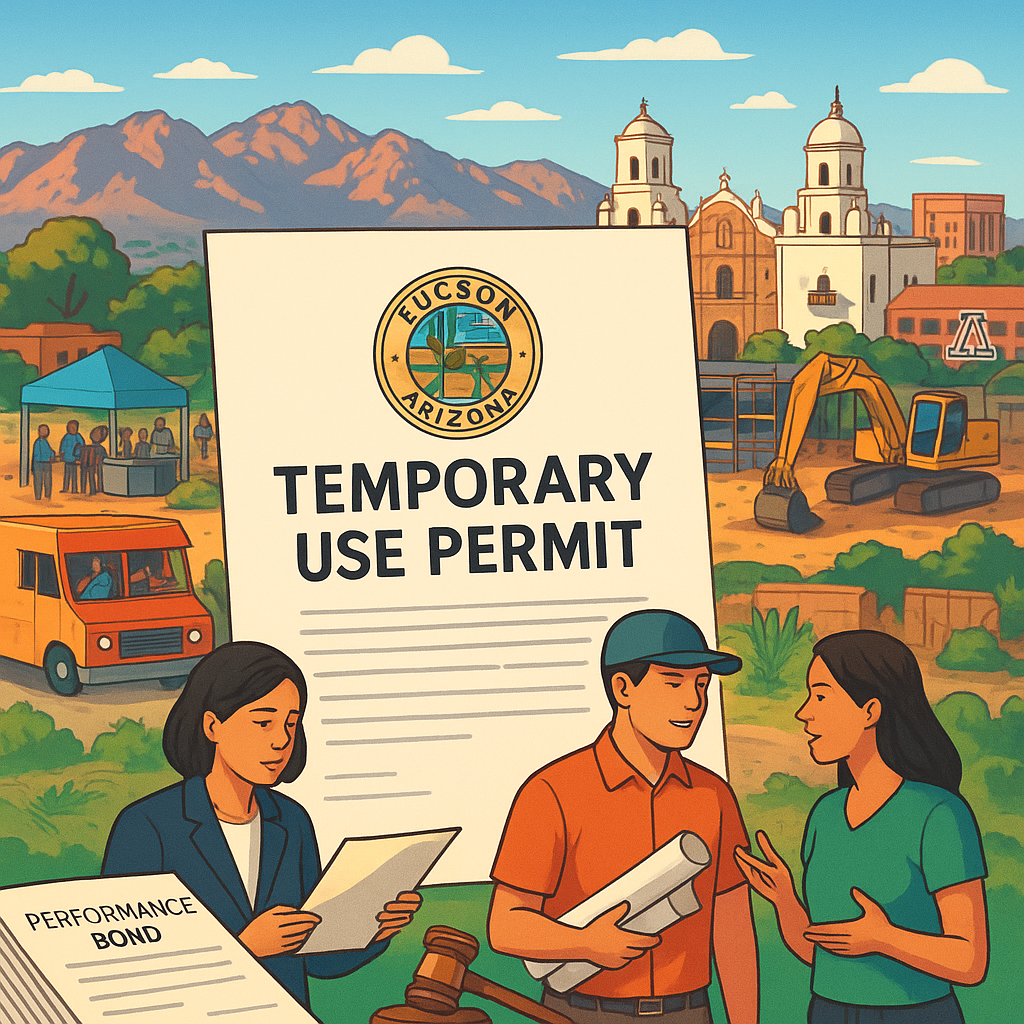
Have you ever driven by an empty lot in Tucson and seen a pop-up pumpkin patch, a weekend carnival, or a cluster of food trucks where there was nothing before? These temporary transformations don’t just happen by magic. Behind the scenes, the event organizer or business owner likely secured something called a Temporary Use Permit — and along with it, a performance bond. If you’re planning a short-term activity on private property in the City of Tucson, understanding these requirements can save you from headaches, fines, or even a shutdown.
So, What Exactly is a Temporary Use Permit?
Think of a Temporary Use Permit, often called a TUP, as a permission slip from the City of Tucson. It allows you to use a piece of land for a limited time and a specific purpose that doesn’t quite fit the permanent zoning rules. Instead of going through a lengthy rezoning process, the TUP gives you the green light to operate for a few days, weeks, or months — as long as you follow certain conditions. It’s a way for the city to say, “Yes, you can host your outdoor market here, but let’s keep things safe, clean, and considerate to the neighborhood.”
Common Activities That Need a TUP
Wondering if your idea needs one? While every situation is unique, here are some typical examples where the Tucson city government asks for a Temporary Use Permit:
- Outdoor seasonal sales, such as Christmas tree lots or firework stands.
- Weekend farmers markets, art fairs, and craft shows on private property.
- Mobile food courts or a single food truck operating on a vacant lot.
- Construction staging areas, trailer offices, or temporary material storage.
- Temporary parking lots for special events like rodeos or concerts.
- Short-term recreational activities, including haunted houses or pop-up drive-in theaters.
Why Does the City Require a Performance Bond?
Now you might be thinking, “Okay, I get the permit, but why do I also need to buy a bond?” Great question. The City of Tucson wants a safety net. A Tucson Temporary Use Permit Performance Bond is a financial guarantee that you’ll do what you promised. It’s not a fee you lose forever or insurance that covers your business — it’s more like a security deposit you’d put down when renting a car or an apartment.
The bond ensures that once your temporary use is over, the land gets restored to its original condition. If you leave behind trash, damage pavement, or fail to remove unpermitted structures, the city can step in. Instead of spending taxpayer money to fix the mess, they can make a claim against your bond. In other words, the TUP bond protects Tucson residents and the environment while holding permit holders accountable.
How the Tucson TUP Performance Bond Works: A Three-Party Agreement
To keep things clear, let’s break down the bond into three key players:
- The Obligee: The City of Tucson. They require the bond and receive the protection.
- The Principal: That’s you — the business owner, event organizer, or individual getting the Temporary Use Permit.
- The Surety: The bond company that backs your promise financially.
If you follow all the permit rules, clean up the site, and meet every deadline, the bond simply expires without any drama. But if you fail to uphold your end of the bargain, the city can file a claim. The surety investigates, and if the claim is valid, they pay out up to the full bond amount. Here’s the catch: the surety will then come to you for reimbursement. This protection mechanism makes the whole temporary land use system fair and reliable.
Real-Life Scenarios: When a TUP Bond Saves the Day
It’s easier to grasp with a couple of concrete examples. Imagine a local charity sets up a temporary pumpkin patch in a shopping center parking lot. They promise to remove every tent, hay bale, and sign by November 5th. The city sets a $5,000 performance bond requirement. If the charity leaves everything behind and disappears, the lot owner might complain. The city can then file a claim, hire a cleanup crew with the bond money, and restore the space without dipping into public funds.
Another scenario: a food truck operator gets a TUP to park on a vacant downtown lot for three months. Grease spills stain the asphalt, and the truck drives away without making repairs. Because a City of Tucson Performance Bond was in place, the city can recover the cost of resurfacing. Without the bond, that expense would likely fall on the property owner or the community. The bond essentially turns a promise into real-world accountability.
Step-by-Step: How to Get Your Tucson Temporary Use Permit and Bond
Navigating the process doesn’t have to be intimidating. Pulling together your TUP and the corresponding bond involves a few straightforward stages:
1. Talk to the City Early. Reach out to Tucson’s Planning and Development Services Department. Describe your proposed activity, location, and timeframe. They’ll confirm if a TUP is needed and walk you through any specific zoning or neighborhood considerations.
2. Submit a Complete Application. You’ll typically need a detailed site plan, proof of property owner consent, and information about things like traffic flow, sanitation, and noise control. The more prepared you are, the smoother the review goes.
3. Learn the Required Bond Amount. Based on the scale and potential impact of your project, the city will determine the bond amount. For many temporary activities in Tucson, this might range from $2,000 to $10,000, but larger events or more complex uses could require higher coverage. The city will give you the exact figure.
4. Secure Your Performance Bond. Once you know the amount, contact a surety bond agency. Provide basic information about your business and personal credit. You’ll pay a small percentage of the total bond — not the whole sum itself. The bond is then issued quickly, often within a day or two.
5. Submit the Bond and Get Your Permit. Give the completed bond form to the city. After they verify everything, your Temporary Use Permit is issued, and you’re ready to set up shop.
Factors That Affect Your Bond Premium
The premium is the tiny fraction you pay out of pocket. For many Tucson TUP bonds, this premium falls between 1% and 5% of the total bond amount. What determines where you land? Mainly your personal credit score and financial history. If you have strong credit, expect premiums on the lower end — sometimes as little as $100 for a $5,000 bond. If your credit has hit a few bumps, don’t panic. You can still secure a bond, though the premium might be higher, and the surety could ask for collateral. Experienced bond agents work with all kinds of credit profiles and can help you find the right solution.
How Much Does a TUP Bond Cost in Tucson?
Let’s put some numbers in perspective. Suppose the city requires a $5,000 Temporary Use Permit Performance Bond for your weekend arts festival. With good credit, your annual premium might be somewhere between $100 and $150. That’s a manageable expense to unlock a potentially profitable event. Even a $10,000 bond might only cost a few hundred dollars. Remember, you are never paying the full bond amount upfront — you’re paying a fraction to the surety company for backing your responsibility. It’s an affordable way to meet city regulations and show you’re a serious, trustworthy organizer.
What Happens If You Don’t Meet the Permit Conditions?
Nobody plans to fail, but life is unpredictable. If you can’t restore the property or violate the permit terms, the city can file a claim. The surety will investigate thoroughly. If the claim is upheld, the surety pays the city and then comes to you for every penny. This is not insurance for your own losses — it’s a guarantee to the obligee. Treating the bond like a free cleanup service is a costly mistake. The smart approach is to budget for proper site restoration from the start and communicate with the city if you need a small extension. Often, they’ll work with you if you’re proactive.
Frequently Asked Questions
Is the TUP bond premium refundable if I cancel my event?
Typically, no. The premium compensates the surety for taking on the risk for a set term. Even if you don’t use the permit, the surety’s commitment was in place. Some bonded agencies might offer a partial refund if the bond is terminated very early, but you shouldn’t count on it. Always confirm refund terms before purchasing.
Can I get a bond with bad credit?
Yes. A Tucson TUP bond is accessible even with less-than-perfect credit. The premium will be higher, and you might need to provide collateral or a cosigner, but specialty bond providers exist for exactly these situations. Being upfront about your credit situation helps agents match you with the right program.
Do I need a separate bond for each Temporary Use Permit?
In most cases, yes. Each TUP is evaluated individually, and the bond ties directly to that specific permit’s conditions and timeframe. If you run multiple events throughout the year, you’ll likely need a new bond for each one. That said, talk to the city and your bond agent about whether a blanket bond program is an option for repeat, low-risk activities.
How long does the bond need to stay in effect?
The bond must cover the entire duration of your permit, plus any post-event restoration period the city requires. It might extend weeks or even a couple of months after your last day of activity. Read your permit conditions carefully and set up the bond term accordingly to avoid a lapse.
Making Your Tucson Temporary Use a Success
Temporary land uses bring vibrancy, culture, and economic life to Tucson. A pumpkin lot, a taco stand, a weekend jazz festival — they all add character to our desert city. The City of Tucson’s Temporary Use Permit and Performance Bond requirements might feel like paperwork hurdles, but they exist so everyone plays by the same rules and neighborhoods stay clean and safe.
By building the bond cost into your event budget early and understanding exactly what’s expected, you’ll avoid last-minute scrambles. Work with a surety bond expert who knows Arizona requirements, keep an open line with city planners, and always leave the land better than you found it. When you do, your temporary use won’t just be compliant — it’ll be a welcome addition to the Tucson community.