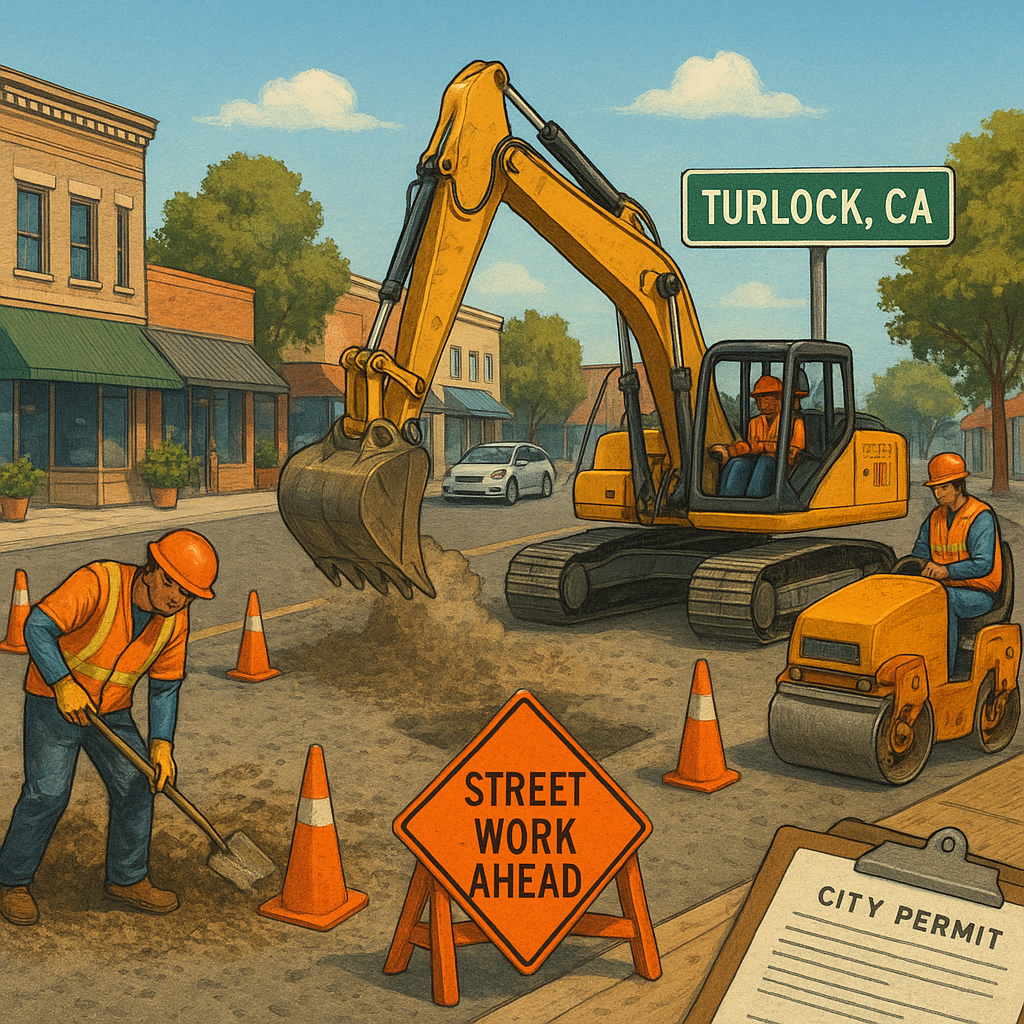
Have you ever noticed a crew cutting into a freshly paved road in Turlock and wondered who gives them permission to do that? Or maybe you’re a contractor, a homeowner planning a major utility upgrade, or a developer breaking ground on a new project. Either way, digging into a public street is a big deal — and the City of Turlock has clear rules to make sure everything is done safely and restored properly. Let’s walk through the essentials of Turlock’s street work excavation permit and the performance bond that often goes hand in hand with it.
What Exactly Is a Street Excavation Permit?
A street excavation permit is official permission from the City of Turlock to cut, dig up, or otherwise disturb the surface of a public right-of-way. Think of it as a promise to the community: you can open the street, but you must put it back the right way. This applies to asphalt streets, concrete curbs, gutters, sidewalks, and even landscaped areas within the city’s control.
Without this permit, any digging is illegal. The city needs to know who is working, where, and for how long. That way, they can coordinate with other utility work, protect underground infrastructure, and keep drivers, cyclists, and pedestrians safe. It’s not just red tape — it’s how Turlock balances progress with public safety.
Why Turlock Requires a Performance Bond for Excavation
Now, here’s where it gets interesting. Along with the permit, most street excavation projects will need a Turlock CA Street Work and Excavation Performance Bond. A bond is a financial guarantee. It’s like a security deposit for the street. If the work isn’t finished correctly or the restoration isn’t up to city standards, the bond covers the cost of repairs without taxpayers footing the bill.
The City of Turlock doesn’t want to chase contractors down for shoddy backfill or a sinking trench six months later. The performance bond says, “We trust you to do the job right, but if you don’t, we have a way to fix it immediately.” It’s a built-in safety net that protects the city’s infrastructure and your reputation as a responsible contractor.
The Three Parties Involved
A performance bond involves three key players:
- Principal: That’s you — the contractor, utility company, or property owner digging up the street.
- Obligee: The City of Turlock, which requires the bond to ensure the public street is restored.
- Surety: The insurance or bonding company that backs the guarantee financially.
If you fail to complete the restoration according to the Turlock Municipal Code, the city can file a claim against the bond. The surety then pays up to the bond amount, and you must repay the surety — so it’s still your responsibility in the end.
How the Permit and Bond Process Works in Turlock
You’ll typically start at the City of Turlock Engineering Division or the Public Works department. They handle street excavation permits. The process isn’t meant to be a headache, but it does require some preparation. Here’s a streamlined look at what to expect:
Step 1: Prepare Your Application
You’ll need a completed permit application, a detailed plan showing where you’re digging and the scope of the excavation, and traffic control drawings if the work impacts lanes or sidewalks. If you’re installing something new, like a water service or sewer lateral, include those specifications. The city needs to see the full picture.
Step 2: Review and Estimate
The city’s engineers will review your plans. They’ll look for conflicts with existing utilities, the condition of the road (a newer overlay might have stricter restoration requirements), and whether a lane closure is acceptable during certain hours. They’ll also calculate the permit fee, which often depends on the size of the excavation and the street classification. This is also the moment where the required bond amount is determined.
Step 3: Secure the Performance Bond
Once you know the bond amount, you purchase the Turlock street work excavation performance bond from a licensed surety company. The bond must match the city’s requirements for form and coverage. Typically, the bond amount is set high enough to cover the worst-case restoration scenario — sometimes a percentage of the total project value or a fixed sum based on the square footage of the cut. The city will provide the exact bond form so there’s no confusion.
Step 4: Permit Issuance and Start of Work
With the bond in hand and fees paid, the permit is issued. You’ll get a copy to keep on-site. Remember, the permit isn’t a blank check to dig whenever and however you like. You must follow the approved plans, adhere to trench safety rules (Cal/OSHA standards apply), and notify the city at key points for inspections.
Step 5: Restoration and Final Inspection
After the excavation is backfilled and compacted, you’ll restore the surface. In Turlock, that often means a temporary patch first, followed by a permanent paving restoration later after settling. The city inspector will check everything: compaction, asphalt thickness, concrete finish, and whether the patch blends seamlessly with the surrounding street. Only when the inspector signs off does your responsibility begin to wind down. At that point, you can request release of the bond.
What Kinds of Projects Need This Permit and Bond?
You might be surprised how many everyday jobs trigger the requirement. It’s not just for giant construction firms. Here are common scenarios:
- Repairing or replacing a water line from the main to a home or business.
- Sewer lateral replacements that cross a sidewalk or street.
- Installing a new fire service line for a commercial building.
- Cutting the street for a new driveway approach or curb ramp.
- Underground utility work for electricity, gas, or fiber optic cables.
- Trenching for storm drain connections or irrigation lines in the right-of-way.
Even a small cut — say, a two-foot-wide trench for a sprinkler line — can need a permit if it’s within the public street or sidewalk area. When in doubt, always check with the city. Digging without permission can lead to fines, a stop-work order, and a much bigger mess to clean up.
How Much Does a Turlock Excavation Bond Cost?
The bond amount (the penalty sum) is set by the city, often a few thousand dollars for small patches, up to tens of thousands for major street cuts. The premium you pay, however, is just a small percentage. For a contractor with good credit, it’s typically 1% to 3% of the total bond amount. So a $5,000 bond might cost as little as $100 to $150 per year. The premium is an annual expense until the city releases the bond, so don’t drag out the restoration. The quicker you close out the project, the sooner you stop paying.
What Happens If You Don’t Get a Permit or Bond?
Working without a valid Turlock street excavation permit and required bond is a risky game. City inspectors can issue a stop-work order on the spot. You could face daily fines until you comply. More importantly, any damage to existing utilities, injuries, or road failures become your personal liability — and that could far exceed the cost of doing things by the book. There’s also the hit to your business reputation. The City of Turlock maintains a list of approved contractors who play by the rules; you want to be on it, not on the enforcement radar.
Tips for a Smooth, Worry-Free Excavation
Over the years, we’ve seen what separates a stressful permit process from a seamless one. Keep these pointers in mind:
- Start early. Don’t wait until the trencher is on-site. Permit reviews and bond paperwork take a few business days at minimum.
- Communicate with the city. If you’re unsure about right-of-way boundaries or required restoration standards, ask before you submit. The engineering staff can save you from costly revisions.
- Use a local bonding specialist. A surety agent familiar with Turlock’s bond forms and requirements will get you accurate paperwork quickly.
- Document everything. Take photos before, during, and after the dig. If a question arises about the pre-existing street condition, you’ll have proof.
- Don’t forget traffic control. Even a partial lane closure might need cones, signs, or a flagger — include that in your plan and your bond coverage.
- Schedule inspections promptly. Delays in getting the final sign-off mean your bond stays active and you keep paying premiums.
Real-Life Analogy: The Street Is Like a Shared Driveway
Imagine you live on a street where everyone shares a long, paved driveway. If one neighbor needs to dig a trench across it, everyone else still needs to use that driveway. Without a clear agreement (the permit) and assurance they’ll fix it perfectly (the bond), chaos would follow. The City of Turlock acts on behalf of all of us, making sure the shared asphalt — our public streets — stays smooth, safe, and pothole-free. That’s the simple idea behind the requirements.
Common Questions People Ask
Can a homeowner pull an excavation permit, or does it have to be a licensed contractor? Homeowners may be eligible for a permit for work on their own property that crosses into the right-of-way, but many jobs will still require a licensed contractor with proper insurance. The bond requirement often points toward a contractor or a specific utility contractor’s license. The city can clarify based on the scope.
How long does the bond stay in effect? Typically, the bond remains active until the city’s final inspection is passed and the warranty period expires. Some bonds include a one-year maintenance period after completion, meaning the surety is still on the hook if the patch fails due to poor workmanship.
Is the performance bond the same as a contractor license bond? No. A contractor license bond protects consumers against violations of state contracting law. A Turlock street excavation performance bond is a separate, project-specific guarantee that protects the city’s streets. You may need both.
Protecting Turlock’s Streets One Cut at a Time
Every time a road is opened and repaired correctly, the whole community wins. The City of Turlock’s permit and bond framework isn’t there to make life difficult — it’s there to make sure that a quick utility fix doesn’t turn into a decade-long bump in the road. By understanding the requirements and working with the system, you’ll keep your project on track and your neighbors grateful. So next time you see fresh asphalt with a neat patch, you’ll know the careful thought and financial guarantee that made it possible.