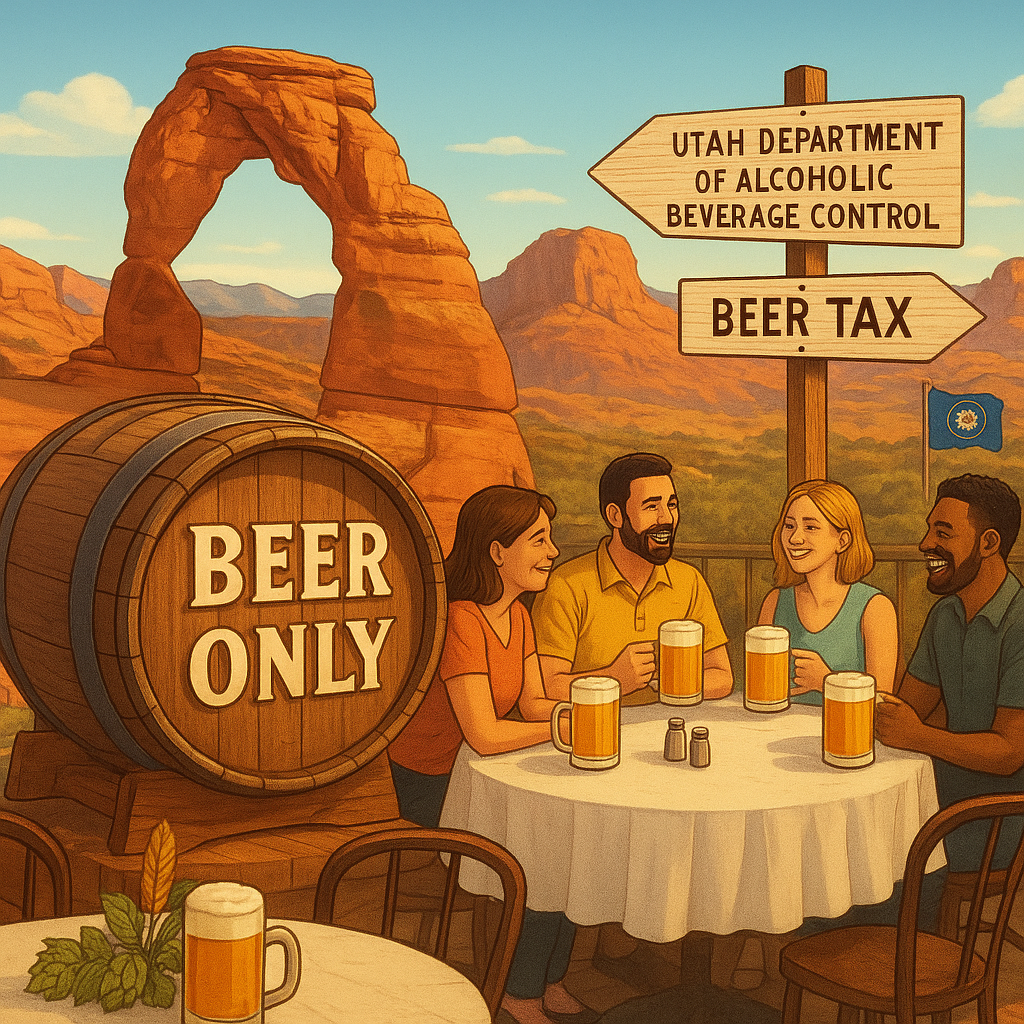
Have you ever walked into a cozy Utah café, glanced at the menu, and noticed something a little different? Maybe the beer list is proudly the star, but there’s no wine or spirits in sight. Or perhaps you’ve heard a restaurant owner mention a “beer bond” and wondered if they’d accidentally wandered into a legal thriller. Welcome to the fascinating world of Utah’s beer-only restaurant licensing and tax rules. It’s a system built on tradition, tight regulation, and a surprising number of financial safeguards. Don’t worry—I’m going to break it all down in plain English, no jargon required.
The Utah Department of Alcoholic Beverage Control (DABC): The Gatekeeper
Before we dive into the nitty-gritty of bonds and taxes, you need to meet the main character: the Utah Department of Alcoholic Beverage Control, often called the DABC. Think of them as the state’s official host for anything involving alcohol. They don’t just make the rules; they enforce them, collect taxes, and issue every type of liquor license you can imagine. For restaurant owners who dream of pouring a cold local brew without stepping into the full-blown world of cocktails, the DABC is the first and last stop.
Utah’s relationship with alcohol is famously unique. The state operates under a controlled system where the government itself manages the distribution of most alcoholic beverages. That means if you want to sell beer in your restaurant, you’re not just dealing with a private wholesaler and calling it a day. The UT Department of Alcoholic Beverage Control is deeply involved, and that’s where the idea of a beer-only license enters the picture.
What Exactly Is a “Beer Only” Restaurant License?
Picture this: you run a bustling pizzeria. Your customers love the wood-fired pies, and you’d love to offer a crisp lager alongside them. But you’re not interested in building a full bar. No martinis, no merlot. Just beer. Utah’s beer-only restaurant license was tailor-made for this exact scenario.
In simple terms, a beer-only license allows a qualifying restaurant to sell beer for on-premise consumption. The catch? You can’t sell wine, spirits, or heavy beer (anything over 5% alcohol by volume). It’s a narrowly focused permit that lets you keep things simple while still adding a revenue stream. For many small establishments, it’s the perfect middle ground.
But here’s where it gets interesting: obtaining that license isn’t as straightforward as filling out a form and handing over a fee. The state wants assurance that you’ll pay every penny of beer tax you owe. Enter the star of today’s story—the Beer Only Restaurant Bond.
The Beer Only Restaurant Bond: Your Financial Promise
Let’s demystify that oddly formal phrase: “Beer Only Restaurant Bond.” It sounds like something from a medieval contract, but it’s really just a financial safety net. A bond, in this context, is a type of surety bond. If you’ve ever rented an apartment, you might have paid a security deposit. That deposit guarantees the landlord won’t get stuck with unpaid rent or damages. A beer bond works the same way, but the DABC is your landlord, and the “rent” is your beer tax.
When you apply for a Utah beer only restaurant bond, you’re essentially buying a promise. A surety company backs you and says, “If this restaurant doesn’t pay its beer taxes, we’ll cover the losses up to the bond amount.” The bond amount is set by the DABC based on your projected beer sales and the expected tax liability. For a modest restaurant, the bond might be just a few thousand dollars. For a busier spot, it could be higher.
Don’t confuse the bond’s total value with what you actually pay out of pocket. You don’t need to plunk down the full bond amount in cash. Instead, you pay a small percentage annually—often between 1% and 5%—to the surety company as a premium. So a $5,000 bond might only cost you $100 to $250 a year. It’s an affordable way to meet the state requirement while protecting public coffers.
Why does this bond exist in the first place? The UT Department of Alcoholic Beverage Control collects a specific excise tax on every gallon of beer sold. If a restaurant falls behind on those payments, the state uses the bond to recoup the money. No bond, no license. It’s that simple.
Beer Tax: How Utah Takes Its Sip
Speaking of beer tax, let’s talk about who pays what and when. Utah levies a state excise tax on beer, currently around $0.41 per gallon. While that number might sound tiny on a per-pint basis, it adds up quickly for a busy restaurant. But the tax picture gets more layered because the DABC operates on a markup system too. When you buy beer through the state’s distribution, there’s a built-in markup that functions much like an additional tax. For a beer-only restaurant, understanding this layered cost structure is crucial.
Here’s a practical example: imagine you buy a keg of a popular local craft brew. The price you pay already includes the state markup. On top of that, you must track and remit the excise tax based on the volume you purchase. Then there’s your regular sales tax at the point of sale. Mess up any part of this chain, and the DABC can and will come knocking. The bond is your collar, ensuring you don’t run away from those obligations.
One question that often pops up: “Does the bond cover my income taxes or other state fees?” The answer is no. The beer bond is specifically tied to the beer tax obligations under your license. Think of it as a dedicated guard dog—it protects one yard only.
Navigating the Application Process: A Step-by-Step Peek
Getting your hands on a beer-only restaurant license isn’t rocket science, but it does require patience and attention to detail. Here’s a simplified roadmap to help you see the forest from the trees.
- Check your eligibility. Your establishment must meet the state’s definition of a restaurant. That usually means a certain percentage of revenue comes from food, not just drinks. The DABC wants to see a real kitchen, not a bar disguised as a café.
- Gather documents. You’ll need your business license, menu, floor plan, and proof that your local government is okay with the plan. Zoning and local consent matter a lot.
- Submit the application to the Utah Department of Alcoholic Beverage Control. Expect to pay a non-refundable application fee. This fee is separate from any bond or license fee.
- Secure your Beer Only Restaurant Bond. Work with a licensed surety broker to get a bond that matches the DABC’s required amount. The state will tell you exactly what you need after reviewing your projected sales.
- Wait for background checks and inspections. The DABC will look at your personal and business history. They might send someone to inspect the premises. Cleanliness, food service setup, and compliance with the famous (or infamous) Zion Curtain rules may all be on the checklist.
- Receive your license and start buying beer. Once approved, you’ll purchase your beer through the state system, carefully track invoices, and file your beer tax returns on time.
The whole process can feel a bit like a treasure hunt, but most owners say the clarity is there if you follow the DABC’s guidelines religiously.
Common Misconceptions and Pitfalls
Even seasoned restaurateurs sometimes trip over Utah’s unique system. Let’s clear the air on a few myths.
Myth: “A beer-only license means I can serve any beer I want.” Not quite. Heavy beer (above 5% ABV) is generally off-limits under this license. If you want to pour a high-point IPA, you might need a different license category.
Myth: “The bond is a one-time expense.” In reality, bonds typically renew each year. You’ll need to keep that bond active for as long as your license is valid. Let it lapse, and you risk losing your license.
Myth: “Beer tax is the same as the markup.” These are separate concepts. The markup is built into the price you pay the state for the beer. The excise tax is filed and paid separately based on volume. Treat them as two distinct line items on your mental ledger.
Avoiding pitfalls comes down to building a strong relationship with the Utah Department of Alcoholic Beverage Control. Their staff can answer questions, and their website often clarifies gray areas. Don’t be shy—ask before you act.
Why This System Exists: A Look at Utah’s Culture
You can’t fully grasp the beer bond and tax maze without understanding Utah’s cultural backdrop. The state’s dominant religious influence has shaped alcohol policy for decades. The goal has often been to make alcohol available but not too convenient or glamorized. A controlled system with bonds, strict separation of alcohol preparation zones (the Zion Curtain), and heavy taxation reflects a compromise between personal freedom and community standards.
For a restaurant owner, this means the license isn’t just a permit—it’s a trust agreement. The bond says, “I respect the rules of this community and will play by them.” And the beer tax ensures that the state and its citizens benefit from every glass poured.
In a way, the Beer Only Restaurant Bond is a quiet hero. It lets small businesses thrive without requiring the owner to navigate the higher stakes and steeper costs of a full liquor license. It keeps the playing field honest, and it reassures the state that taxes won’t vanish into thin air.
So, Is the Beer-Only Route Right for You?
If you’re a potential restaurateur reading this, you might be asking yourself whether this license fits your vision. Consider these questions: Do you want to keep your concept simple and focused on food with a beer complement? Are you comfortable with the limitations on beer strength? Can you manage the administrative side—tracking purchases, filing taxes, and renewing your bond annually? For many, the answer is a resounding yes. The startup and operational costs are typically lower than a full license, and for a neighborhood pizzeria, taco joint, or breakfast diner that wants to serve a mimosa alternative, it’s a fantastic choice.
Think of your bond as a small, invisible partner that guarantees your good standing. Without it, you’re just a dreamer with a tap handle and no legal beer to pour. With it, you’re a legitimate part of Utah’s carefully woven hospitality fabric.
Wrapping It All Up
Utah’s restaurant beer licensing and tax policies might seem like a puzzle wrapped in a riddle, but at their core, they boil down to a few key players: the DABC, the beer-only license, the required bond, and the beer tax. Together, they create a framework that allows for responsible beer service in a state that values both community norms and individual enterprise.
Next time you sip a local amber ale at a Utah café, you’ll know that behind that simple pleasure lies a well-structured system of promises, taxes, and a little piece of financial magic called the Beer Only Restaurant Bond. It’s not just red tape—it’s the state’s way of saying, “Cheers, but let’s keep everything in order.”
Whether you’re a business owner tackling the application or just a curious customer, understanding these layers adds a new appreciation for every frosty mug. And if you ever meet someone confused by the whole thing, you can now pour them a glass of clarity—served straight up, of course.