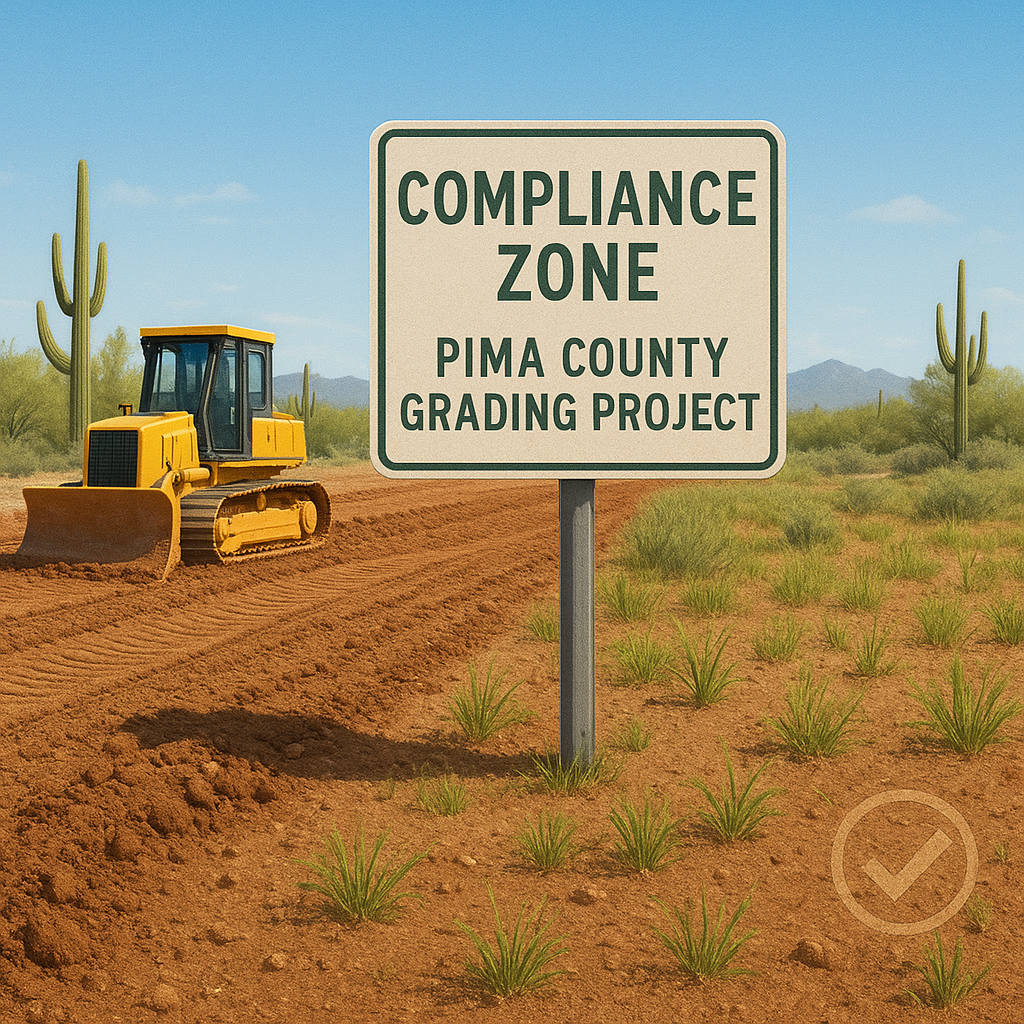
Have you ever started a construction project only to hit a wall of paperwork? It can feel like you need a whole dictionary just to understand the requirements. One term that pops up often for contractors in Pima County, Arizona, is the “Preliminary Grading and Reseeding Performance Bond.” That sounds like a mouthful, right? Don’t worry. By the time you finish reading this, you’ll know exactly what it is, why it exists, and how to handle it without breaking a sweat.
What Is a Preliminary Grading and Reseeding Bond Anyway?
Think of this bond as a three-way promise. You, the grading contractor, make a commitment to Pima County that you will complete the preliminary grading and reseeding work according to the approved plans. The bonding company backs you up financially. If something goes sideways, the county has a safety net. It’s not insurance for you—it’s a guarantee for the public and the environment.
When a developer wants to shape the land to prepare for building, they often need to move dirt, level areas, and then plant seeds to control erosion. Pima County cares deeply about stormwater management and dust control. The bond ensures that if you start scraping and grading, you’ll also finish the reseeding so the land doesn’t turn into a blowing dust bowl or create a muddy mess for neighbors.
Why Does Pima County Require This Bond?
You might wonder, “Why can’t I just promise to finish the job and call it a day?” The desert landscape here is fragile. A half-finished grading site can quickly become a source of severe erosion, dust pollution, and even safety hazards during monsoon rains. Pima County uses the bond requirement to protect everyone’s health, property, and the natural beauty of southern Arizona.
Protecting the Community and the Environment
Imagine living next to a plot of land where a contractor scraped away all the vegetation, then abruptly stopped working. A strong windstorm could blanket your home in dust. A sudden downpour could send a river of mud into the street. The bonding requirement puts some teeth into the county’s rules. It gives officials the financial means to step in and hire another crew to finish the reseeding if the original contractor disappears or fails to comply.
Who Needs a Grading Contractor – Compliance Only Bond?
You won’t need this bond for a tiny backyard patio project. It comes into play for larger land development or construction jobs where you disturb a significant amount of earth. If your project requires a grading permit from Pima County Development Services, there’s a good chance you’ll also need to post a performance bond for the preliminary grading and reseeding phases.
Sometimes the requirement specifically targets the “compliance only” stage. This means the bond covers just the work needed to bring the disturbed land into compliance with county standards, not necessarily the entire long-term landscaping plan. It’s a focused tool meant to get the site stabilized and erosion under control quickly.
How Does This Bond Work in Real Life?
Let’s walk through a common scenario. A housing developer wants to put in a new subdivision. They hire you, the grading contractor. Before you can fire up your scrapers and dozers, the county says, “We need a Preliminary Grading and Reseeding Performance Bond.” You contact a surety bond agency and apply. The surety looks at your credit, your business history, and the project details.
Once approved, you pay a premium—often a small percentage of the total bond amount—and the bond is issued. You hand it to the county, and they issue your grading permit. You do the work, call for inspections, and get a sign-off that the reseeding is established and the site is stable. The county releases your bond obligation. Simple as that, as long as everything goes smoothly.
A Safety Net, Not a Blank Check
It’s important to remember the bond doesn’t give you a free pass to walk away. If you fail to perform, the county can make a claim on the bond. The surety company will then come to you for reimbursement. Yes, they pay the county upfront, but your business is ultimately on the hook for every penny. That’s why treating this obligation seriously from day one saves you massive headaches later.
Steps to Secure Your Pima County Grading Bond
Navigating the bond process might feel like a chore, but breaking it into small steps makes it manageable. Here’s what you typically need to do:
- Determine the exact bond amount. The county will tell you the dollar figure required. It’s usually based on the engineer’s estimate of the grading and reseeding costs.
- Gather your documents. You’ll need your contractor’s license, the grading plans, and sometimes a financial statement showing your business is healthy.
- Choose a surety bond provider. Look for an agency familiar with Arizona and Pima County requirements. They can streamline the whole thing.
- Complete the application. The surety will run a soft credit check and assess your experience. This isn’t a deep dive into every aspect of your life, but they need to trust you can finish the job.
- Pay the premium and file the bond. Once you pay, the surety issues the bond form. You submit the original to Pima County.
The whole process can take as little as a day or two if your financials are in order. Planning ahead keeps your project on track.
Common Mistakes That Trip Up Contractors
Even savvy builders slip up sometimes. Knowing the pitfalls can keep you from joining that club.
- Underestimating the bond cost. The premium is a project expense you must budget for. Forgetting to include it can eat into your profit margin.
- Ignoring the reseeding timeline. Reseeding has to happen during the right season and must be maintained until the vegetation takes hold. Rushing this phase often leads to failed inspections and bond claims.
- Assuming all bonds are the same. A preliminary grading bond is not a general contractor license bond. Each serves a different master. Getting the wrong one will just delay your permit.
- Waiting until the last minute. Surety approvals can take a few days. Applying on a Friday afternoon before a Monday start date is a recipe for stress.
What Does “Compliance Only” Really Mean?
You’ll see the phrase “compliance only” attached to some grading bonds. This simply narrows the focus. The bond guarantees the site will meet Pima County’s minimum standards for stabilization and erosion control. It does not cover aesthetic landscaping features like ornamental gardens or decorative rock work that might be part of a later phase. It’s the county’s way of saying, “We need to make sure the dirt stays put and the dust stays down, period.” For contractors, this means you can sometimes get a lower bond amount because the scope is strictly functional.
How to Keep Your Bond in Good Standing
Once the bond is active, your main goal is to never hear from the county about a problem. How do you do that?
- Stick to the approved grading plan. Any deviation without an amended permit is a red flag.
- Communicate with the inspector. If weather delays reseeding, let the county know promptly. They often appreciate proactive updates over excuses after the fact.
- Photograph everything. Before you start, document the existing conditions. After grading, show the contouring. After reseeding, capture the germination. A solid paper trail protects you if questions arise later.
- Don’t abandon the site. The bond remains in force until the county formally releases it. Walking away with a few patches of dead seed guarantees a claim.
Why a Bond Is Actually Good for Your Business
It’s easy to see bonding as just another government hoop to jump through. But look at it from a different angle. The bond tells clients, developers, and general contractors that you’re a legitimate, trustworthy operator. It says you’ve been vetted by a surety company and you’re capable of doing the job right. In a competitive market like Pima County, that can be the edge that wins you the next big contract. Many private developers won’t even consider a grading contractor who can’t obtain a bond.
What Happens After You Finish the Work?
The finish line isn’t when you drive the last piece of equipment off the site. The county needs to perform a final inspection, confirm the reseeding has taken hold, and make sure drainage functions correctly. Only then do you receive a notice of bond release. Keep that document safe. It’s proof that your obligation is fully satisfied. If you don’t receive a release letter within a reasonable time, follow up. Sitting with an open bond on the county’s books can complicate your bonding capacity for future projects.
Finding the Right Help in Arizona
You don’t have to navigate this alone. Surety bond professionals who specialize in contractor bonds for Arizona can answer your questions and get you bonded efficiently. They know the ins and outs of Pima County Development Services requirements and can often help you avoid common delays. Building a relationship with a good agency pays off project after project.
So next time you see “Preliminary Grading and Reseeding Performance Bond” in your permit conditions, take a deep breath. You now understand it’s a promise to protect the land and the community. With a little preparation, you’ll secure the bond, do the work, and proudly leave behind a stable, green site that makes everyone breathe a little easier—literally and figuratively.