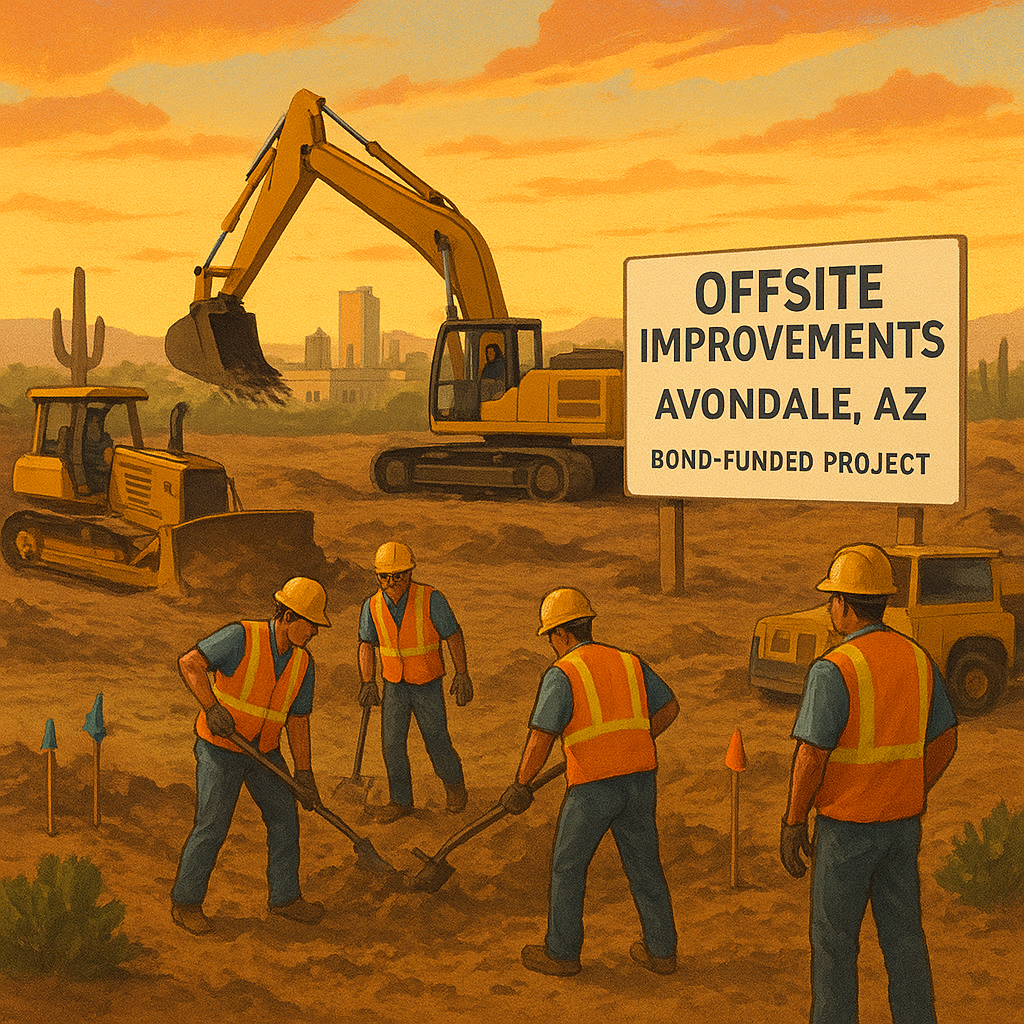
Have you ever driven past a new housing development and noticed all the work happening just beyond the property lines? New streets, sidewalks, storm drains, and freshly graded land don’t appear by magic. They’re often the result of what’s called “offsite improvements,” and they play a huge role in keeping a city like Avondale, Arizona, safe, functional, and ready for growth. But what happens if the contractor hired to do that work runs into trouble or walks away before finishing? That’s exactly where the City of Avondale’s performance bond for offsite improvements steps in.
If you’re a clearing and earthwork contractor looking to work in Avondale—or a developer trying to understand why this bond matters—you’re in the right place. Let’s break it all down in simple, everyday language, so you can see how this bond actually helps build better neighborhoods and protects everyone involved.
What Exactly Is a Performance Bond?
Think of a performance bond as a promise with a financial safety net. It’s a three-party agreement between the contractor (that’s you), the project owner (in this case, the City of Avondale), and a surety company. The bond says, “If the contractor doesn’t finish the job according to the approved plans and city standards, the surety will step in to cover the cost of completing the work.”
Now, unlike insurance that protects the contractor’s own business, a performance bond protects the city and its residents. It ensures that if something goes wrong—maybe the contractor goes bankrupt, abandons the project, or simply fails to meet quality requirements—the municipality won’t be stuck with a half-finished eyesore and a drained budget.
Why the City of Avondale Requires Offsite Improvement Bonds
Avondale is a fast-growing community in the Phoenix metropolitan area. With new subdivisions, commercial centers, and public infrastructure projects popping up regularly, the city needs to make sure that the roads, drainage systems, and utility extensions that serve these developments are built correctly. This is exactly why the City of Avondale requires a performance bond for offsite improvements before a clearing and earthwork contractor can start moving dirt.
Offsite improvements are those construction activities that happen on public property or public right-of-way—think of widening a roadway, installing a new sewer line connection, or building a retention basin that manages stormwater runoff for the entire neighborhood. Because these assets will eventually be owned and maintained by the city, Avondale wants a solid guarantee that the work will be completed without cutting corners.
The bond runs directly to the municipality. That means the City of Avondale is the named beneficiary. If the contractor defaults, the city can make a claim on the bond to hire another contractor and get the job done right without dipping into taxpayer funds.
The Heart of the Work: Clearing and Earthwork Contractors
Before any pavement is poured or any building foundations are dug, the land has to be prepared. That’s where clearing and earthwork contractors come in. You’re the ones removing vegetation, stripping topsoil, cutting and filling to create level pads, and establishing proper drainage slopes. In Arizona’s desert environment, this work also involves managing dust control, preserving natural washes, and ensuring that the site won’t flood during monsoon storms.
Because your work literally shapes the ground that everything else will sit on, even small mistakes can lead to massive problems later—like cracked pavement, sinking sidewalks, or water draining into someone’s living room. That’s why Avondale’s performance bond for offsite improvements covers this critical phase of construction. It guarantees that the earthwork meets all geotechnical specifications and city codes, protecting the long-term investment in community infrastructure.
What Does “Bond Runs to Municipality” Mean?
You’ll often see the phrase “bond runs to municipality” attached to these bonds. It simply clarifies that the bond is made payable to the city government, not to a private developer or a homeowners’ association. This direct link gives Avondale the legal power to enforce the bond if the contractor fails to perform. It’s not a vague promise; it’s a legally binding tool the city can use to safeguard public infrastructure.
How the Avondale Performance Bond Protects Everyone
It’s easy to assume that bonds only serve bureaucrats, but that couldn’t be further from the truth. A well-structured bond creates a safety net that benefits the entire community.
For the City of Avondale: The bond ensures that taxpayer money and public right-of-way are never compromised by an unfinished or poorly executed project. If something goes wrong, the city has immediate financial recourse.
For developers and property owners: The bond helps projects move forward on schedule because the city can issue permits with confidence. It also prevents the nightmare of being stuck with a non-compliant site that could delay sales or occupancy certificates.
For residents and business owners: Every time you drive on a smooth road, walk on a stable sidewalk, or see a new park that drains properly after the rain, you’re experiencing the positive outcome of bonded work. The bond helps ensure that the infrastructure built today will last for decades.
For contractors: Believe it or not, a performance bond is also a mark of credibility. It tells the city and clients that a surety company has vetted your business and believes you’re capable of completing the job. Having the ability to secure a bond can open doors to larger public projects in the future.
Common Offsite Improvements That Require Bonding
Not sure whether your specific project triggers the bond requirement? Here are some typical examples of offsite improvements in Avondale that call for a performance bond:
- Street widening and new roadway construction adjacent to a development.
- Sidewalk, curb, and gutter installation along public streets.
- Storm drain systems, catch basins, and retention or detention basins.
- Sanitary sewer line extensions and connections to the city’s main system.
- Waterline installations and fire hydrant placements in public right-of-way.
- Traffic signal modifications or new streetlight installations.
- Landscaping and irrigation in public areas or medians.
Even if your primary contract is just for clearing and earthwork, you’re often the first major contractor on site, and your grading sets the stage for all the other improvements. The city’s bond requirement may lump your scope under the overall offsite improvement permit, or you might need a separate earthwork-specific guarantee. Always check with Avondale’s engineering or public works department early in the planning process.
How to Obtain a Performance Bond in Avondale
If you’re new to the bonding world, the process might seem intimidating at first. But once you understand the steps, it becomes just another part of your project preparation—like getting a building permit or lining up equipment.
First, you’ll need to work with a surety bond agency. These agencies represent the surety companies that actually issue the bond. They’ll ask you for financial statements, project details, and evidence of your experience and capacity. The surety wants to know that you have a track record of finishing jobs and managing your cash flow. For a strong contractor, approval can be quick and surprisingly affordable. The bond premium is typically a small percentage of the total contract amount—often between 0.5% and 3% for qualified applicants.
Here are a few things that can help you secure better bonding terms:
- Keep your business financials accurate and up to date.
- Maintain a healthy working capital position.
- Document your successfully completed projects, especially municipal work.
- Build a relationship with a bond agent before you actually need the bond.
Once the bond is issued, you’ll deliver it to the City of Avondale along with your permit application and improvement plans. The city will review everything and, upon approval, you can mobilize your crew to start clearing and grading with full confidence that you’re compliant.
What Happens If Something Goes Wrong?
Nobody wants to think about project failure, but it’s smart to know how the system works if a claim is filed. Let’s say a clearing and earthwork contractor starts grading a site for a new subdivision but abandons the job halfway through. The rough grading is incomplete, the drainage channels are left half-formed, and a monsoon season is approaching. The city, as the bond beneficiary, can notify the surety company of the contractor’s default.
The surety will then investigate. If the claim is valid, the surety has a few options: they can hire a replacement contractor to finish the work, provide funds so the city can do it themselves, or pay out the bond amount up to the full penal sum. The contractor remains responsible for reimbursing the surety for any losses, so a claim can seriously damage a business’s future bonding ability and reputation. That’s why clear communication and proactive problem-solving are always the best first steps if you hit a snag on a job.
Why This Bond Is Good for Avondale’s Infrastructure Future
Avondale has a clear vision: grow sustainably while maintaining high standards for public infrastructure. The performance bond for offsite improvements is one of the quiet heroes making that vision possible. It holds contractors accountable and ensures that each new street, sidewalk, and drainpipe is built to last. When you, as a contractor, secure that bond, you’re not just checking a box—you’re becoming a trusted partner in the city’s long-term success.
And let’s not forget the peace of mind it provides to the people who call Avondale home. They may not know the term “performance bond,” but they absolutely appreciate roads that don’t crumble after the first heavy rain and neighborhoods that don’t flood because the grading was done right.
Wrapping It All Up
At its core, the City of Avondale’s performance bond for offsite improvements is about keeping promises. It turns a handshake deal into a concrete guarantee that protects the city, the developer, the residents, and even the contractor’s professional standing. For clearing and earthwork contractors, understanding this bond isn’t optional—it’s the key to unlocking municipal work and building a reputation that lasts.
So the next time you look at a freshly graded site that’s about to become a vibrant community, remember the bond that’s working silently in the background. It’s there to make sure that what’s promised is what gets delivered. And in a growing city like Avondale, that makes all the difference.