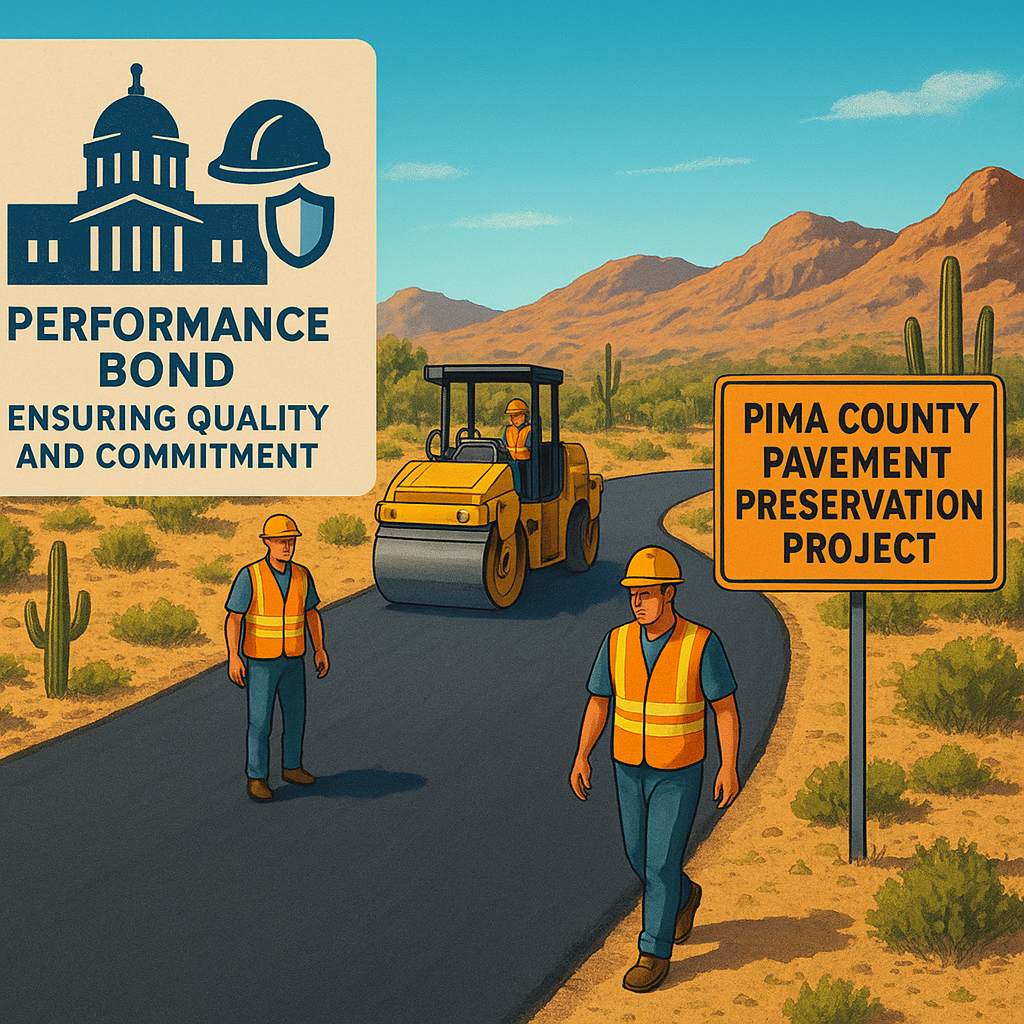
What Exactly Is Pavement Preservation?
Before we dive into bonds, let’s talk about the work itself. Pavement preservation is all about keeping roads in great shape before they fall apart. Think of it like changing the oil in your car regularly instead of waiting for the engine to seize up. In Pima County, Arizona, this might include seal coating, crack sealing, micro-surfacing, or thin overlays on existing asphalt. It’s proactive maintenance that saves taxpayers a ton of money down the road. When a general contractor takes on one of these jobs for the municipality, they’re not just repaving a street — they’re protecting an essential public asset.
Why Does a Contractor Need a Performance Bond?
Here’s the short answer: the bond guarantees the job gets done right. A Pima County AZ pavement preservation performance bond is a three-party agreement between the contractor (you), the county or city (the obligee), and a surety company. If the contractor fails to complete the project according to the contract terms, the surety steps in to fix things — either by finding another contractor to finish the work or by compensating the municipality for the financial loss. It’s a safety net that protects public funds.
Imagine you hire someone to redo your driveway. You pay them upfront, but they disappear halfway through. Without any protection, you’re stuck. Now multiply that by a road project worth hundreds of thousands of dollars. Performance bonds exist so that Pima County never has to face that nightmare scenario.
The Specific Requirement in Pima County, AZ
For pavement preservation projects, Pima County typically requires a performance bond that runs to the municipality. This isn’t a suggestion — it’s a contractual obligation baked into the bidding documents. The bond amount is usually 100% of the contract price. So if you win a $500,000 micro-surfacing contract, you’ll need a performance bond for the full $500,000. This guarantees the county that every dollar of that investment is protected from start to finish.
What makes Pima AZ pavement preservation performance bonds unique is how closely they’re tied to the long-term durability of the work. The county wants to be sure that the thin overlay or sealant applied today won’t crack and peel next monsoon season.
Who Needs This Bond? (Spoiler: It’s Not Just Anyone)
If you’re a general contractor bidding on a pavement preservation contract issued by Pima County or a local municipality within the county, you’ll almost certainly need one. Subcontractors occasionally need their own bonds if they’re directly contracted by the county, but typically the prime contractor obtains the bond and extends coverage to the entire project. Even small, family-owned paving companies can qualify — it’s not reserved for giant construction firms only.
Ask yourself: Are you responding to a public RFP for crack sealing or slurry sealing in Tucson, Green Valley, or unincorporated Pima County? If yes, start budgeting for a performance bond now.
How Does a Performance Bond Work? A Simple Breakdown
Let’s walk through a real-world example. Say your company, DesertGuard Paving, wins a contract to apply rejuvenating sealant on 20 miles of county roads. You obtain a performance bond for the contract amount. Halfway through, a supplier fails to deliver the specialized material, causing a two-week delay that violates the schedule. The county becomes concerned that you won’t finish before the summer heat sets in. They can file a claim against your bond.
Once the claim is filed, the surety investigates. If it’s valid, the surety might finance the extra cost to rush-order materials, bring in a substitute contractor, or pay the county the penalty up to the bond limit. In the end, the project gets completed, and the county isn’t left with a half-sealed road. The contractor is then responsible for reimbursing the surety for all costs — so it’s not free insurance. It’s a form of credit that keeps everyone honest.
How to Secure Your Pavement Preservation Performance Bond in Pima County
Getting bonded is simpler than most contractors expect. You’ll work with a surety bond agency that understands Arizona’s municipal requirements. Here’s the usual flow:
- Gather your paperwork: Business financial statements, personal financials for the owners, a profit-and-loss statement, and a resume of completed projects.
- Choose an experienced surety agent: Look for one who regularly handles Pima County performance bonds. They’ll know the local contract language and county expectations inside out.
- Underwriting review: The surety evaluates your company’s stability, capacity, and track record. They want to see that you’ve handled similar-sized pavement preservation jobs successfully.
- Receive a quote and pay the premium: Once approved, you’ll pay a small percentage of the bond amount. The bond is then issued, and you can submit it with your contract.
The whole process can take as little as a few days if your financials are in order. Start early so there’s no last-minute scramble before a bid deadline.
What Does a Pavement Preservation Bond Cost?
You won’t pay the full bond amount out of pocket. The premium is a percentage — typically between 1% and 3% of the total bond sum for well-qualified contractors. So for that $500,000 project, you might pay anywhere from $5,000 to $15,000. The exact rate depends on your credit score, business history, and the surety’s assessment of the risk. Newer businesses or those with spotty credit may pay toward the higher end, but they can still get bonded.
Think of the premium as a small fee for borrowing the surety’s credibility. It’s a fraction of what the county would lose if the project went south.
Why This Bond Is a Win-Win for Everyone
For Pima County residents, the bond means better roads that get preserved on time and on budget. For the municipality, it shifts the risk away from taxpayer dollars. For contractors, it’s more than just a requirement — it’s a badge of trust. When you can provide a performance bond, you signal that your business is stable, capable, and ready to take on public work. It opens the door to more lucrative government contracts and sets you apart from unlicensed operators who can’t get bonded.
Common Pitfalls and How to Avoid Them
Not all bonds are created equal, and a few mistakes can delay your project or cost you money:
- Forgetting to renew or extend: Pavement preservation projects can stretch months. If your bond expires before the work is officially accepted, you’ll be in breach. Always align bond terms with the contract’s maintenance period.
- Underestimating the scope: If the contract includes a warranty or a two-year performance period, your bond may need to remain in effect that whole time. Check the fine print.
- Working with an inexperienced agent: A local agent who knows Pima County’s specific bond forms will save you headaches. Generic bonds may get rejected by the county attorney’s office.
When in doubt, ask the county procurement office for a sample bond form and share it with your surety agent early.
Frequently Asked Questions About Pima County Pavement Bonds
Can a small contractor really qualify for this bond?
Absolutely. Sureties look at the whole picture, not just company size. If you have decent personal credit and can show that you’ve completed similar maintenance projects on time and without major issues, you have a strong chance. Some sureties even offer programs specifically for emerging contractors.
Is the performance bond the same as a payment bond?
No. A performance bond guarantees the work. A payment bond guarantees that the contractor pays their subcontractors and material suppliers. Often, Pima County will require both on larger pavement preservation contracts, but they are separate bonds.
What happens if the surety has to pay out?
The contractor must repay the surety in full, plus any legal costs. It’s essentially a loan that you’re obligated to settle. That’s why it’s crucial to manage your project well and communicate early if problems arise — avoiding a claim is always the best path.
Bringing It All Together
Pavement preservation might not grab headlines, but it’s the unsung hero of Pima County’s infrastructure. The Pima County AZ pavement preservation performance bond ensures that every seal coat and crack fill lives up to its promise. As a contractor, understanding this bond early in the bidding process puts you in control. You’ll submit stronger proposals, build trust with local agencies, and help keep Arizona’s roads smooth and safe for years to come.
So before you source that aggregate or calibrate your spray truck, ask yourself: is my performance bond ready to go? With the right preparation and a knowledgeable surety partner, the answer will be a confident yes.