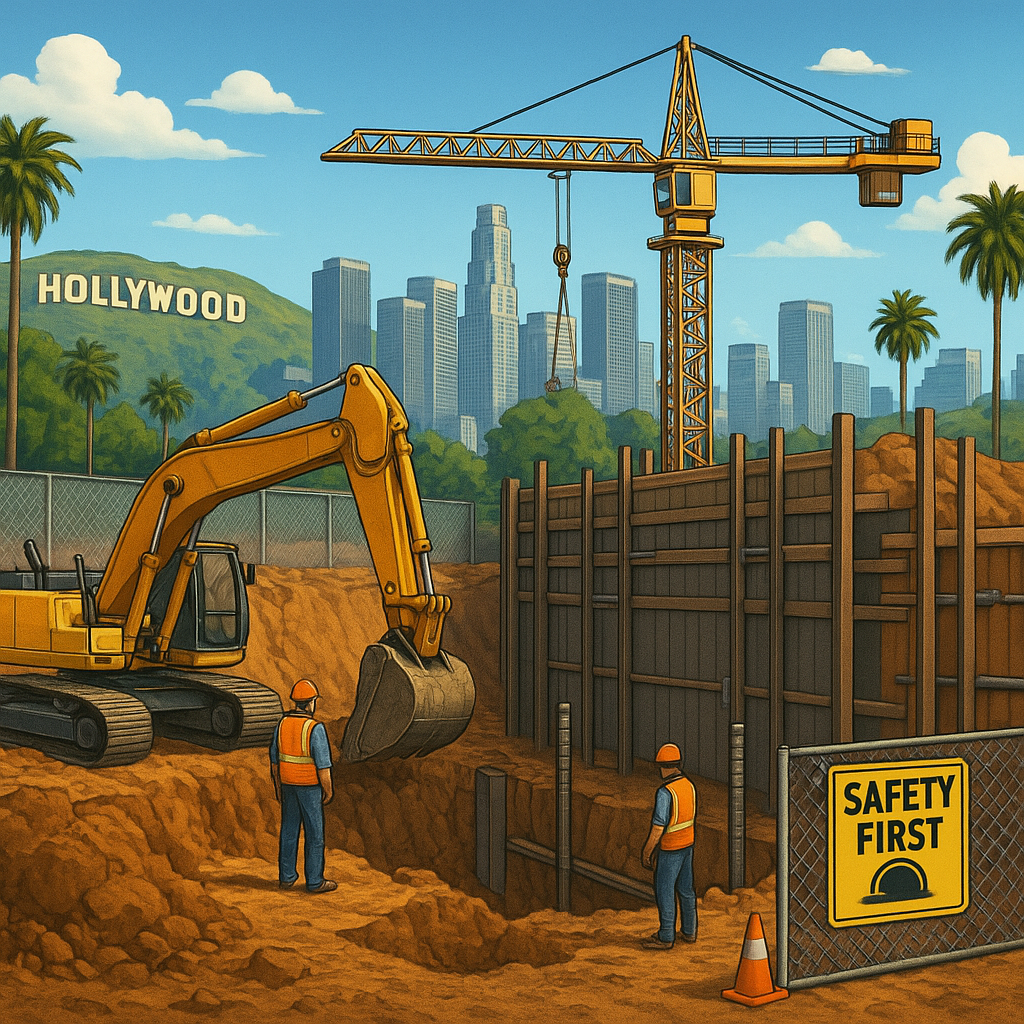
If you’re planning to dig deep next to a property line in Los Angeles, you’ve probably stumbled across a term that sounds a bit like construction jargon: the Excavation Lateral Support Bond. It’s not the most exciting topic, but understanding this requirement can save you from major headaches, lawsuits, and city stop-work orders. Let’s break it all down in plain English so you know exactly what’s expected, why it matters, and how to get it without pulling your hair out.
What Is an Excavation Lateral Support Bond, Anyway?
Think of a lateral support bond as a financial safety net. When you excavate near a neighbor’s land or a public street, the soil that physically supports those adjacent properties can shift, crack, or collapse. The bond guarantees that if your digging causes damage—like sinking sidewalks, cracked foundations, or even a land slump—there’s money set aside to fix it. The word “lateral” simply means sideways. The soil doesn’t just hold things up from below; it also pushes sideways against foundations and retaining walls. Mess with that sideways support, and trouble follows.
In the City of Los Angeles, an Excavation Lateral Support Bond is a specific type of surety bond. It’s a three-party agreement between you (the contractor or property owner), the city (who requires it), and the surety company that issues the bond. If you fail to uphold your responsibility to protect neighboring properties, the bond pays out to cover damages—up to the bond amount. Then, you pay the surety back. It’s not insurance for you; it’s protection for everyone else.
Why Does Los Angeles Require This Bond?
Los Angeles sits on a mix of soil types, from loose sandy loam to expansive clay. Throw in seismic activity, heavy rains, and dense urban building, and you have a recipe for excavation risks. The City of Los Angeles Department of Building and Safety (LADBS) doesn’t want a construction project on one lot to undermine a neighboring home, apartment building, or public roadway. So, they included the bond requirement in the local building code. It’s a proactive step, making sure that if something goes sideways—both literally and figuratively—there’s a clear path to making things right without a drawn-out legal battle.
When you apply for an excavation permit, the city often flags projects that involve digging deeper than a certain depth (commonly five feet), especially when the work creeps close to property lines. That’s when the lateral support bond request lands on your desk. It’s not a punishment. It’s simply the city’s way of saying, “We trust you, but we also need a promise backed by real funds.”
Who Needs an Excavation Lateral Support Bond?
This isn’t just for giant construction companies. If you’re a homeowner adding a basement, a contractor digging for a swimming pool, or a developer putting in underground parking, you might need one. Essentially, anyone performing excavation work that could compromise lateral support for adjacent properties may be required to post this bond before a permit is issued. This applies directly to excavation contractors operating in Los Angeles, but property owners who pull permits themselves also bear the responsibility.
The city evaluates each project based on factors like excavation depth, distance from the property line, soil reports, and existing structures nearby. Even a seemingly small trench for a foundation underpinning job can trigger the requirement. A good rule of thumb: if your shovels and equipment are getting close to where your land meets your neighbor’s, ask about the bond early.
The Third-Party Liability Connection
Third-party liability is the core reason this bond exists. “Third party” refers to anyone who isn’t you or the city—most often your neighbor. Picture this: you’re excavating for a new retaining wall along your property line. Because the soil is temporarily unsupported, your neighbor’s driveway cracks and begins to settle. Without a bond, your neighbor might have to sue you directly, and even if they win, collecting damages can be a nightmare. With the bond in place, they can make a claim against it and get compensated for repairs more swiftly.
The bond creates a clear, straightforward solution. It protects the property rights of adjacent landowners, the public right-of-way, and even utility infrastructure. You’re essentially saying, “I’m doing the work, but if I accidentally harm your land, there’s a guaranteed pot of money ready to fix it.” For contractors, this also means fewer lawsuits that damage reputations and drain resources.
How Bond Amounts Are Determined
The required bond amount isn’t random. LADBS typically sets the value based on the estimated cost to restore lateral support and repair potential damage. They’ll look at your project plans, a soils report, and sometimes a surveyor’s input. Bond amounts often range from $10,000 to $50,000 for residential projects, but larger commercial excavations can push that number well into the hundreds of thousands. Always check your permit conditions—the city will spell out the exact dollar figure you need.
Don’t confuse the bond amount with what you pay out of pocket. You only pay a small percentage, called the bond premium. For someone with strong credit, that premium might be as low as 1% to 3% of the total bond amount. So, a $20,000 bond could cost just $200 to $600 per year. If your credit history has some bumps, the rate might be higher, but it’s still a fraction of the coverage amount.
What Happens If You Don’t Get the Bond?
Skipping the bond isn’t an option if the city has made it a permit condition. Your excavation permit will not be issued, full stop. Starting work without the required bond can lead to immediate stop-work orders, fines, and even legal action. Beyond the city’s enforcement, you leave yourself personally exposed. If damage occurs and there’s no bond, the financial fallout comes straight from your pocket—and potentially from your business assets or home equity. It’s simply not worth the gamble.
Steps to Get Your Los Angeles Excavation Lateral Support Bond
Getting bonded might sound intimidating, but the process is straightforward once you know the steps. Here’s a typical path:
- Confirm the requirement: Review your LADBS permit conditions or talk to the plan checker. Know the precise bond amount needed.
- Gather your paperwork: The surety company will ask for basic information—your name, business details (if applicable), project address, and the bond amount. Sometimes they want a copy of the soils report or permit.
- Apply with a surety bond agency: Work with a bond specialist who understands Los Angeles municipal requirements. You can apply online or over the phone in many cases.
- Undergo a quick credit review: For most small-to-medium bonds, underwriting is fast. The surety checks credit and business history. Good credit means instant approval and the lowest rate.
- Pay the premium and receive your bond form: Once approved, you pay the premium. The surety issues the official bond document, which you’ll sign as the principal.
- File the bond with the city: Submit the original signed bond to LADBS, typically at the same office handling your permit. Keep a copy for your records.
The entire process can often be completed in a day or two, so don’t wait until the last minute. Starting early keeps your project timeline intact.
Common Myths That Trip People Up
Myth: My general liability insurance already covers this. Nope. General liability policies may have exclusions for earth movement and excavation damage, and even if they offer some coverage, the city specifically wants a surety bond. The bond and insurance serve different purposes and are not interchangeable.
Myth: Only the contractor needs the bond. In Los Angeles, the permit holder is responsible. That could be the contractor, but if a homeowner pulled the permit, the homeowner must provide the bond. Always clarify who is on the hook.
Myth: The bond is expensive and kills my budget. For most residential jobs, the premium is a modest line item. Compare it to the cost of underpinning a neighbor’s sagging foundation out of pocket, and the bond looks like a bargain.
Can You Use Cash Instead of a Bond?
The city sometimes allows alternatives, like a cash deposit or an irrevocable letter of credit, but these tie up large sums of money for the duration of the project—and often beyond. A surety bond keeps your capital free. The bonding company charges a small fee for taking on the risk, which makes far more financial sense for most contractors and property owners.
Does the Bond Cover Your Own Property?
This is a crucial distinction. The Excavation Lateral Support Bond protects adjacent properties, not your own land or structure. If your excavation causes your own house to settle, that’s on you. The bond specifically addresses third-party lateral support. So, don’t consider it a blanket safety net for your entire job site.
Keeping Your Bond Active and Compliant
Once filed, the bond remains in effect until the city releases it. This typically happens after the excavation is completed, backfilled, and any necessary inspections are signed off. Don’t assume the bond automatically expires when the job is “done” in your eyes. You need official confirmation from LADBS. Otherwise, you might keep paying renewal premiums unnecessarily. Communicate with your surety agent and the building inspector to close out the permit and cancel the bond at the right time.
Real-World Example to Bring It All Together
Imagine a homeowner in Silver Lake wants to add an ADU with a small basement. The excavation will go down eight feet, just three feet from the neighbor’s century-old craftsman home. LADBS requires a $25,000 Excavation Lateral Support Bond. The homeowner applies through a surety agency, pays a $375 annual premium, and files the bond with the city. A month into digging, the contractor hits unexpectedly loose soil, causing a section of the neighbor’s garden wall to lean and crack. Instead of a heated dispute, the neighbor files a claim on the bond. The surety investigates, confirms the damage was related to the excavation, and pays $8,000 for repairs. The homeowner then reimburses the surety, but avoids a lawsuit and a ruined relationship. That’s the bond working exactly as intended.
Choosing the Right Bond Provider
Not all bond agencies are familiar with Los Angeles municipal requirements. Look for a provider that regularly handles City of Los Angeles excavation bonds and knows the ins and outs of LADBS form requirements. A local agent can help you get the right bond language the first time, preventing delays at the permit counter. Plus, if you’re a contractor, building a relationship with a surety can help you secure larger bonds for future projects.
Ask potential providers: “Have you issued City of Los Angeles Excavation Lateral Support Bonds before?” Their answer will tell you a lot about how smoothly things will go.
Wrapping Up Without the Surprises
The Excavation Lateral Support Bond might feel like just another piece of bureaucratic paperwork, but it’s actually a clever tool that protects communities and keeps construction projects fair. In a city as tightly packed as Los Angeles, where one person’s excavation can literally undermine another’s foundation, the bond is a reasonable middle ground. It lets you dig while giving your neighbors peace of mind.
Whenever you’re preparing for excavation near a property line, get the bond requirement sorted early. Talk to your plan checker, line up a knowledgeable surety agent, and budget the premium as a small but essential part of your costs. Doing so keeps your project moving, your relationships intact, and the city happy. And honestly, who doesn’t want a drama-free dig?